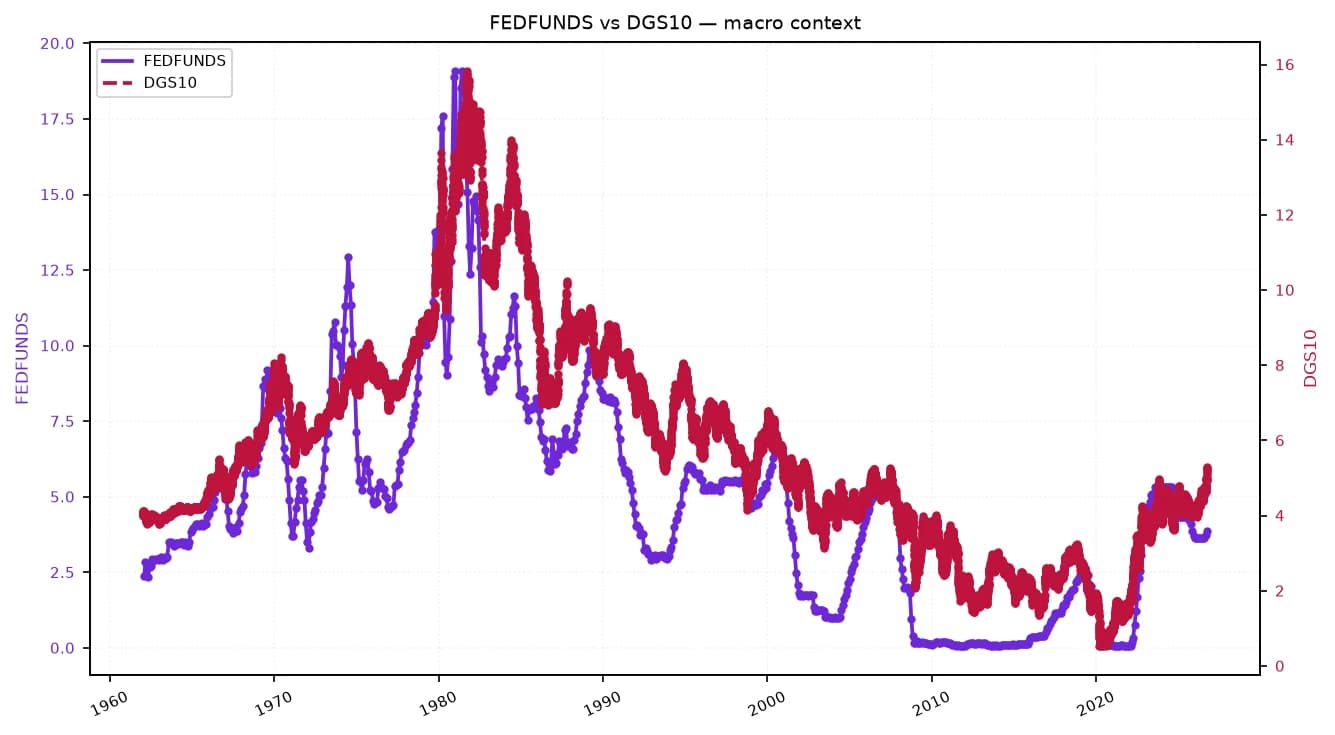
US Treasury markets are showing enough stress that Federal Reserve officials should be ready to deploy emergency tools to stabilize them, Cleveland Fed President Beth Hammack said, as the 10-year yield pushes above 5% and the rise in borrowing costs ripples through stocks, credit and the dollar.
Treasury Yield Rise Stresses Bonds, Stocks, Credit

Hammack’s warning matters because Treasury market functioning is the plumbing of the global financial system. When the benchmark 10-year yield climbs to 5.1%, near the highest levels in years, it does not just raise the government’s financing bill; it also lifts mortgage rates, corporate funding costs and the discount rate applied to equities. That is why the move has hit longer-duration assets first, with bond funds and rate-sensitive shares under pressure even as short-term policy expectations reprice higher.
Sentiment Indicators
The backdrop is a market increasingly convinced the Fed may need to stay restrictive for longer. Two-year yields have risen to about 4.9%, while the high-yield credit spread has widened to 3.34 percentage points, up from 2.95 points in mid-October, suggesting investors are demanding more compensation for risk. In credit, that combination is especially uncomfortable: borrowing costs are rising just as refinancing pressure remains elevated and liquidity is thinner than in periods of easier policy.
Treasury exchange-traded funds show the same strain. TLT, which tracks long-dated government bonds, has fallen to 79.55 from above 87 in late February, with its price sitting below its 200-day moving average and its RSI in the high-30s, a sign of weak momentum rather than a completed rebound. IEI, a medium-term Treasury fund, has been steadier at 114.21, but it too remains below its 200-day average. High-yield bonds have held up better, yet HYG has slipped to 76.63 and remains only marginally above its 50-day average, reflecting growing caution rather than conviction.
The move has also reinforced a broader risk-off tone across markets. The S&P 500 and Nasdaq have been pressured by higher discount rates and pockets of equity weakness, while the dollar has firmed toward a 19-month high, underscoring tighter financial conditions. Adalytica’s market expectations gauge for Fed rate decisions shows “Extreme Fear,” a sign that investors see policy risk as elevated and communication from the central bank as unusually consequential.
Hammack’s remarks echo lessons from the pandemic and the 2019 repo spike, when the Fed was forced to respond quickly to restore market functioning after liquidity broke down. They also recall the 2020 market turmoil, when emergency buying and backstops were needed to prevent Treasury dislocations from spilling into the broader financial system. The key investor takeaway is that the Fed may have to distinguish between a benign rise in yields and a disorderly one. If volatility becomes self-reinforcing, the central bank could be pushed toward temporary support measures even if it is not cutting rates.
For investors, that leaves a split-screen trade-off. Higher yields are helping income strategies and money-market returns, but they are also compressing valuations, raising default risk and making duration risk more expensive to own. The next catalysts are inflation data, Fed commentary and any signs that Treasury market depth is deteriorating further. If those pressures intensify, emergency steps may move from a theoretical backstop to a live policy discussion.
| Entity | Gains | Losses |
|---|---|---|
| Cash investors | ▲Higher yields on short-term assets | ▼Longer-duration bond prices |
| Banks and money funds | ▲Wider reinvestment income | ▼Mark-to-market bond portfolios |
| Equity markets | ▲— | ▼Higher discount rates |
| Fed officials | ▲Optionality to stabilize markets | ▼Policy flexibility if turmoil worsens |