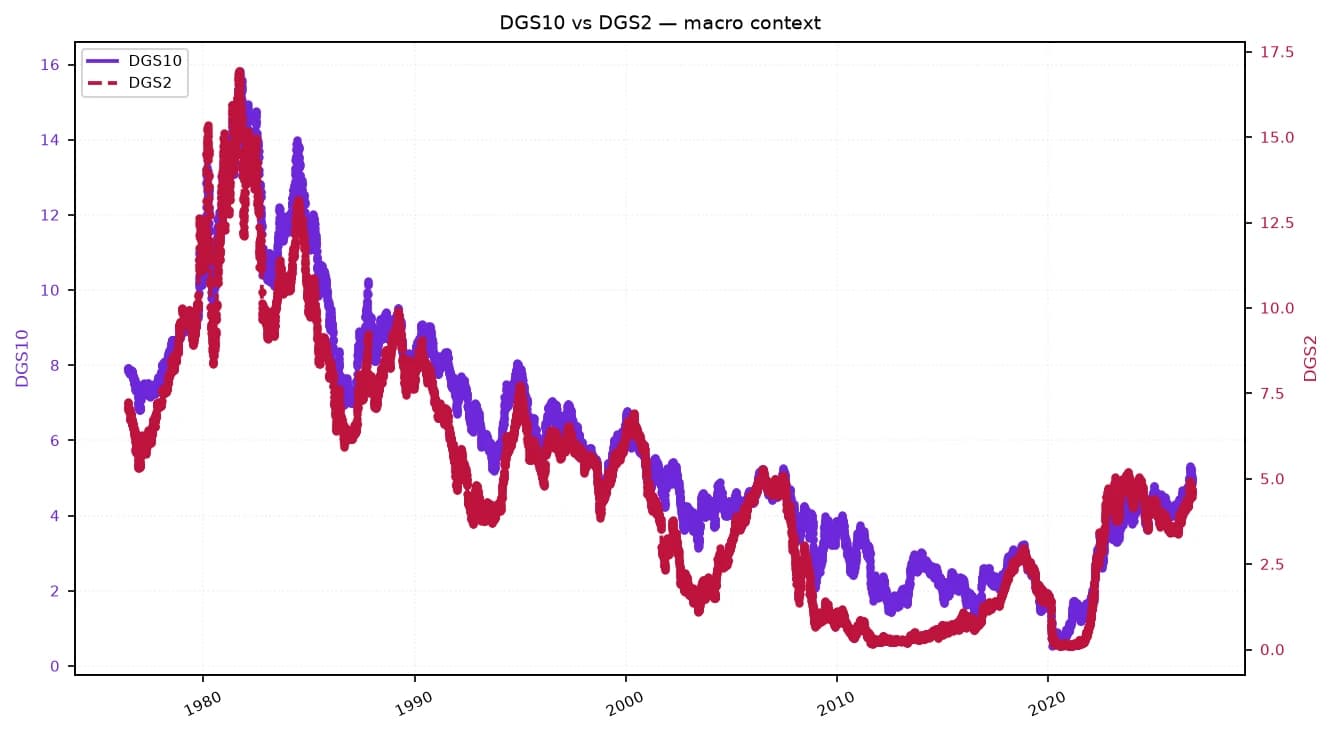
Treasury’s two bond auctions tomorrow will be a key test of demand at a moment when borrowing costs are already elevated, the yield curve is steepening and investors are showing renewed caution toward long-duration debt.
Treasury auctions test demand as 10-year yield nears 5%

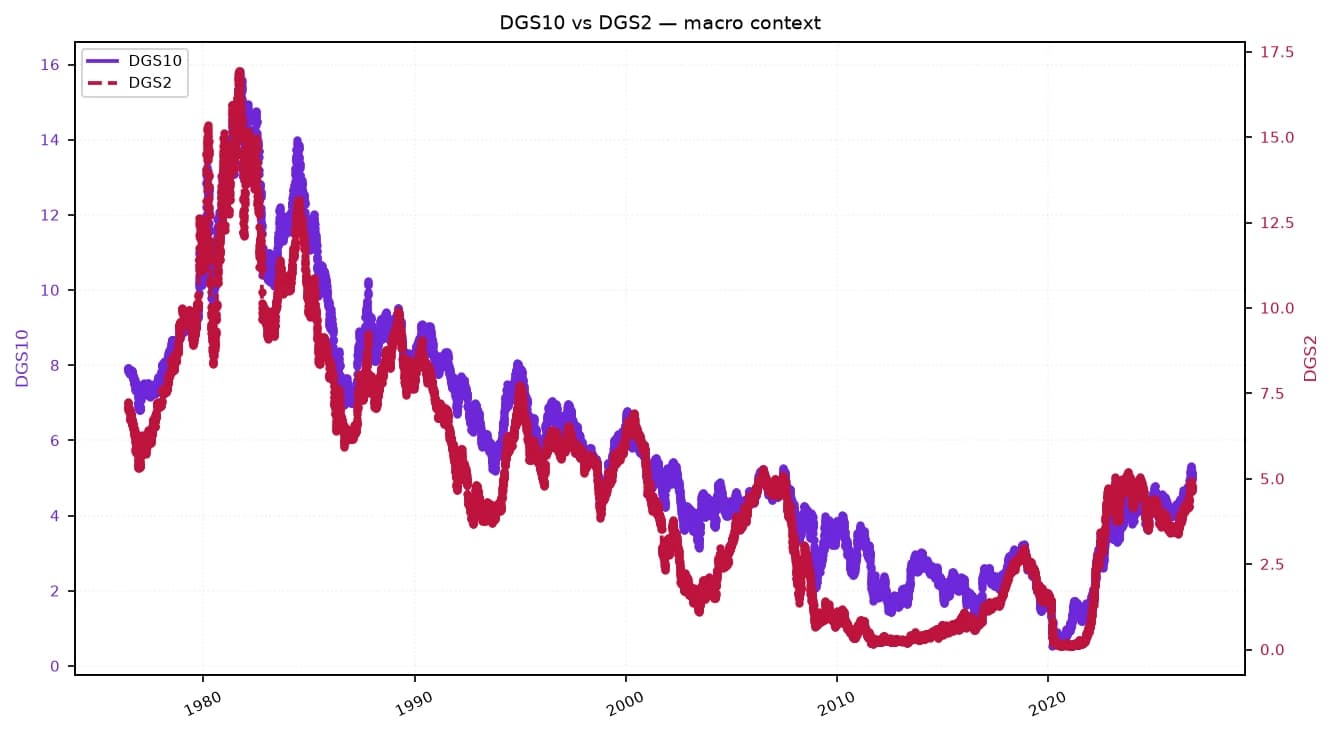
The auctions come with the 10-year Treasury yield trading around 5.15%, while the 2-year note yields about 4.86%, leaving the 10-year/2-year spread at roughly 27 basis points. That gap has widened from just 24 basis points in the latest reading, underscoring a market that expects rates to stay restrictive even as the front end remains anchored.
Sentiment Indicators
That matters economically because higher Treasury yields set the benchmark for mortgages, corporate borrowing and government financing costs. When the 10-year pushes above 5%, it raises discount rates across asset classes and increases the cost of refinancing for companies and consumers alike.
Investors will be watching whether primary buyers absorb the supply without forcing yields higher in the secondary market. Weak demand could spill into broader fixed income, pressure rate-sensitive equities and revive concerns that the bond market is struggling to digest a wave of issuance, including heavy sovereign and corporate borrowing abroad.
US Treasury
The technical setup also reflects a market still adjusting to that pressure. The 10-year yield has climbed above its 50-day moving average of about 5.06%, while the 30-year yield has risen to 5.48%, near the upper end of its recent Bollinger Band range. TLT, the long-duration Treasury ETF, fell to 79.38 on Friday from 81.11 earlier in the week, and Adalytica’s Treasury bond trade signals show sentiment at 44, labeled neutral, with awareness at zero and an extreme-fear reading.
For investors, the auctions will help set the tone into the next stretch of supply and into the debate over whether long-end yields can hold near multidecade highs without cracking demand. A strong result would ease pressure on bond funds and interest-rate-sensitive stocks; a poor one would reinforce the case for staying defensive in duration.
| Entity | Gains | Losses |
|---|---|---|
| Treasury | ▲funds borrowing smoothly | ▼higher auction costs |
| Bond buyers | ▲lock in 5%+ yields | ▼face mark-to-market losses if yields rise |
| TLT holders | ▲benefit from strong auction demand | ▼hurt by higher long yields |
| Mortgage and rate-sensitive borrowers | ▲little near-term relief | ▼higher financing costs |