The bond market is treating the Democrats’ November victory as a bid for slower fiscal expansion and a cleaner path to lower rates, with Treasury yields easing after the election and investors leaning into duration.
Treasury yields ease after Democrats' election win

The clearest signal is in the long end of the curve. The 10-year Treasury yield was 4.84% on Nov. 5, ticked to 4.86% on Nov. 6 and 4.88% by Nov. 9, before the forecast for Nov. 10 pointed to 4.832%. The 2-year yield moved from 4.46% to 4.51% and 4.56% over the same stretch, leaving the market still pricing a restrictive policy backdrop, but one that looks less likely to tighten further. That matters because bond investors are not just reacting to politics — they are re-pricing the odds of future Fed easing, inflation restraint and a less aggressive Treasury supply outlook.
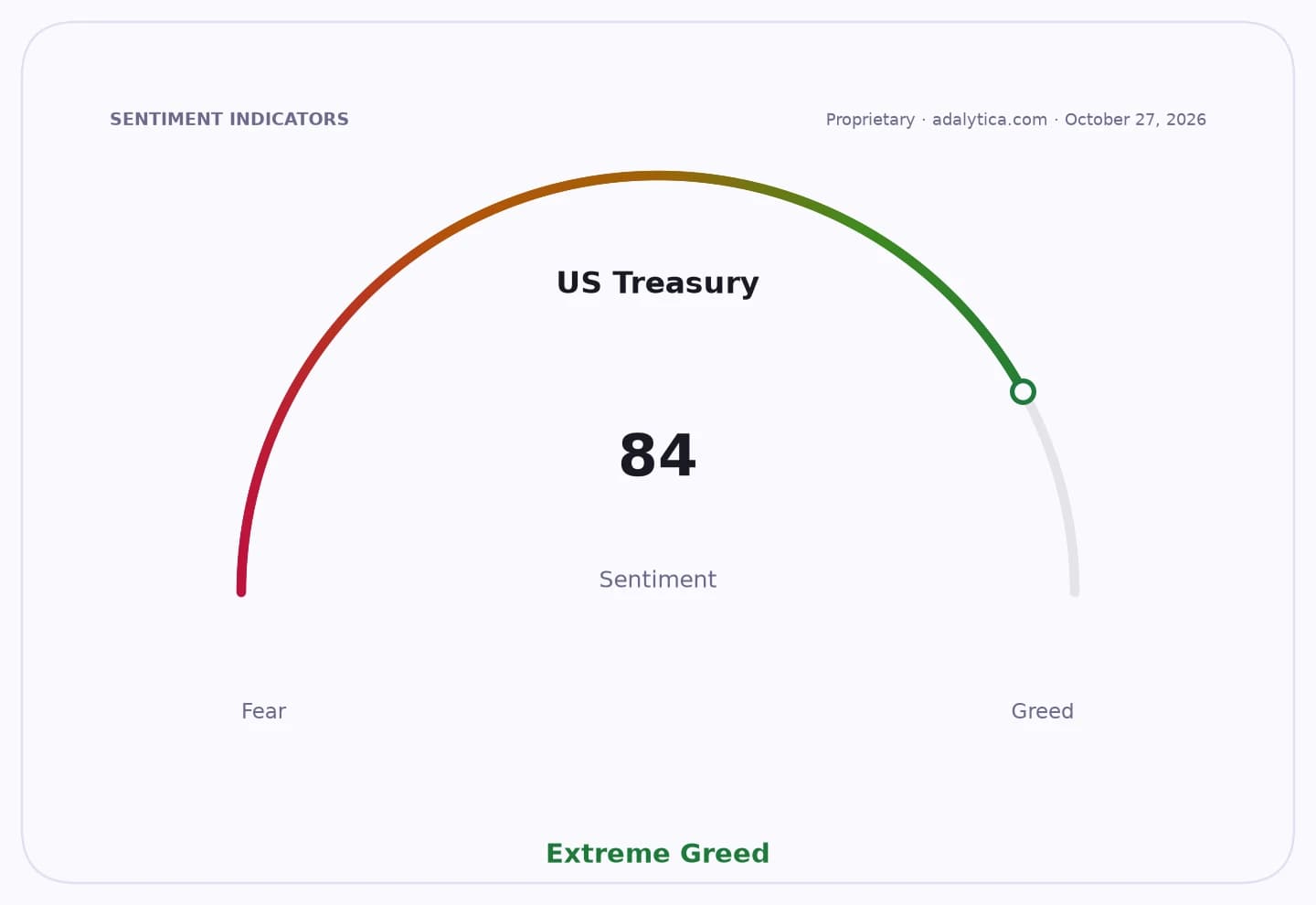
Sentiment Indicators
For investors, the message is straightforward: lower yields would be a tailwind for duration-heavy assets and a headwind for the “higher for longer” trade that has punished long bonds for much of the year. The iShares 20+ Year Treasury Bond ETF, or TLT, has rebounded to 80.88 after trading as low as 79.46 in October, while the 7- to 10-year Treasury ETF, IEF, has climbed back to 91.01. TLT’s 50-day moving average sits at 80.19, with the fund recently trading above it, and its RSI has cooled to 55.0 after flashing overbought readings earlier in the month. That combination suggests the bond rally is no longer just a reflexive post-election bounce — it is becoming a trend traders can actually follow.
The deeper economic story is that bond markets are welcoming a political result they see as mildly disinflationary and less destabilizing for deficits. A Democratic win is not a guaranteed path to easier monetary policy, but it can alter expectations around spending priorities, tax policy and the pace of Treasury issuance. With the 10-year still far above the near-zero yields of the pandemic era and the Fed funds rate at 3.88% in October, fixed income remains anchored in a world of positive real returns, not emergency policy. That is why even modest declines in yields can have outsized effects on asset allocation.
The beneficiaries are already visible. Treasury exposure is gaining appeal as a defensive income trade, while rate-sensitive sectors such as homebuilders, utilities and long-duration growth stocks can benefit if the bond rally broadens. Banks, meanwhile, face a more mixed setup: steeper or stable long rates can support net interest margins, but a sustained decline in front-end yields would also reinforce expectations for easier policy and slower loan growth.
The market is still early in that repricing, and that is where the opportunity lies. If Democrats’ win is interpreted as reducing the odds of another fiscal shock or inflationary policy surprise, then the next leg of the trade is not simply “buy bonds.” It is to position for a softer yield curve, falling real rates and a renewed bid for duration-sensitive equities and bond proxies. For now, the bond market has made its vote clear: it likes the result.
| Entity | Gains | Losses |
|---|---|---|
| Treasury bonds | ▲Higher prices, lower yields | ▼Short-duration bearish trades |
| TLT / IEF holders | ▲Duration rally, capital gains | ▼Late longs if yields reverse |
| Rate-sensitive equities | ▲Easier financing conditions | ▼High-yield, bond-substitute trades |
| Banks | ▲Better value on fixed-income portfolios | ▼If short rates fall faster than expected |