Treasury yields climbed sharply after a stronger-than-expected U.S. jobs report, with the 10-year note rising to 4.88% and markets leaning toward a more hawkish Federal Reserve path.
U.S. 10-Year Yield Rises After Jobs Report

The move matters because a firmer labor market reduces the urgency for the Fed to cut rates and raises the odds that policy stays restrictive for longer. That keeps real borrowing costs elevated across the economy, from mortgages and corporate debt to bank funding and valuation models that are sensitive to discount rates.
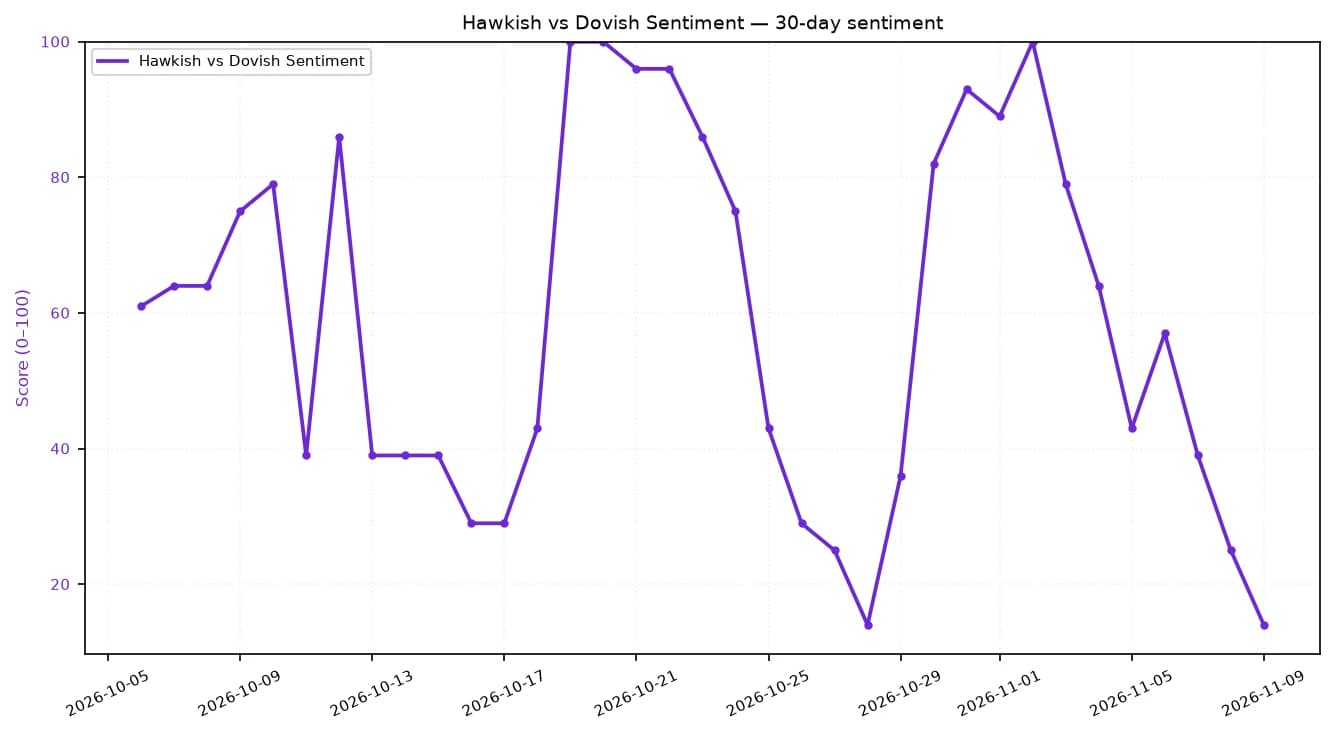
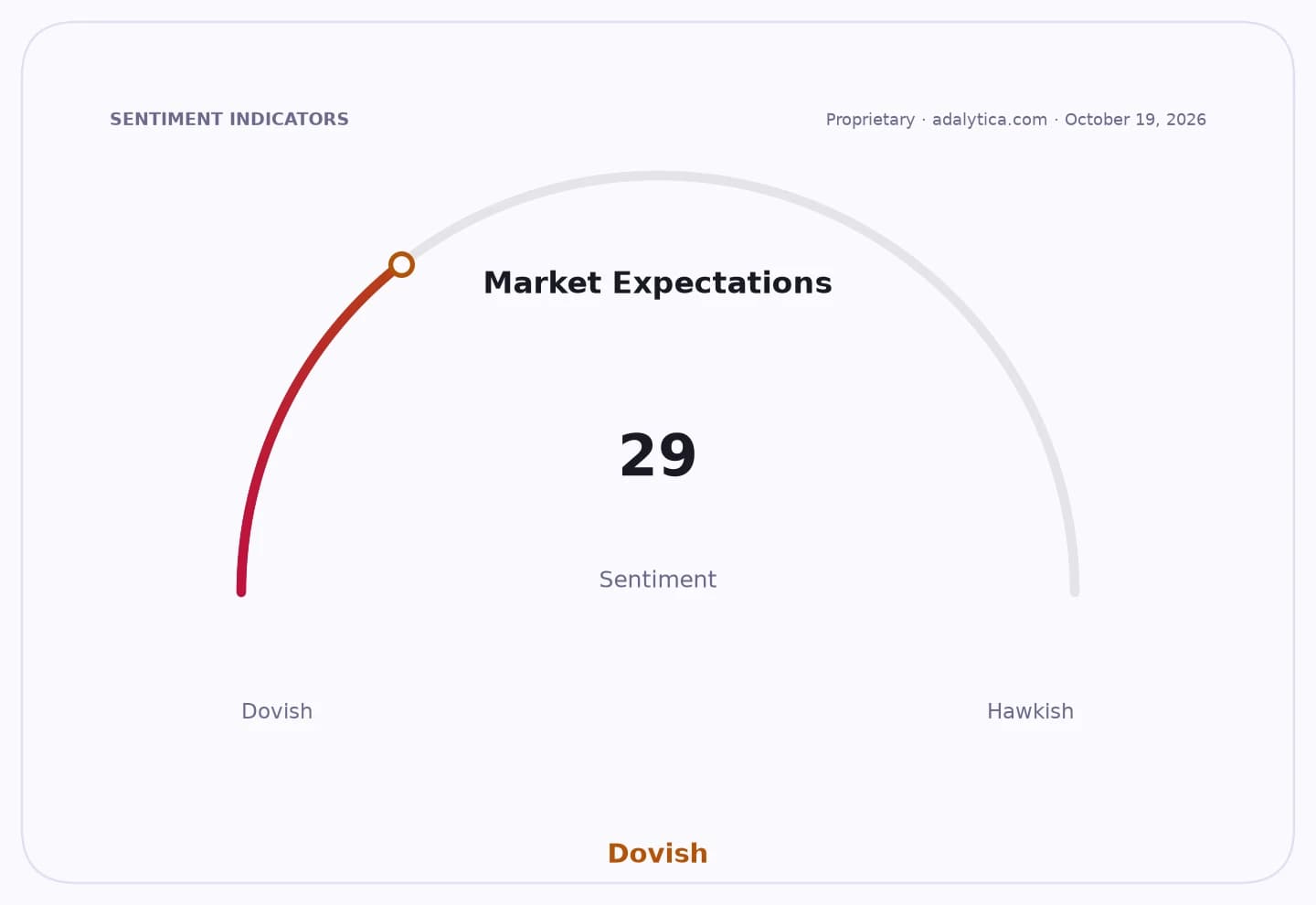
Sentiment Indicators
Hawkish vs Dovish
The labor data showed the unemployment rate at 4.1% in October, slightly better than the prior month’s 4.2%, while job openings and hiring conditions remained resilient enough to keep pressure on bond prices. The 10-year yield’s move to 4.88% on Nov. 9-10 marked a fresh leg higher from 4.84% on Nov. 5, underscoring how quickly traders are repricing the rate outlook when the economy refuses to cool decisively.
Bond funds reflected the shift. TLT, the long-duration Treasury ETF, traded around 80.92 to 80.88 in the latest sessions after earlier touching 81.96, still below its 200-day moving average of 83.12, a sign that longer-dated bonds remain under pressure despite occasional rebounds. IEF, the intermediate-maturity Treasury ETF, also softened to 90.94 from 91.80, leaving it below its 200-day average of 92.45. Both moves are consistent with yields rising rather than falling.
Equities were less distressed than bonds, but not immune. SPY rose to 759.81 on Nov. 11 after slipping to 749.92 a day earlier, yet the S&P 500 ETF remains close to but below its 50-day moving average, suggesting investors are still balancing the benefits of economic resilience against the risk of tighter financial conditions. That tension is especially important for rate-sensitive sectors such as housing, utilities and long-duration growth stocks.
The market’s message is straightforward: strong employment data can be good for growth, but it is often bad for bonds. Adalytica’s Fed policy sentiment gauge has stayed neutral, while its Federal Reserve forward guidance sentiment sits in extreme fear territory, reflecting how uncertain traders are about the timing and size of any policy shift. For now, the burden of proof is on weaker data to justify lower yields.
Banks may be among the clearest relative winners if rates stay elevated. JPMorgan and Bank of America have both disclosed sensitivity to higher rate scenarios in their filings, and a steeper, more stubborn yield environment can support net interest income even as funding costs remain a watchpoint. The bear case is that if yields rise too far, they tighten financial conditions enough to slow credit demand, pressure risk assets and ultimately force the Fed into a more cautious stance.
For investors, the key question is whether the latest labor strength is temporary resilience or a sign the economy can absorb higher rates for longer. If the former, yields may eventually retreat; if the latter, the bond market may be repricing a “higher for longer” regime that could keep pressure on duration-heavy assets and valuations into year-end.
| Entity | Gains | Losses |
|---|---|---|
| U.S. banks | ▲Higher net interest income | ▼Funding costs if rates stay elevated |
| Treasury shorts | ▲Price declines in bonds | ▼Gains on falling bond prices |
| Long-duration equities | ▲Some support from growth resilience | ▼Higher discount rates |
| Mortgage borrowers | ▲None | ▼Higher borrowing costs |