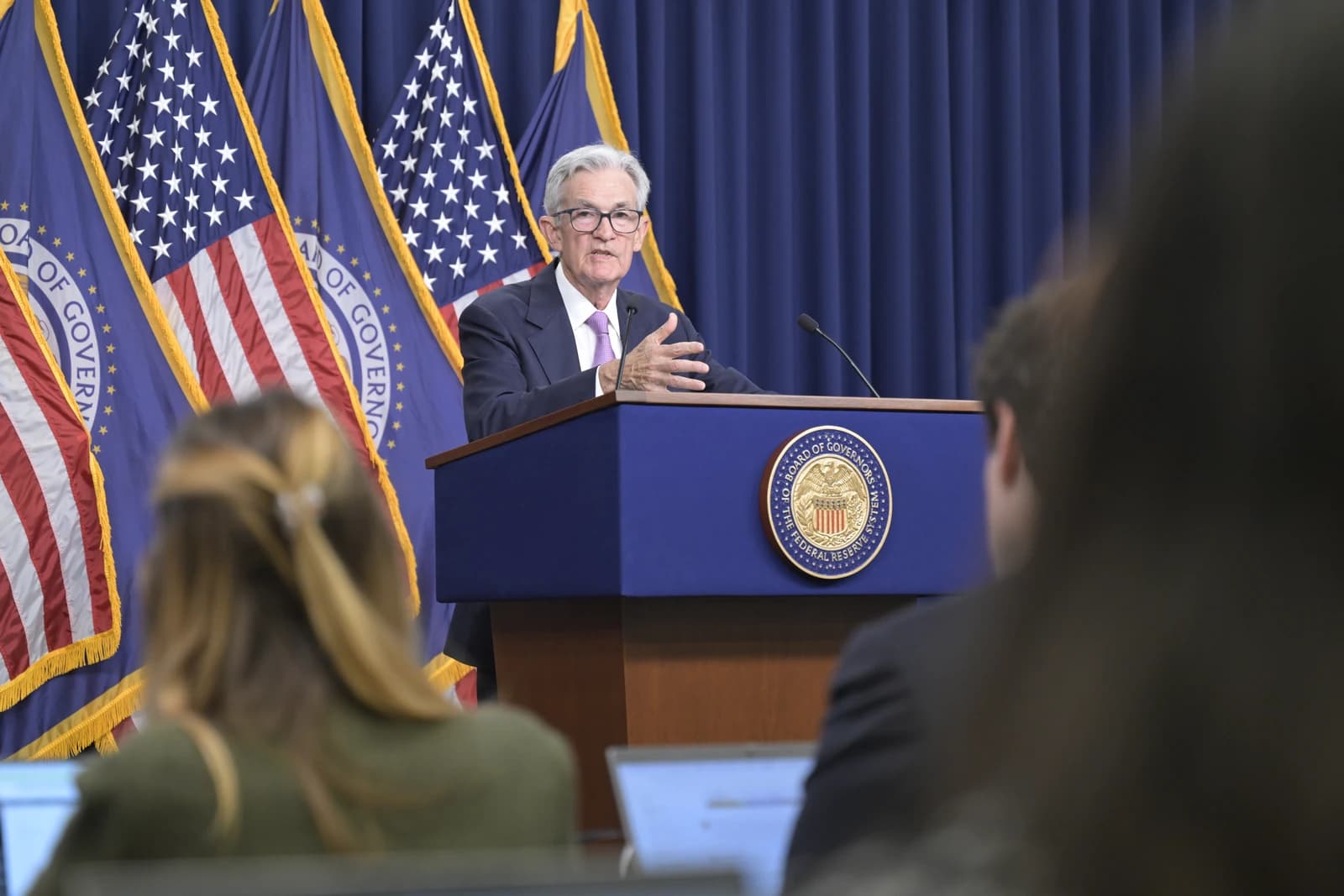
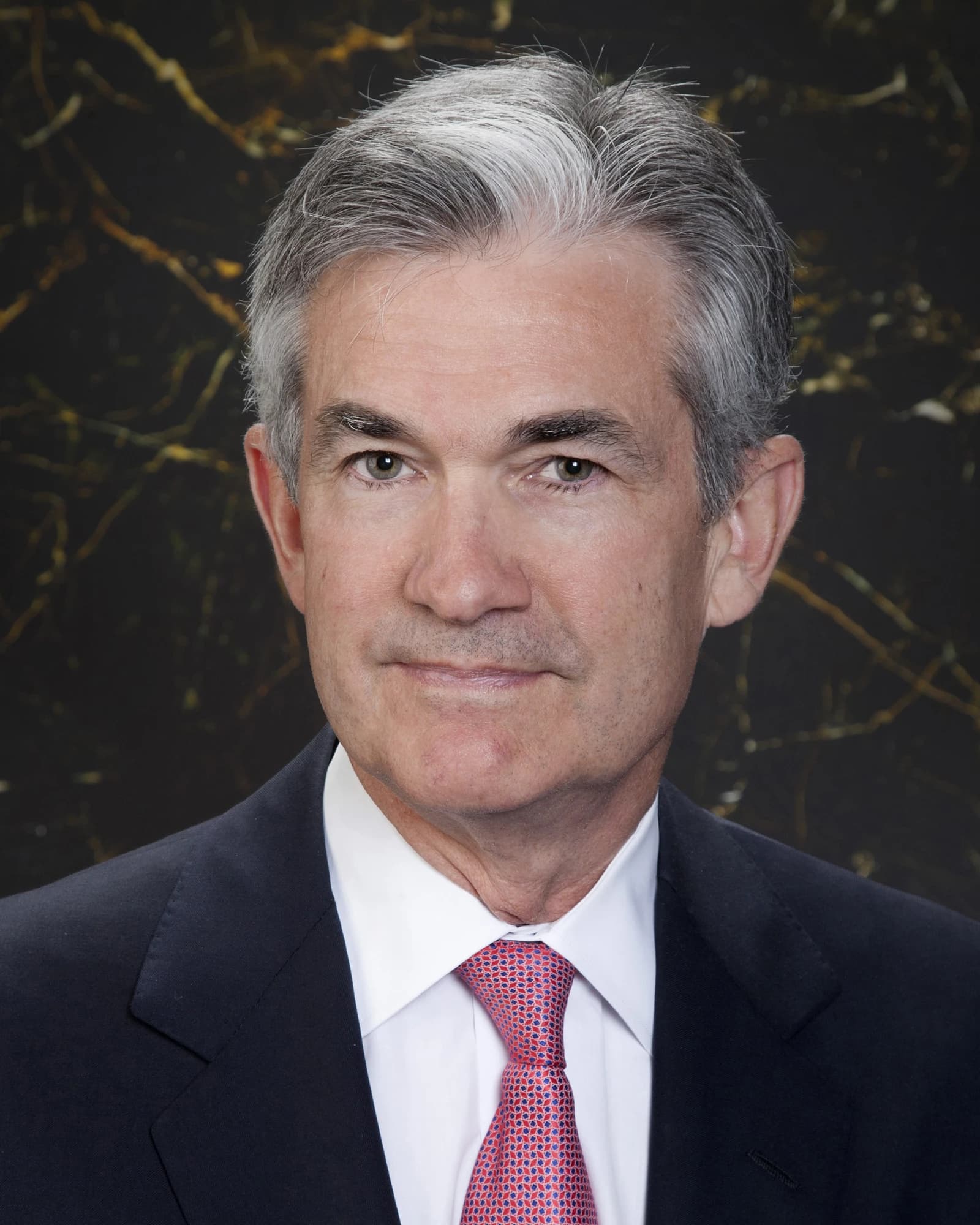
Richmond Fed President Thomas Barkin says the Federal Reserve still needs to raise interest rates again, a reminder that policymakers are not done fighting inflation even after a recent pause.
Richmond Fed Barkin backs another rate hike

That matters because the Fed’s next move will shape borrowing costs across the economy, from mortgages and business loans to Treasury yields and equity valuations. Barkin said unemployment remains near historic lows, inflation is still “too high,” and consumer spending is holding up well enough to suggest policy may still be somewhat loose. In other words, the economy has not yet slowed enough to convince the central bank that its work is finished.
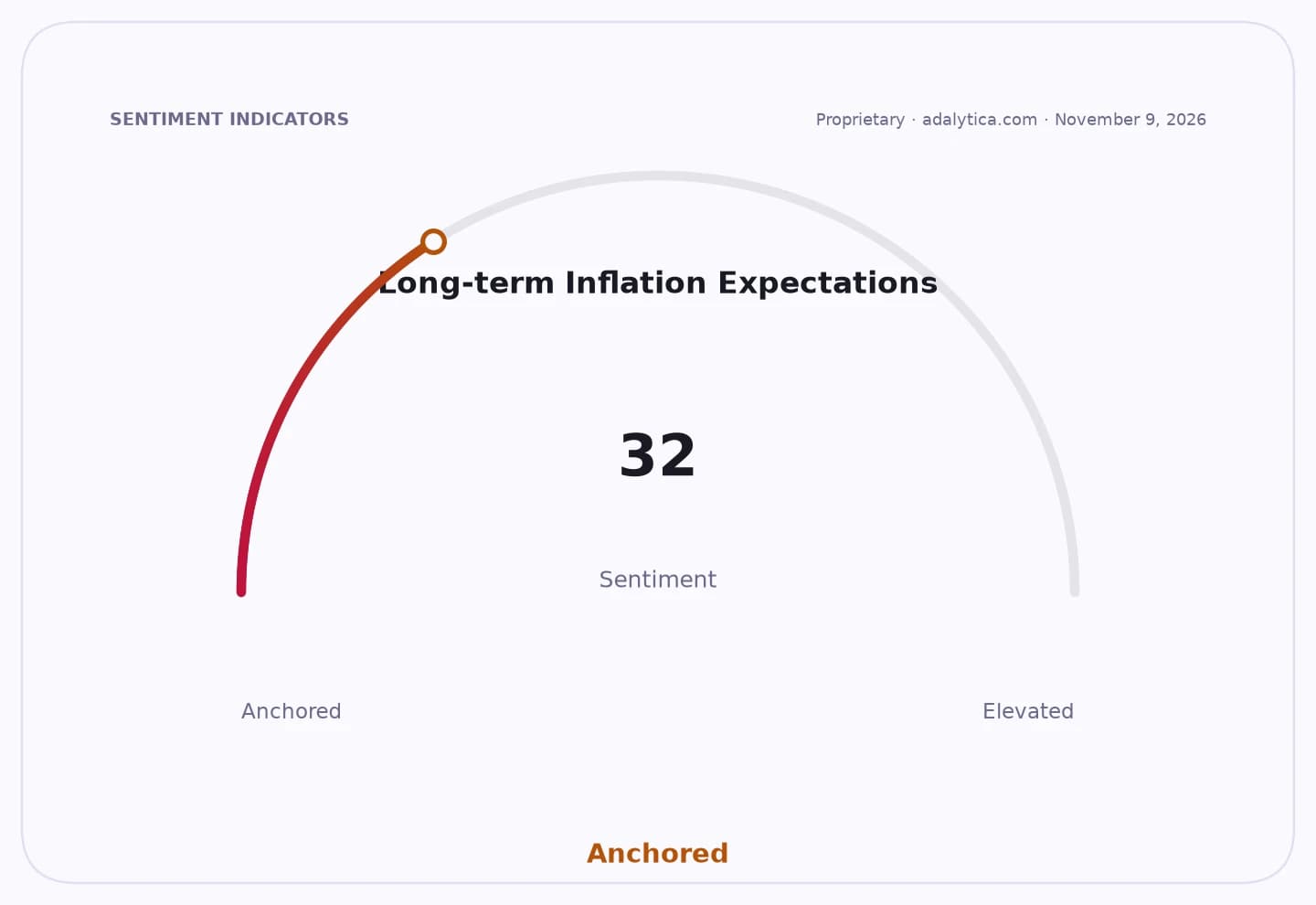
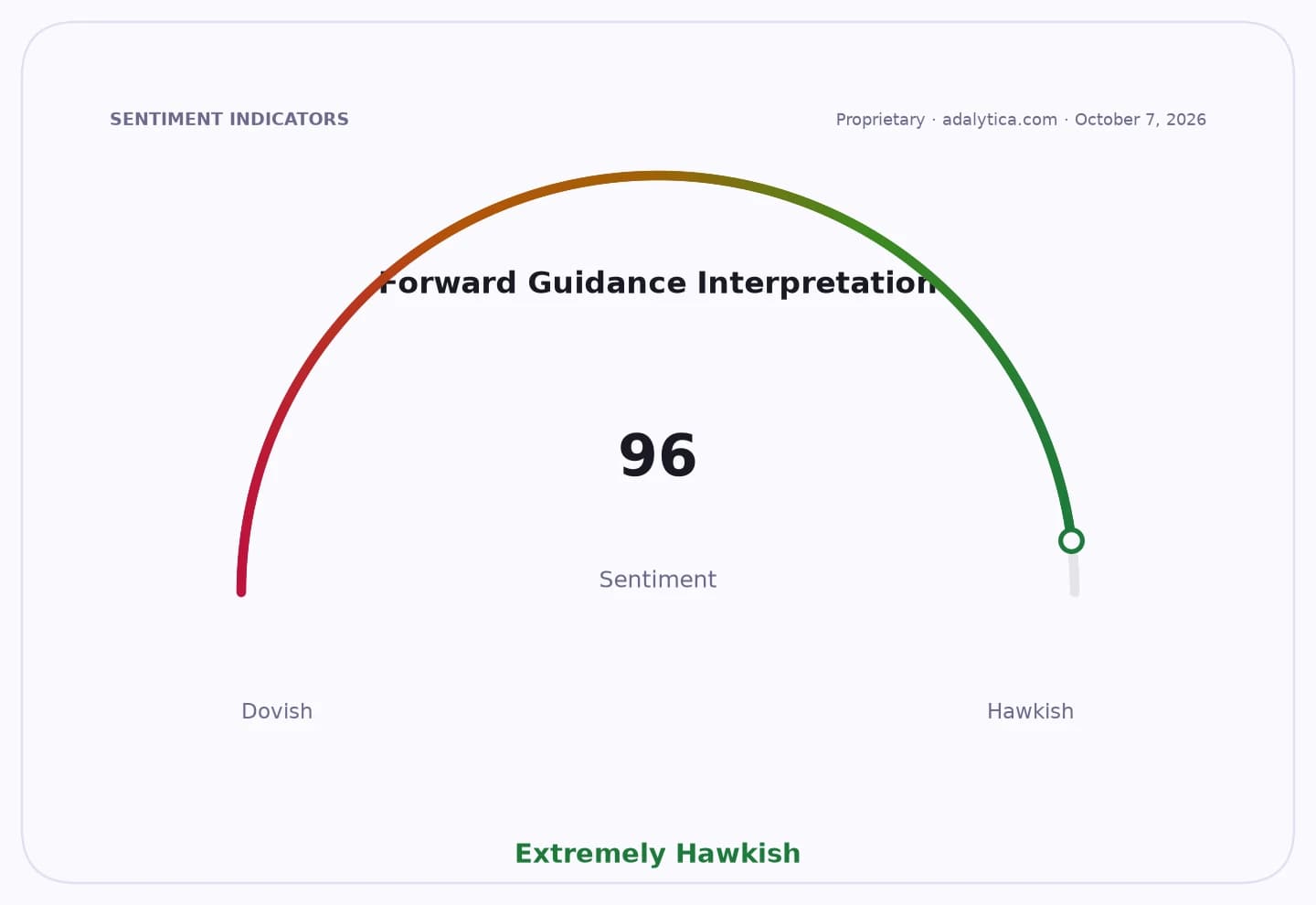
Sentiment Indicators
Markets are already leaning that way. Fed funds futures are pricing in better than an 80% chance of another hike in December, showing investors have largely accepted that rates may need to move higher from the current 3.75% to 4.00% range. The 10-year Treasury yield has also been pressing higher, a sign bond investors are preparing for a longer period of restrictive policy.
Barkin’s message was not simply “more hikes,” but “speed is the key.” He argued that given global uncertainty and incoming data, the Fed should move gradually rather than slam on the brakes. That is classic central-bank caution: tighten enough to cool inflation, but not so fast that the economy tips into a harder landing.
FEDFUNDS vs DGS10 — macro contextadalytica.com
Explore this data interactively — full history, time series and cross-market comparisons.
For investors, the takeaway is straightforward. Higher-for-longer rates generally favor cash, short-term Treasurys and banks with strong deposit franchises, while they pressure rate-sensitive assets such as long-duration bonds, high-multiple growth stocks and parts of real estate. That helps explain why Treasury prices have been choppy and why the market remains sensitive to every fresh Fed comment.
Barkin also drew attention to an angle investors should not ignore: the AI spending boom. He warned that massive investment in artificial intelligence could add to inflation pressures in the near term and create pockets of credit risk in financial markets, particularly around the rapidly growing wave of debt issuance tied to hyperscalers. He stopped short of questioning the creditworthiness of the biggest tech companies, but he did flag the possibility that hidden risk could build in the financial intermediaries financing all that spending.
That is an important nuance for long-term investors. AI remains a powerful secular growth story, but capital-intensive buildouts do not come free. If companies keep pouring hundreds of billions of dollars into data centers and cloud infrastructure, the financing chain matters just as much as the technology itself.
The broader narrative is becoming clearer: inflation is sticky, the labor market is still resilient, and the Fed is leaning toward another hike to keep real rates restrictive enough to slow price growth. If that continues, investors should expect volatility in stocks and bonds to persist, even as the long-term case for well-capitalized companies and diversified portfolios remains intact.
For now, Barkin’s comments reinforce a simple message: the Fed is not ready to declare victory, and investors should stay patient, diversified and focused on businesses that can thrive even when borrowing costs remain elevated. This is a market to watch, not chase.
| Entity | Gains | Losses |
|---|---|---|
| Cash and short-term Treasurys | ▲Higher yields | ▼Lower reinvestment risk |
| Banks with strong deposits | ▲Wider lending spreads | ▼Funding-cost pressure eases slowly |
| Long-duration bonds | ▲None | ▼Price pressure from higher yields |
| Rate-sensitive growth stocks | ▲Strong balance sheets only | ▼Higher discount rates and valuations |