US consumers kept spending in November even as import prices climbed more than expected, a combination that suggests the economy is still expanding but inflation pressures have not fully gone away.
US Consumers Spend as Import Prices Rise
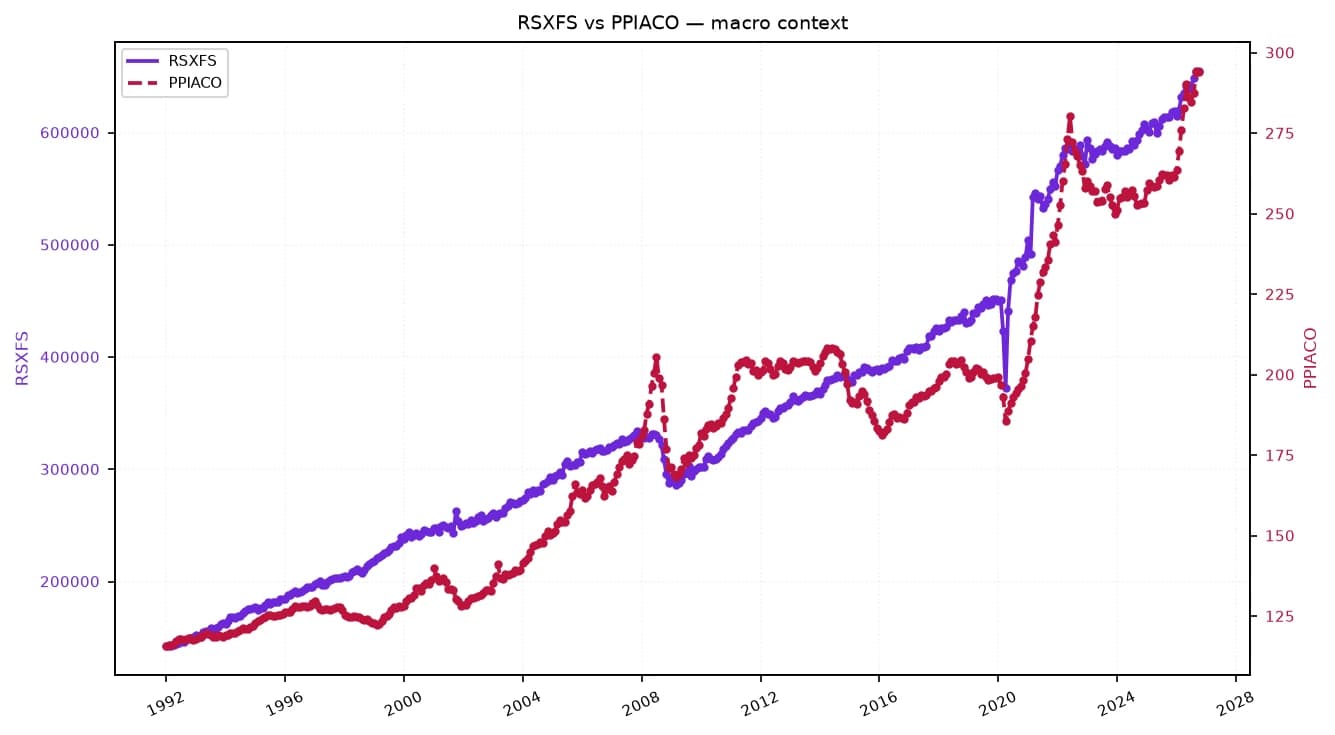
That matters because the US economy is still being driven by household demand, and demand is what gives companies pricing power and keeps earnings growth alive. It also means the Federal Reserve cannot assume inflation is safely back in its comfort zone just yet, especially with producer prices and core consumer prices still edging higher in the latest readings.
Sentiment Indicators
CPI
Retail sales rose 0.7% in November, according to the data context, a moderate gain that points to steady demand rather than a spending surge. Import prices increased 1.07% in the November forecast, above expectations, while the producer price index is projected to rise 0.27% and core CPI 0.3%. Taken together, those figures tell a familiar story: inflation is cooling from its peak, but not in a straight line, and some price pressures are still filtering through the supply chain.
For investors, that mix is important because it helps explain why consumer-facing stocks and the broader market can stay resilient even when interest-rate cuts are not imminent. Strong enough spending supports revenue growth for retailers, restaurants and travel companies. But firmer import prices and sticky underlying inflation can keep borrowing costs elevated, which tends to favor companies with pricing power, strong balance sheets and durable free cash flow over highly levered names.

The market reaction in exchange-traded funds shows that tension clearly. Consumer discretionary ETF XLY has held above its 50-day and 200-day moving averages after a sharp rebound, while consumer staples ETF XLP has also stayed firm, reflecting investor preference for steadier demand and defensive earnings. Retail ETF XRT has been volatile, but it is trading above both its 50-day and 200-day moving averages, suggesting traders are still willing to give the sector the benefit of the doubt as spending remains intact.
Adalytica’s Consumer Spending Sentiment snapshot shows extreme fear, which is a reminder that households and markets are not always aligned in the short term. Consumers may feel cautious, but the numbers show they are still buying. That gap often creates opportunity for long-term investors, because fear can coexist with a functioning economy and solid corporate profits.
The bigger narrative is not a boom or a bust. It is an economy that is still growing, still spending and still wrestling with the last mile of inflation. If retail demand keeps holding up while price pressures remain contained but persistent, the best investments are likely to be the businesses that can compound through both conditions. For patient investors, that is a constructive setup worth watching.
| Entity | Gains | Losses |
|---|---|---|
| US consumers | ▲Continued access to goods and services | ▼Higher prices on imports and essentials |
| Retailers and discretionary brands | ▲Solid sales growth | ▼Margin pressure if costs stay elevated |
| Fed and bond bulls | ▲Evidence of moderate, not overheating, demand | ▼Delayed rate cuts if inflation sticks |
| Defensive stocks and pricing-power companies | ▲Better relative demand and earnings resilience | ▼Cyclical firms with weaker pricing power |