Inflation is still running hot enough to keep the Federal Reserve on guard, but it is not yet powerful enough to derail the holiday shopping season — and that is the key market signal investors should watch.
Amazon, XLY, and inflation ahead of holiday shopping

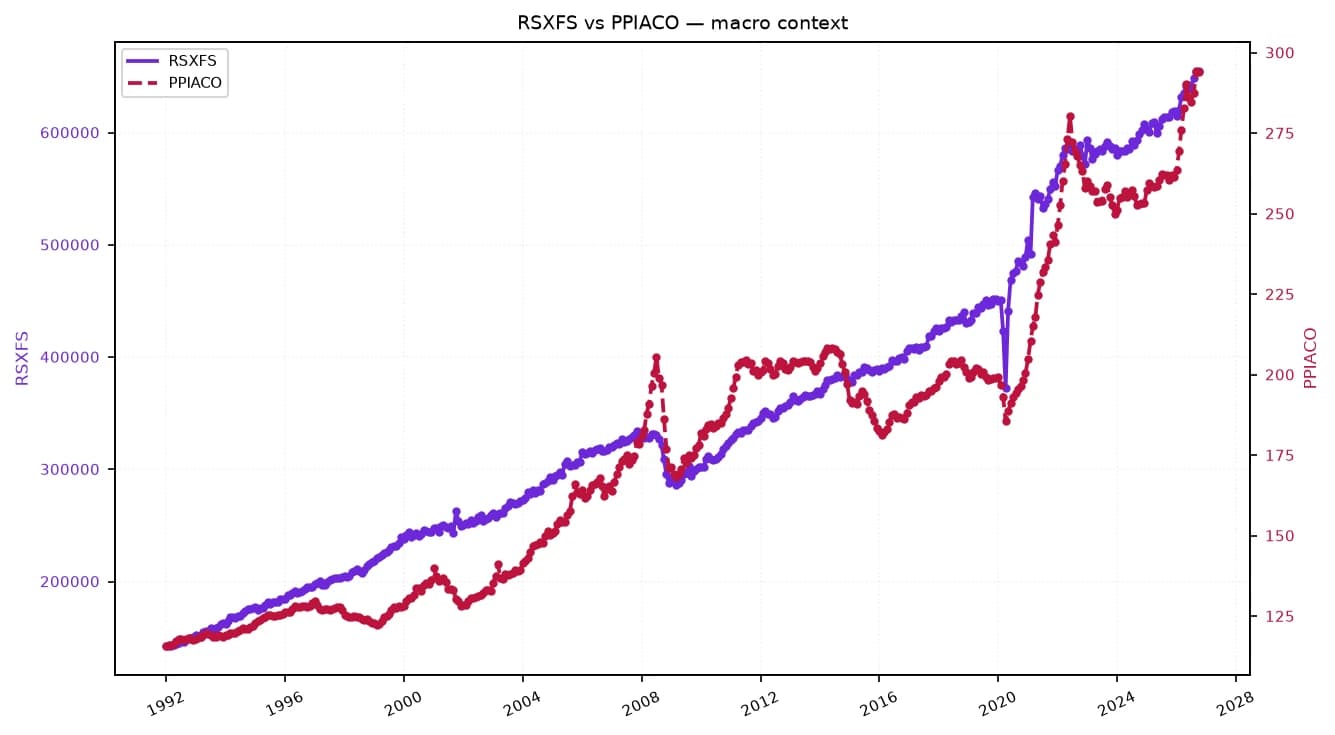
The consumer price index is forecast to rise another 0.35% in November after October’s 0.35% increase, keeping annual price pressure sticky even as the pace cools from the sharper bursts seen earlier in the cycle. That matters because the story is no longer about whether inflation is collapsing back to target; it is about whether households can keep spending through a higher-price regime. The answer, for now, appears to be yes.
Sentiment Indicators

That is why consumer discretionary shares deserve attention. The XLY sector fund has rebounded to 117.20 from a spring low near 107, with its 50-day moving average now above its 200-day moving average and RSI readings in the mid-50s, a sign that the selloff tied to inflation anxiety has been repaired. Amazon, the bellwether for holiday commerce, is still trading well above its 200-day moving average and has reclaimed momentum after a volatile year, with its shares at 255.27 and above both key trend lines. Investors are already positioning for a season in which shoppers may trade down on some purchases but still keep buying.
The macro backdrop is not comforting, but it is not collapsing either. Core consumer demand is being squeezed by elevated prices, yet the data point that matters most for markets is that spending remains resilient enough to support retail volumes into year-end. That helps explain why staples are also firm: XLP is holding above 92, with its 50-day and 200-day moving averages both rising, suggesting investors still want exposure to companies with pricing power and defensive cash flows.
CPIAUCSL vs RSXFS — macro contextadalytica.com
Explore this data interactively — full history, time series and cross-market comparisons.
Consumer Spending
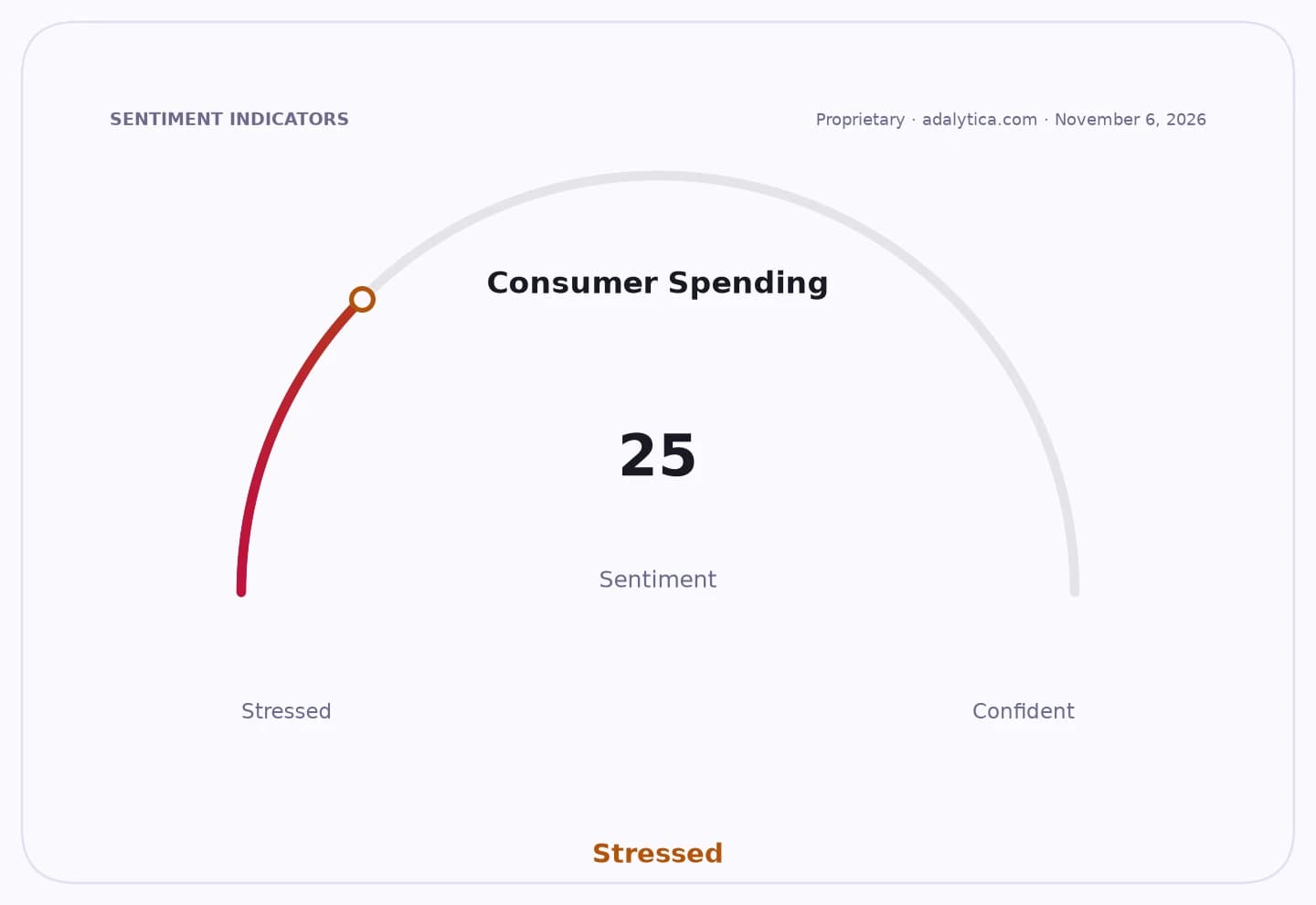
The most striking indicator may be sentiment, not prices. Adalytica’s Consumer Spending Sentiment gauge is in “Extreme Fear” at 7, while awareness remains neutral, a combination that often precedes cautious but still active buying. Food and grocery sentiment is less dire, but still inconsistent, reflecting how households are being forced to prioritize essentials while hunting for value on discretionary goods. That is the holiday trade in one sentence: consumers are nervous, but they are still shopping.
For investors, the opportunity is in the second-order effects. A sticky inflation backdrop can support retailers with scale, logistics and pricing discipline, even as it punishes weak operators with poor inventory control and thin margins. Amazon looks best placed to capture that flow, because it has the balance sheet, fulfillment network and marketplace reach to win share when shoppers become more selective. Staples and discount-oriented names should also hold up better than premium retailers if inflation keeps consumers cautious.
The bigger conclusion is that inflation may keep the Fed hawkish, but it does not automatically kill holiday demand. If anything, the market is underestimating how durable U.S. consumption has become in a higher-price world. That makes the current setup attractive for investors who want exposure to the retailers and consumer franchises that can thrive even when shoppers are squeezed. Stay long the scale players, keep an eye on holiday demand data, and treat inflation not as a demand destroyer, but as a share-shifter.
| Entity | Gains | Losses |
|---|---|---|
| Amazon | ▲Holiday traffic and market share | ▼Smaller retailers with weaker fulfillment |
| Consumer staples | ▲Defensive demand and pricing power | ▼Premium discretionary brands |
| Discount retailers | ▲Trade-down shoppers | ▼Full-price chains |
| Federal Reserve | ▲Justification for tighter policy | ▼Consumers and rate-sensitive sectors |