One in three Canadians say they are skipping meals because groceries are too expensive, a sign that food inflation is still biting hard enough to change daily behavior even as broader price growth cools.
Canada food inflation drives meal skipping
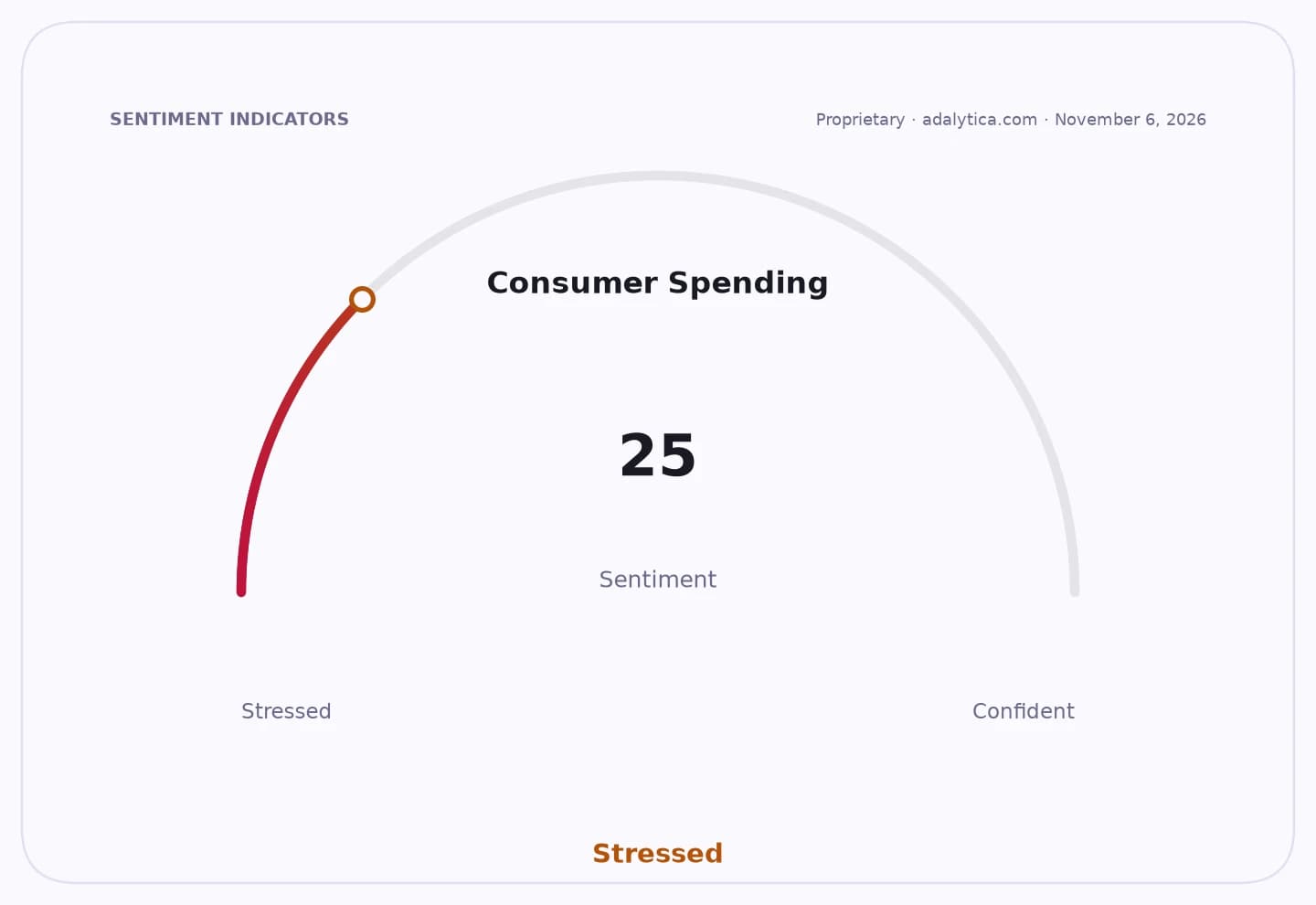
Consumer Spending
The finding matters because food costs are among the most visible and least flexible household expenses. When families cut meals instead of trading down, it suggests budgets are already stretched past discretionary spending and into basics such as food quality, quantity and frequency.
Sentiment Indicators
That pressure comes against a backdrop of elevated North American inflation and stubborn core price gains. U.S. consumer prices are still running far above pre-pandemic norms, with headline CPI at 336.298 in September and core CPI at 338.896, leaving policy makers and retailers alike dealing with consumers who remain price-sensitive even as inflation eases from its peaks.
For investors, the message is mixed. Discount and warehouse chains such as Costco and Walmart typically gain when shoppers become more value-conscious, and both stocks have been firm, with Costco closing at $1,065.59 on Nov. 5 and Walmart at $127.72. But the report also underscores a more fragile consumer backdrop that can eventually weigh on volumes, shrink basket sizes and force grocers to lean harder on promotions and private-label sales to protect traffic.
Kroger, which has said inflation and mix shifts are shaping sales and margin performance, sits squarely in that crosscurrent. Its shares closed at $69.43 on Nov. 5, up sharply from mid-summer lows, as investors position for a household-spending environment where affordability remains the dominant theme.
The broader narrative is that food inflation has moved from a macro statistic to a social strain, and that usually keeps pressure on policymakers, retailers and packaged-food suppliers alike. If grocery inflation cools further, the relief should show up first in meal frequency and basket growth; until then, investors are likely to keep favoring the retailers best able to win value-seeking shoppers.
| Entity | Gains | Losses |
|---|---|---|
| Walmart | ▲value-seeking traffic | ▼premium retailers |
| Costco | ▲bulk-value demand | ▼consumers trading down |
| Kroger | ▲essential-shop volume | ▼household budgets |
| Canadian households | ▲future relief from easing inflation | ▼meal frequency, food security |