Walmart, Costco and Kroger are all trading near or above key moving averages as investors bet grocery chains will keep gaining scale through mergers, delivery expansion and pricing power, even as consumer spending sentiment collapses to "Extreme Fear."
Walmart, Costco and Kroger Trade Above Key Averages
The stock moves underscore a simple investment theme: in a weak demand environment, the biggest grocers can use size to defend margins, absorb supply-chain shocks and pull share from smaller rivals. That matters now because food affordability remains under pressure and online grocery operations are becoming more operationally demanding, a combination that favors operators with deep logistics networks and strong balance sheets.
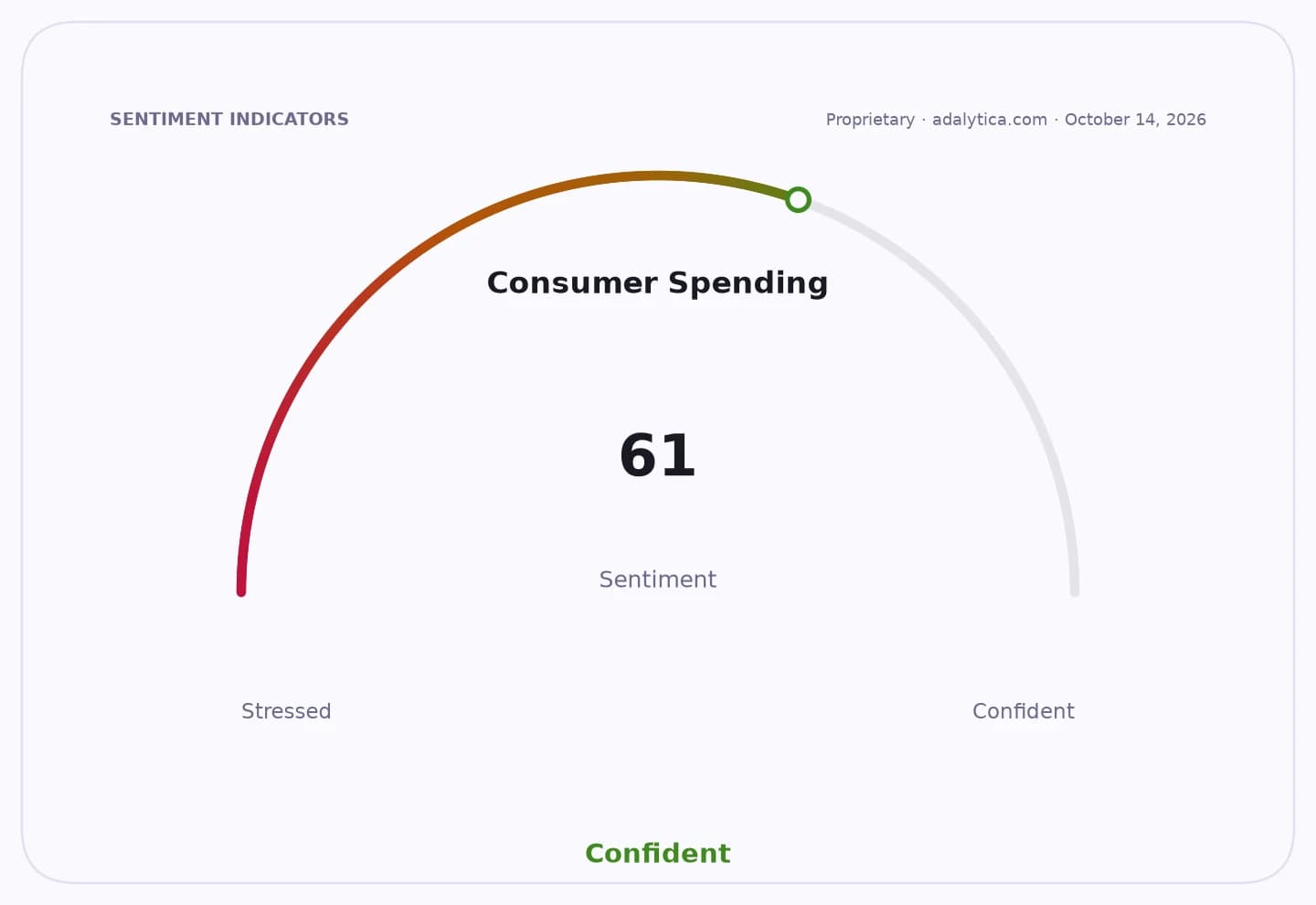
Sentiment IndicatorsⓘProprietary · adalytica.com · October 17, 2026
This is a snapshot — live sentiment, awareness and momentum for 130+ markets update continuously in the dashboard.Open AlphaPulse
Walmart closed at $118.81 on Oct. 16, above its 50-day moving average of $108.86 and just over its 200-day average of $117.86, while Costco ended at $989.11, above both its 50-day average of $933.79 and 200-day average of $964.32. Kroger finished at $63.63, also above its 50-day average of $58.79 and 200-day average of $62.88, signaling technical strength across the sector.
The setup comes as the Adalytica Consumer Spending Sentiment gauge fell to 4, labeled Extreme Fear, while Food and Grocery Spending Sentiment also sat at 4. The data points to consumers trading down, scrutinizing prices more closely and leaning harder on discount and bulk formats — a backdrop that supports large food retailers and squeezes regional players with less pricing flexibility.
Operational strain is also becoming part of the story. Albert Heijn has said no customer data was compromised, but delivery disruptions forced it to halt online grocery deliveries until Tuesday, highlighting how fragile grocery logistics can be when pricing errors and shipment delays hit at the same time. For investors, that reinforces the premium on scale, technology and fulfillment capacity, especially as grocery chains push deeper into e-commerce and subscription-style ordering.
Kroger’s latest filing said identical sales, excluding fuel and a labor dispute, rose in the first half of 2026, helped by eCommerce, natural foods, meat and seafood, bakery and pharmacy. Walmart said U.S. eCommerce continued to help comparable sales, while Costco’s latest trading showed the kind of sustained demand investors favor in an inflationary food environment.
The broader narrative is that grocery is consolidating around the largest national players, and the market is rewarding companies that can use mergers, membership models and omnichannel networks to turn consumer stress into market share gains. The next catalyst is whether the current consumer weakness turns into a prolonged trade-down cycle that accelerates consolidation, or whether food inflation and delivery costs start to pressure even the winners.
| Entity | Gains | Losses |
|---|---|---|
| Walmart | ▲Grocery share gains | ▼Smaller regional grocers |
| Costco | ▲Membership-driven traffic | ▼Price-sensitive rivals |
| Kroger | ▲eCommerce scale | ▼Struggling online grocers |
| Albert Heijn | ▲None yet | ▼Delivery reliability |