Rising prices and reduced food aid are leaving more low-income Americans unable to keep up, turning inflation from a macroeconomic statistic into a political and social stress test for President Donald Trump.
US food inflation strains low-income households
Consumer Spending
The clearest evidence is in places like Tucson, Arizona, where the Community Food Bank says weekly demand has climbed to 200,000 people from 150,000 before the administration’s cuts to food-assistance programs. For households already living paycheck to paycheck, that gap is not abstract: it is the difference between paying for rent and filling a refrigerator, or between buying meat at the supermarket and relying on donations from a food bank.
Sentiment Indicators
The report shows how inflation continues to hit hardest where incomes are weakest. Angelica Garcia, a hotel receptionist and former unemployed worker, says she now buys the cheapest available groceries because she cannot afford better-quality food. Oscar Ochoa, a 65-year-old former serviceman and bus driver, says meat has become too expensive and the food bank is essential for survival. Their stories reflect the broader economic reality that even with unemployment still relatively low at 4.2% in September, wage gains have not been enough for many households to absorb years of price increases.
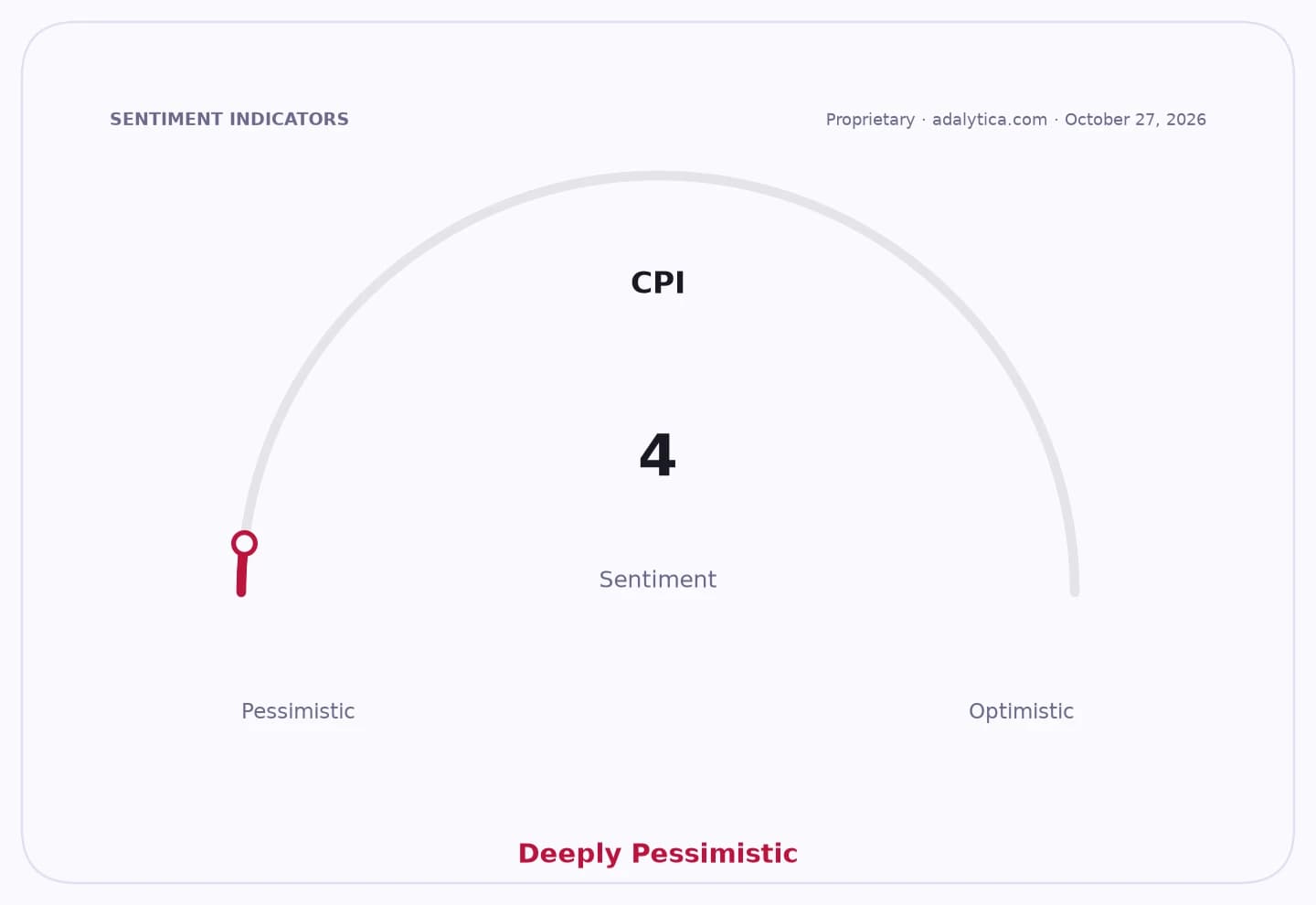
That matters economically because food inflation is among the most regressive forces in the economy. It drains discretionary spending from lower-income consumers first, leaving them with less room to absorb shocks and more likely to fall behind on other bills. The latest CPI reading shows headline prices still running well above pre-pandemic levels, while core inflation remains elevated, suggesting that the burden of high living costs has not disappeared even as the labor market cools only gradually. In practical terms, that means consumer demand is becoming more uneven: higher-income households can keep spending, while lower-income families are forced into trade-down behavior and public assistance.
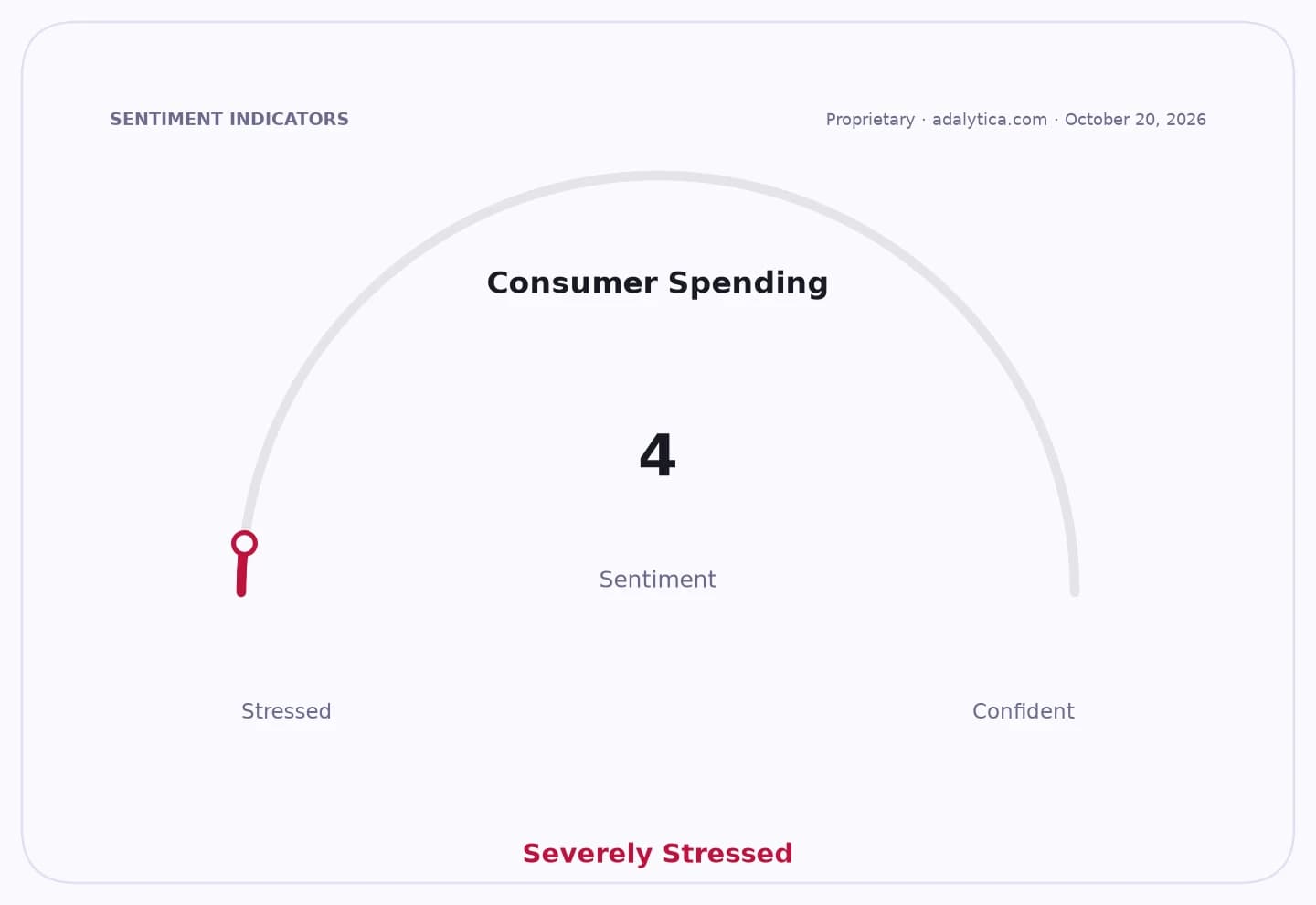
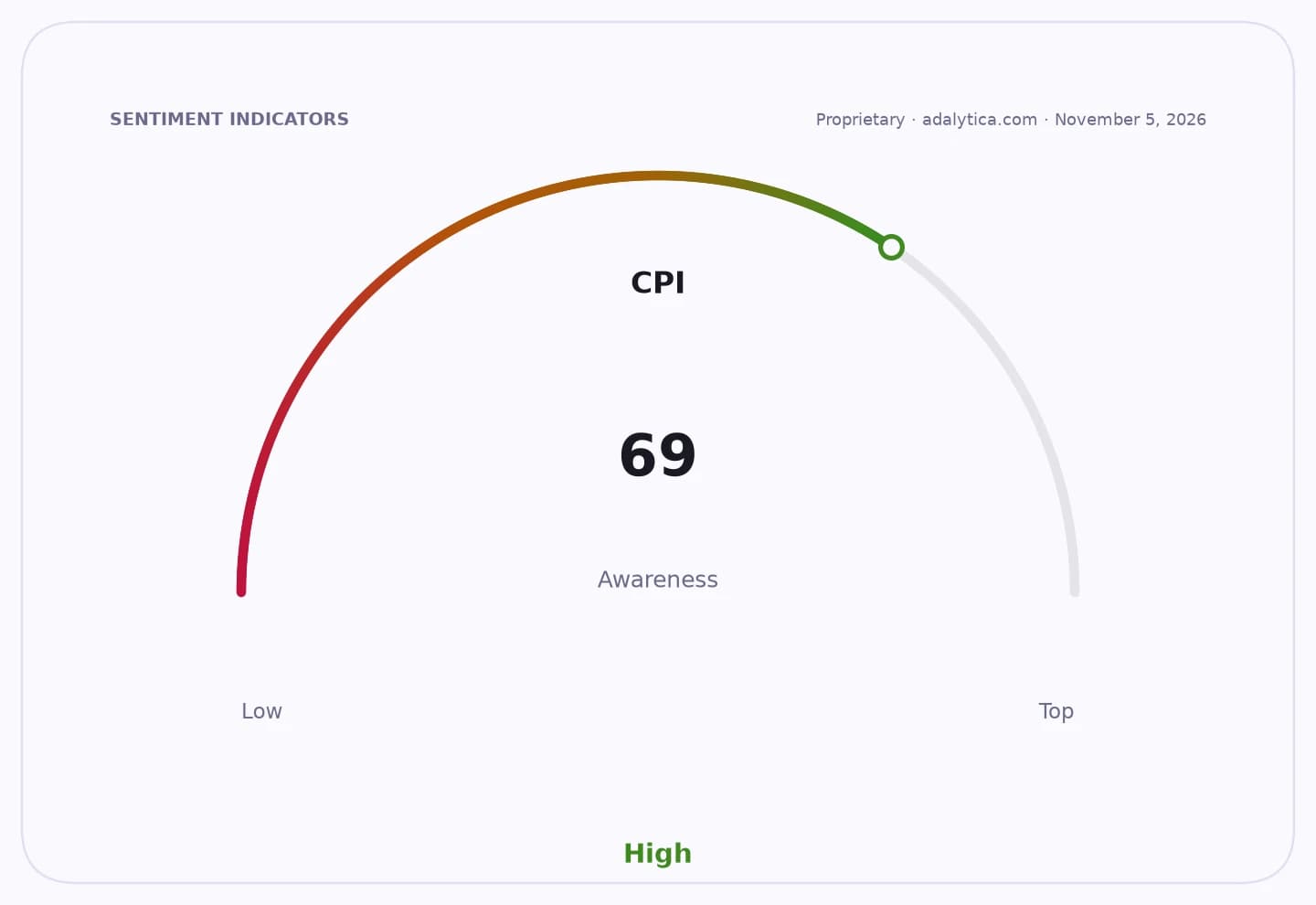
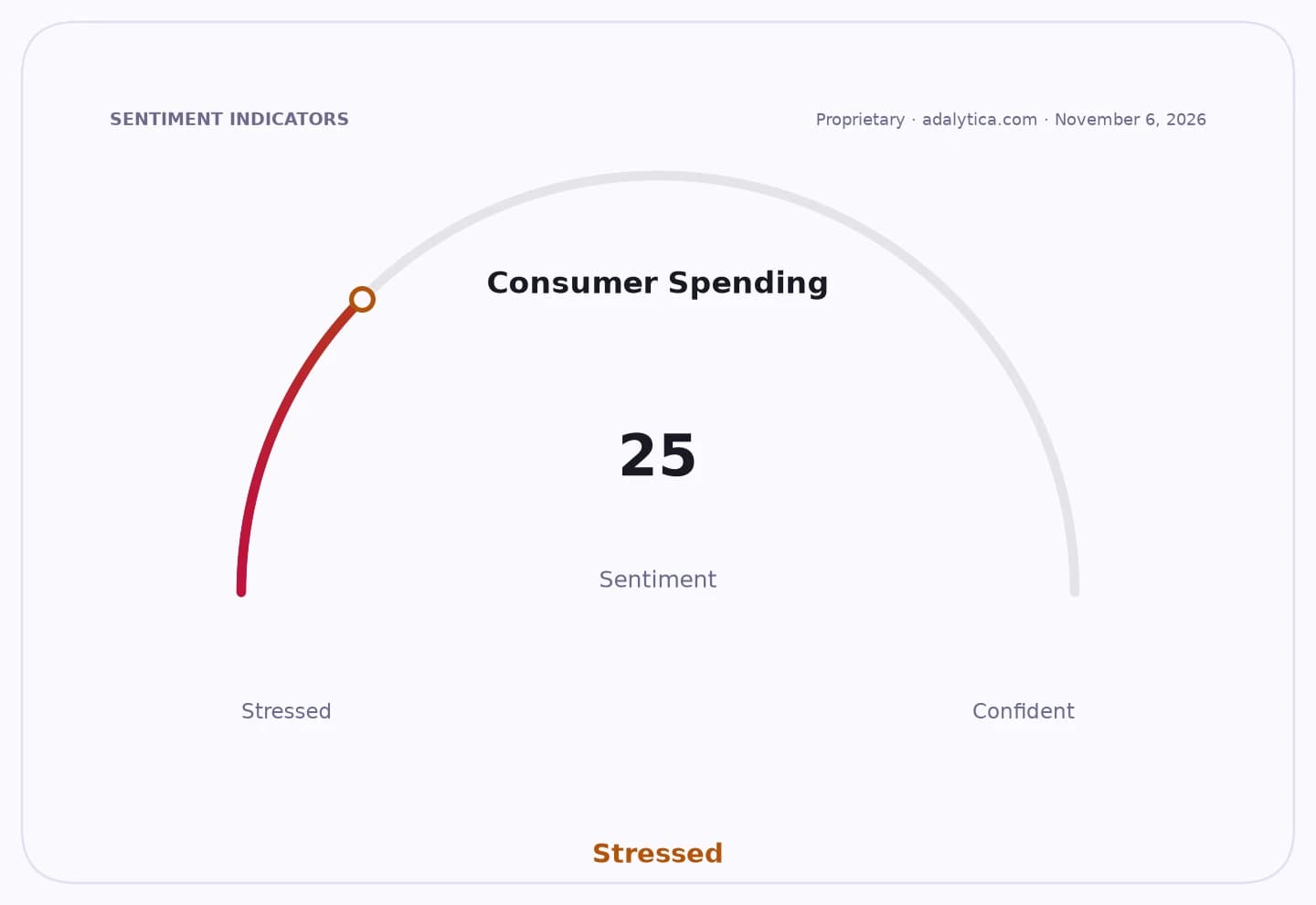
For investors, the implications run beyond grocery aisles. Persistent food-price pressure and weaker purchasing power can weigh on consumer-discretionary sales, especially for lower-priced retailers, packaged-food companies and restaurant chains serving budget-conscious customers. At the same time, demand for food banks and safety-net services signals an economy where nominal growth is not translating into broad-based household resilience, a warning sign for consumer credit quality and politically sensitive sectors tied to households on the edge. Adalytica’s consumer-spending sentiment gauge is in fear territory, underscoring the fragility of household demand even as awareness remains high.
Politically, the story sharpens the affordability debate heading into the midterms. When households feel poorer, they tend to blame the incumbent, regardless of whether the cause is inflation, policy cuts or both. Trump’s decision to scale back food aid gives Democrats a ready-made attack line, but the deeper narrative is that inflation’s aftereffects linger long after headline price growth slows. The households most exposed to that lag are the ones now lining up at food banks.
If price pressures remain sticky and aid remains constrained, the strain will keep showing up first in consumer sentiment, then in spending data, and eventually in the ballot box.
| Entity | Gains | Losses |
|---|---|---|
| Food banks | ▲Higher demand, more relevance | ▼Overstretched capacity |
| Low-income households | ▲Short-term access to food aid | ▼Purchasing power and nutrition |
| Trump administration | ▲None obvious | ▼Political blame for affordability pain |
| Consumer retailers | ▲Discount traffic from trade-down behavior | ▼Demand from squeezed households |