Inflation is once again the economic story voters cannot ignore, and that is exactly why it matters for investors watching Washington’s next moves. With less than three weeks before the midterm elections, new data show prices rising faster than the latest Social Security cost-of-living adjustment, deepening pressure on household budgets and keeping “affordability” at the center of the political debate.
Inflation Outpaces Social Security COLA, Boosts Staples

The gap is what counts. The Social Security Administration said nearly 72 million Americans will get a 3.6% COLA starting in January, or about $75 a month on average after inflation. But the Consumer Price Index rose 3.7% in September from a year earlier, meaning the benefit increase is already being overtaken by the cost of living. For retirees and lower-income households, that is not a technical mismatch — it is a reminder that everyday essentials are still getting more expensive.
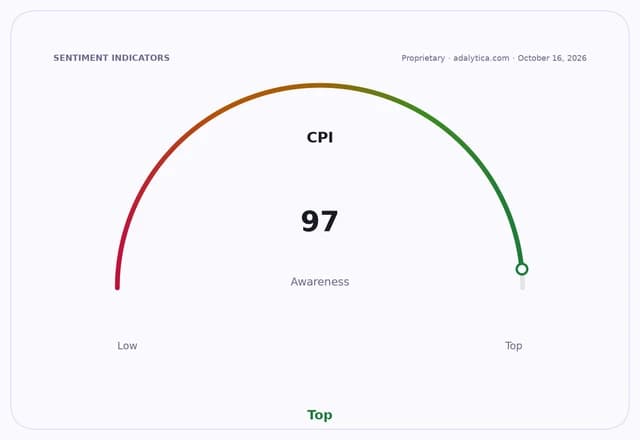
Sentiment IndicatorsⓘProprietary · adalytica.com · October 16, 2026
This is a snapshot — live sentiment, awareness and momentum for 130+ markets update continuously in the dashboard.Open AlphaPulse
That matters economically because inflation does not just shape consumer sentiment; it shapes spending power. When prices for food, medicine, housing and utilities keep climbing, households trim discretionary purchases and become more cautious even if wages or benefits are rising. That pressure ripples through the broader economy, from retailers to consumer staples to health-care providers, and it keeps policymakers under pressure to show they are responding.
For investors, the message is clearer still: inflation is keeping demand alive for defensive assets and value tied to necessities. Consumer staples exchange-traded fund XLP has been firming, with its latest close at 86.68, above both its 50-day and 200-day moving averages, while its relative strength index sat in overbought territory. That kind of resilience suggests investors are still paying up for companies selling goods people must buy regardless of the political cycle.
The contrast with consumer-discretionary exposure is more telling. XLY has lagged, closing at 113.41 and remaining below its 200-day moving average, a sign that shoppers may be prioritizing essentials over optional purchases as higher prices bite. In plain English, inflation tends to reward the boring businesses with pricing power and steady demand, while making life harder for companies dependent on upbeat household spending.
There is also a political layer that markets should not dismiss. President Donald Trump is trying to frame affordability as a campaign issue, promising that prices are already coming down and offering one-time payments for some Medicare recipients. But analysts quoted in the reporting say those checks are unlikely to solve a structural cost-of-living problem. If voters keep blaming the White House for prices, the next Congress could face more pressure for fiscal relief, benefit changes or additional targeted support.
That is why the Social Security debate matters beyond retirees. Lawmakers are already floating changes to the COLA formula, and the program’s projected insolvency by 2032 means the issue will not disappear after the election. Any move to cap or trim benefits could hit lifetime income for millions of Americans, while also influencing the politics of entitlement reform for years.
For long-term investors, the takeaway is simple: inflation is still a force that favors pricing power, defensive cash flow and diversified portfolios. If you own stocks for the next three to 10 years, not the next three weeks, this is another reminder to keep core exposure to high-quality businesses that can pass through costs and keep compounding even when voters are unhappy. Worth watching — and worth using as a cue to stay invested in resilient businesses.
| Entity | Gains | Losses |
|---|---|---|
| Consumer staples companies | ▲Pricing power, steady demand | ▼Less room for discretionary rivals |
| Consumer discretionary retailers | ▲— | ▼Shoppers trading down |
| Social Security recipients | ▲Larger COLA checks | ▼Inflation outpacing benefits |
| Policymakers/candidates | ▲Campaign focus on affordability | ▼Voter frustration over prices |