Small-business confidence slipped back below its long-term average in September as owners faced stubborn inflation, higher fuel costs and a tight labor market, a sign the main engine of U.S. hiring and local spending is losing some momentum.
NFIB Small-Business Optimism Falls in September
The National Federation of Independent Business said its optimism index fell to 97.9 from the prior month, just under its 98 long-term average, while its uncertainty gauge rose to 90, well above the historical average of 68. That combination matters because small firms account for a large share of U.S. employment and capital spending, and softer sentiment can translate into slower hiring, delayed expansion and more cautious pricing decisions.
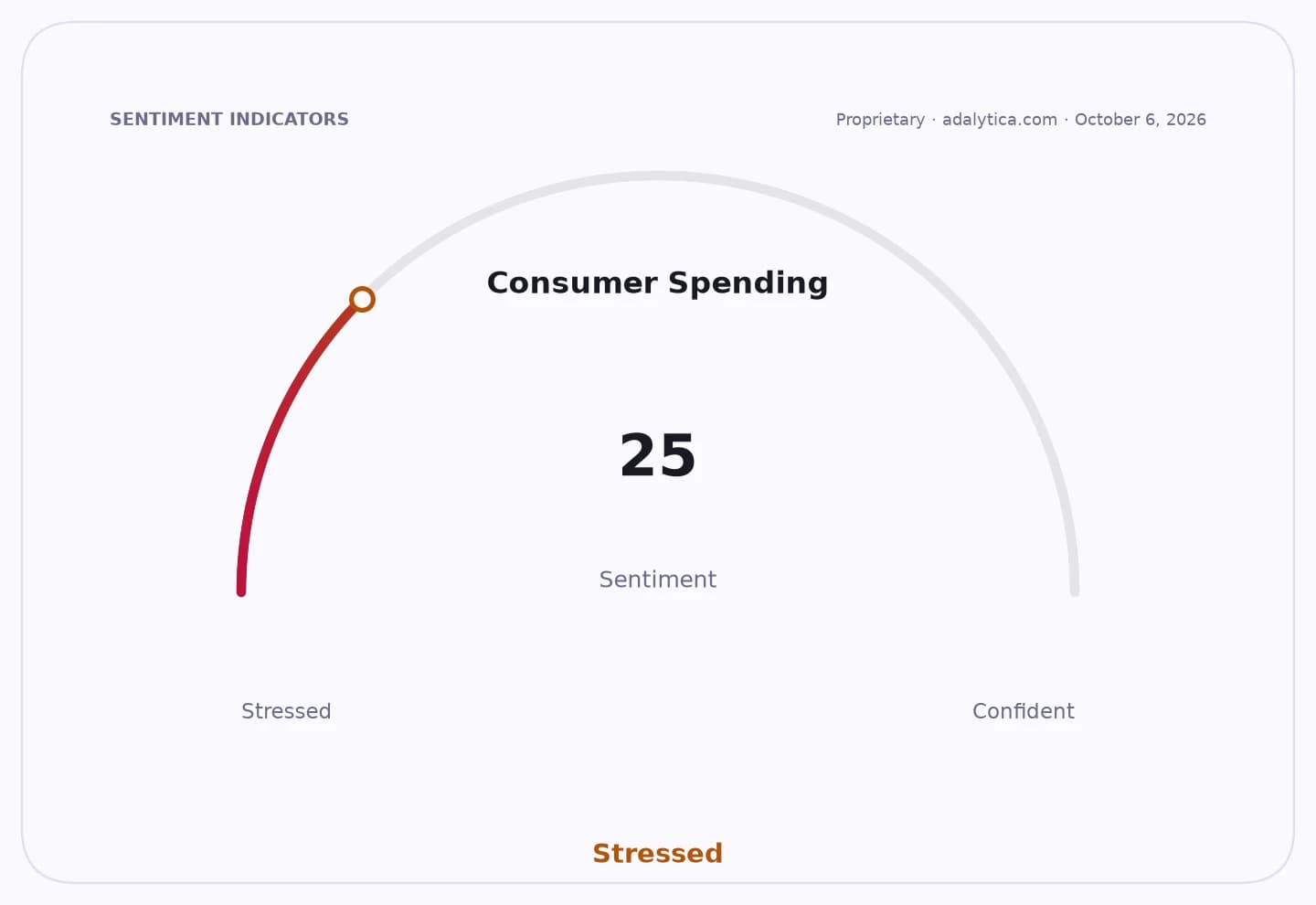
Sentiment IndicatorsⓘProprietary · adalytica.com · October 14, 2026
This is a snapshot — live sentiment, awareness and momentum for 130+ markets update continuously in the dashboard.Open AlphaPulse
The survey showed a clear deterioration in how owners view their own operations. The share calling current business health “good” dropped to 48% from 57% in August, while those saying “fair” climbed to 35% from 28%. NFIB said uncertainty increased and expansion plans eased, suggesting the pressure is moving from abstract worry into day-to-day business decisions.
Labor remains the biggest pain point. Owners again cited the availability of quality workers as their top problem, with shortages especially acute in construction, manufacturing and some service industries. NFIB said small firms are struggling to compete with large employers, particularly as data-center and artificial-intelligence investment pushes up demand for electricians, plumbers and HVAC workers.
Inflation ranked as the No. 2 concern, with energy costs adding to the strain. AAA data cited by NFIB showed average gasoline prices at $4.34 a gallon and diesel at $6.28, up sharply from $2.98 and $3.76 before the war with Iran began. Small-business owners also pointed to tariffs and imported goods costs, keeping price pressure elevated even as consumer spending has not fallen off a cliff.
That tension showed up in pricing plans. A seasonally adjusted net 31% of owners reported raising average selling prices in September, unchanged from August and more than double the historical average of net 14%. Another net 31% said they plan to raise prices in the months ahead, up 3 points from August, indicating that inflation is still being passed through rather than absorbed.
There were pockets of resilience. Danny Reynolds, who runs Stephenson’s of Elkhart, an Indiana clothing store approaching its 95th anniversary, said the climate feels “erratic” but that he remains “cautiously optimistic” heading into the holiday season. His bridal business is strong and his menswear section is expanding, underscoring that demand has not vanished even as margins stay under pressure.
For investors, the NFIB report reinforces a familiar split in the consumer economy: spending is holding up, but the smallest businesses are under more stress from wages, energy and tariffs. That keeps pressure on policymakers watching for signs that inflation is becoming sticky again while also raising the risk that smaller employers pull back on hiring and investment.
Small-cap retailers, local service firms and labor-intensive businesses stand to feel the squeeze first, while larger companies with scale, pricing power and access to capital are better positioned to absorb higher costs. The next read on the trend will come from upcoming inflation data and the next round of small-business surveys, which will show whether September was a wobble or the start of a broader cooling.
| Entity | Gains | Losses |
|---|---|---|
| Large employers | ▲More wage-setting power | ▼Smaller labor pool pressure |
| Small businesses | ▲Some still see demand holding up | ▼Higher costs, weak hiring |
| Consumers | ▲Continued access to goods/services | ▼More price increases ahead |
| Investors in large-cap retailers | ▲Better pricing power resilience | ▼Small-cap retail margins |