A tougher winter at the grocery store is becoming a real possibility as food costs start to firm again just as consumers are already showing signs of strain.
Grocery inflation pressures Costco and Kroger
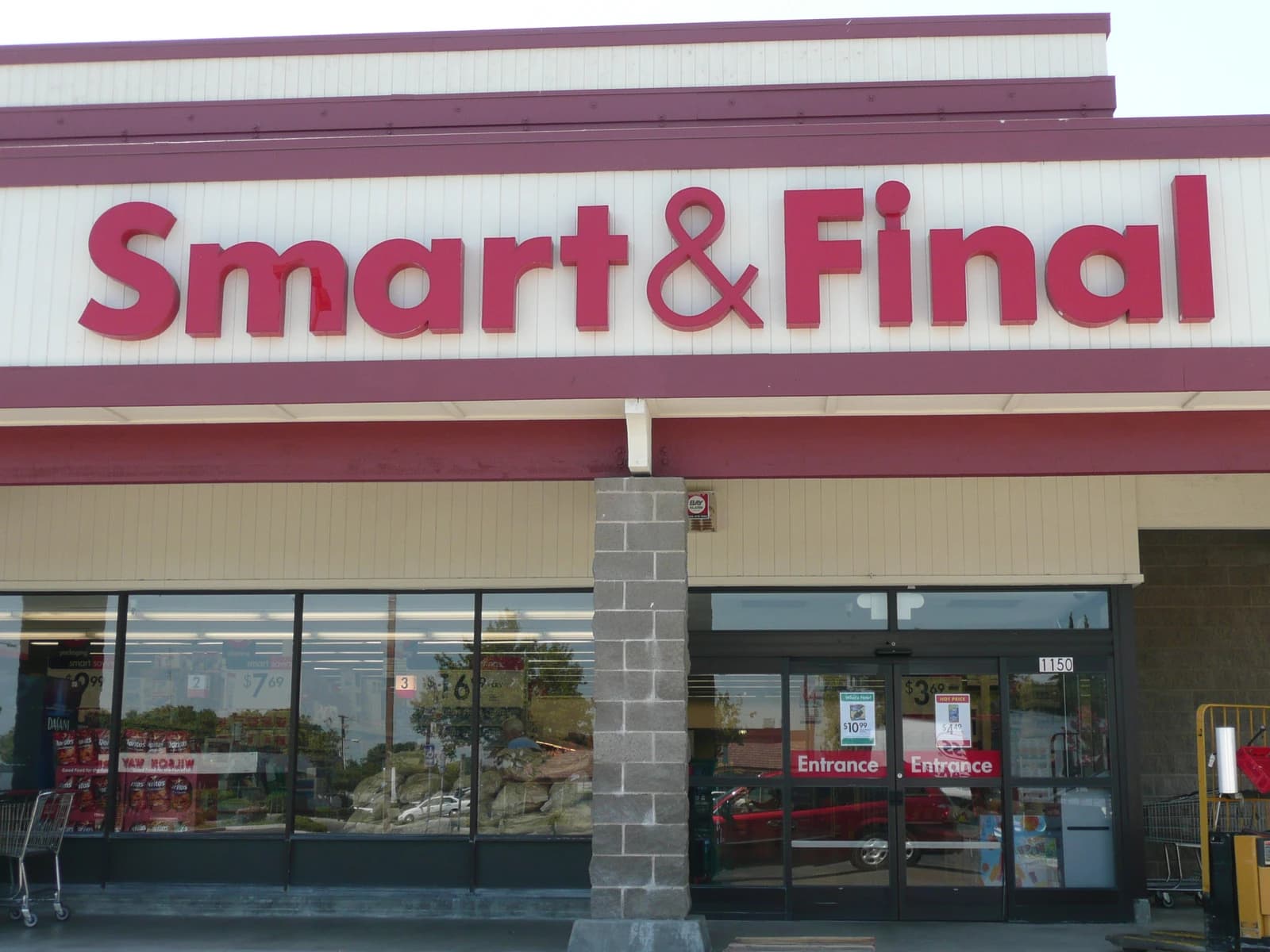
That matters because groceries are the most visible line item in household budgets: when food prices accelerate, families cut elsewhere, retailers lose traffic and inflation stops looking temporary. The latest data points to that squeeze building again. U.S. consumer prices have risen to 334.131 in August from 333.979 in May, while producer prices for all commodities have climbed to 287.928 from 290.2 over the same stretch after earlier swings, a reminder that food chains remain vulnerable to input shocks even when broader inflation looks contained.
Sentiment IndicatorsⓘProprietary · adalytica.com · October 12, 2026
This is a snapshot — live sentiment, awareness and momentum for 130+ markets update continuously in the dashboard.Open AlphaPulse
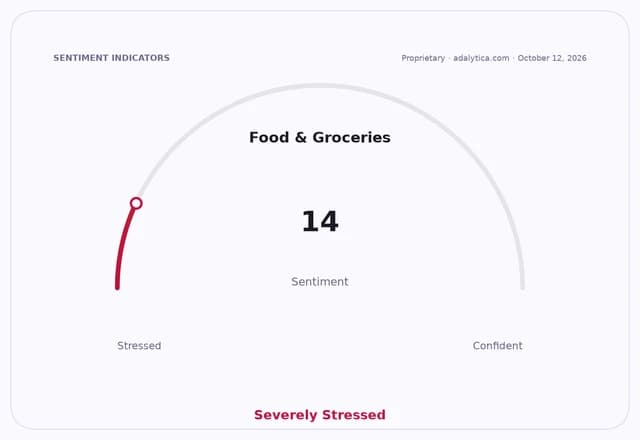
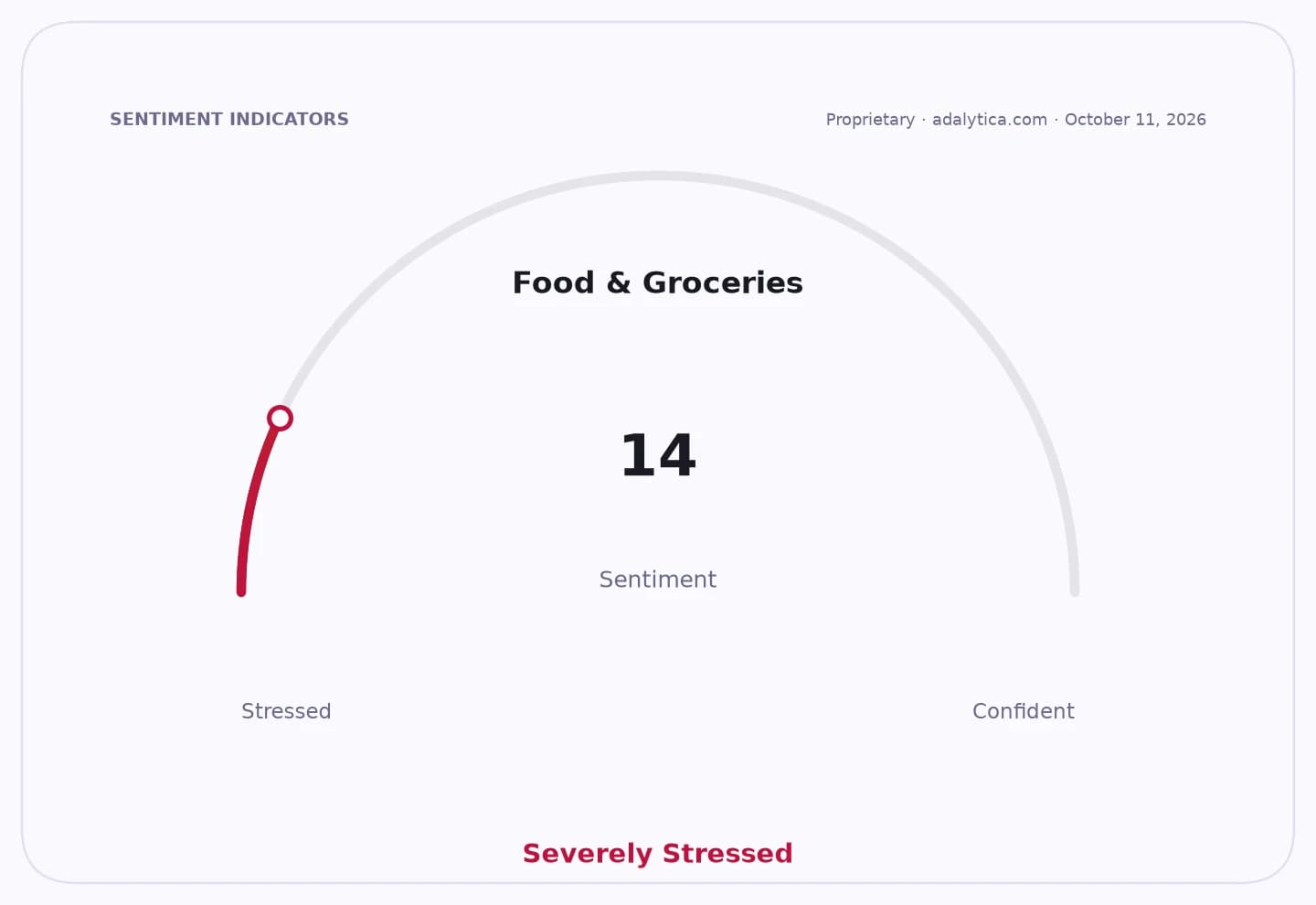
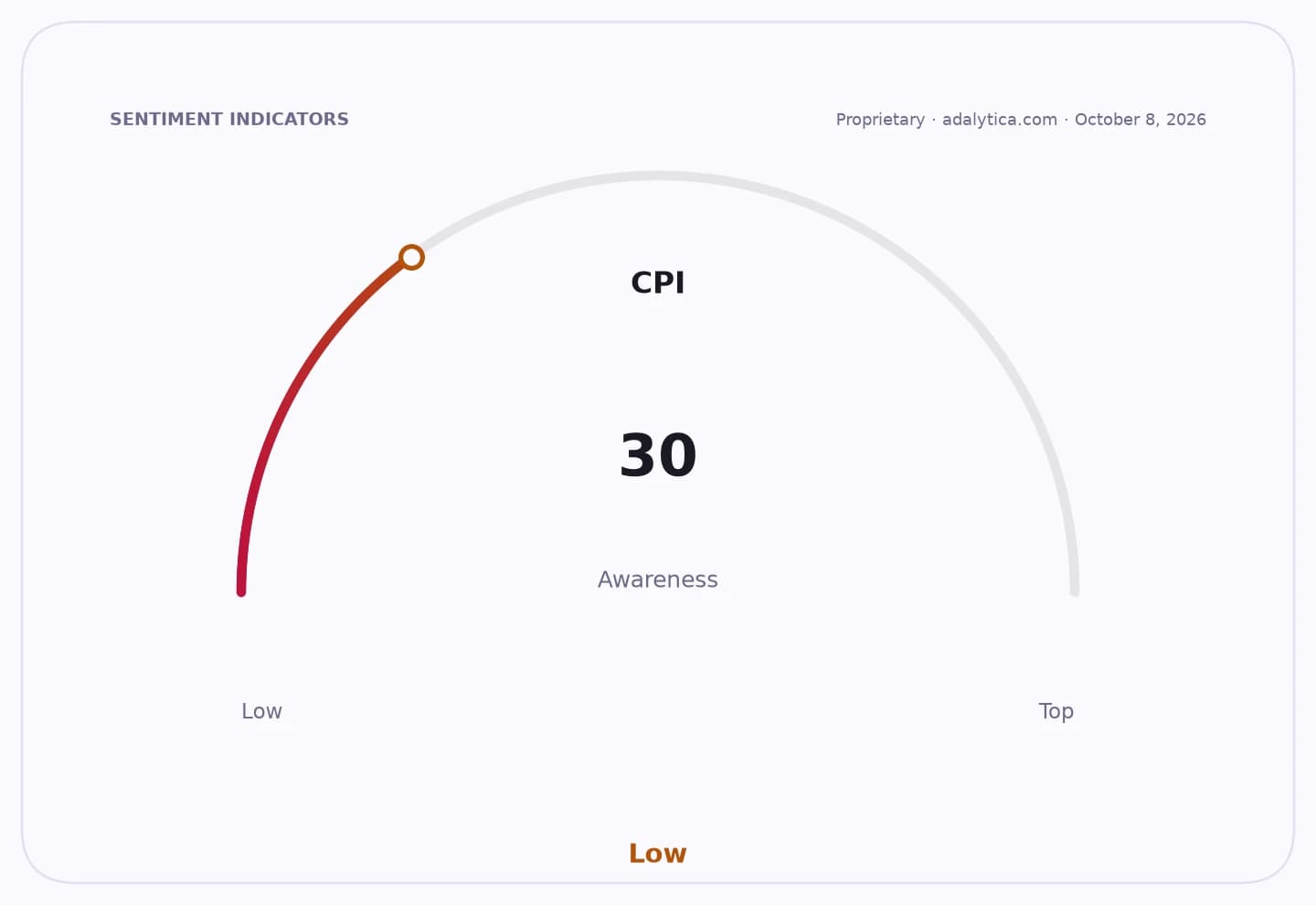
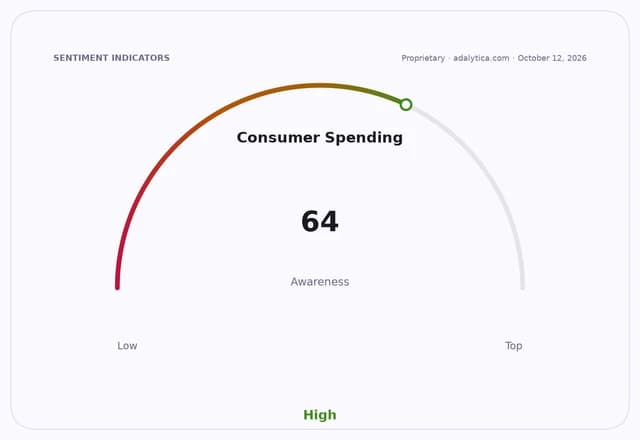
The market is already pricing in a defensive turn. Adalytica’s Food and Grocery Spending Sentiment has collapsed to 14, or “Extreme Fear,” after a one-day drop of 64 points and a seven-day slide of 86 points. That kind of fear usually shows up at the checkout before it shows up in official data. Consumer spending sentiment is still neutral, but the underlying trend has weakened, and the broader inflation gauge remains elevated. In other words, shoppers may still be spending, but they are doing it with far less confidence and far more price sensitivity.
For investors, that sets up a stark split. Staples-heavy funds such as the Consumer Staples ETF XLP have held up better than the market, with the fund trading around 83.43, modestly above both its 50-day and 200-day moving averages. But the recent slide in momentum, with the relative strength index easing and the MACD softening, suggests the trade is crowded rather than clean. The message is not that grocery inflation is a disaster for staples; it is that the wrong names can get squeezed if shoppers trade down, baskets shrink and margins narrow.
CPIAUCSL vs PPIACO — macro contextadalytica.com
Explore this data interactively — full history, time series and cross-market comparisons.Open AlphaPulse
The better opportunity, in my view, is not the grocers themselves but the picks-and-shovels around food inflation. The Invesco DB Agriculture Fund DBA has been firm, while the iShares MSCI Global Agriculture Producers ETF MOO has surged and then cooled, still reflecting a market that expects agriculture pricing power to remain important. That matters because the next winter shock is more likely to come from supply, logistics, tariffs and commodity costs than from demand alone. Retailers such as Kroger and Costco are already signaling the pressure: Kroger says identical sales rose on stronger e-commerce, pharmacy and meat and seafood demand, while Costco warns that supplier costs, tariffs and commodity prices can hurt margins and force markdowns or shortages.
The real narrative here is that groceries are turning into a battleground for inflation, policy and consumer behavior all at once. If wholesale costs keep drifting higher and households keep getting more selective, the winners will be the chains and suppliers with scale, sourcing power and private-label leverage. The losers will be the weaker regional players and any consumer-facing business counting on stable basket sizes.
For investors, the takeaway is clear: treat grocery inflation as a winter catalyst, not a seasonal footnote. Own scale, agriculture exposure and pricing power. Avoid businesses that need cheerful consumers to make the quarter.
| Entity | Gains | Losses |
|---|---|---|
| Costco / Kroger | ▲pricing power | ▼margin pressure |
| Agriculture ETFs / producers | ▲higher crop and input prices | ▼volatile demand |
| Consumers | ▲some discount hunting | ▼higher grocery bills |
| Smaller grocers | ▲little | ▼traffic and profitability |