Supermarket prices in Greece turned negative in September, a rare signal that food inflation is easing and that organized retailers are passing through lower procurement costs faster than shoppers have seen in the past two years.
Greece supermarket prices fall as food inflation eases
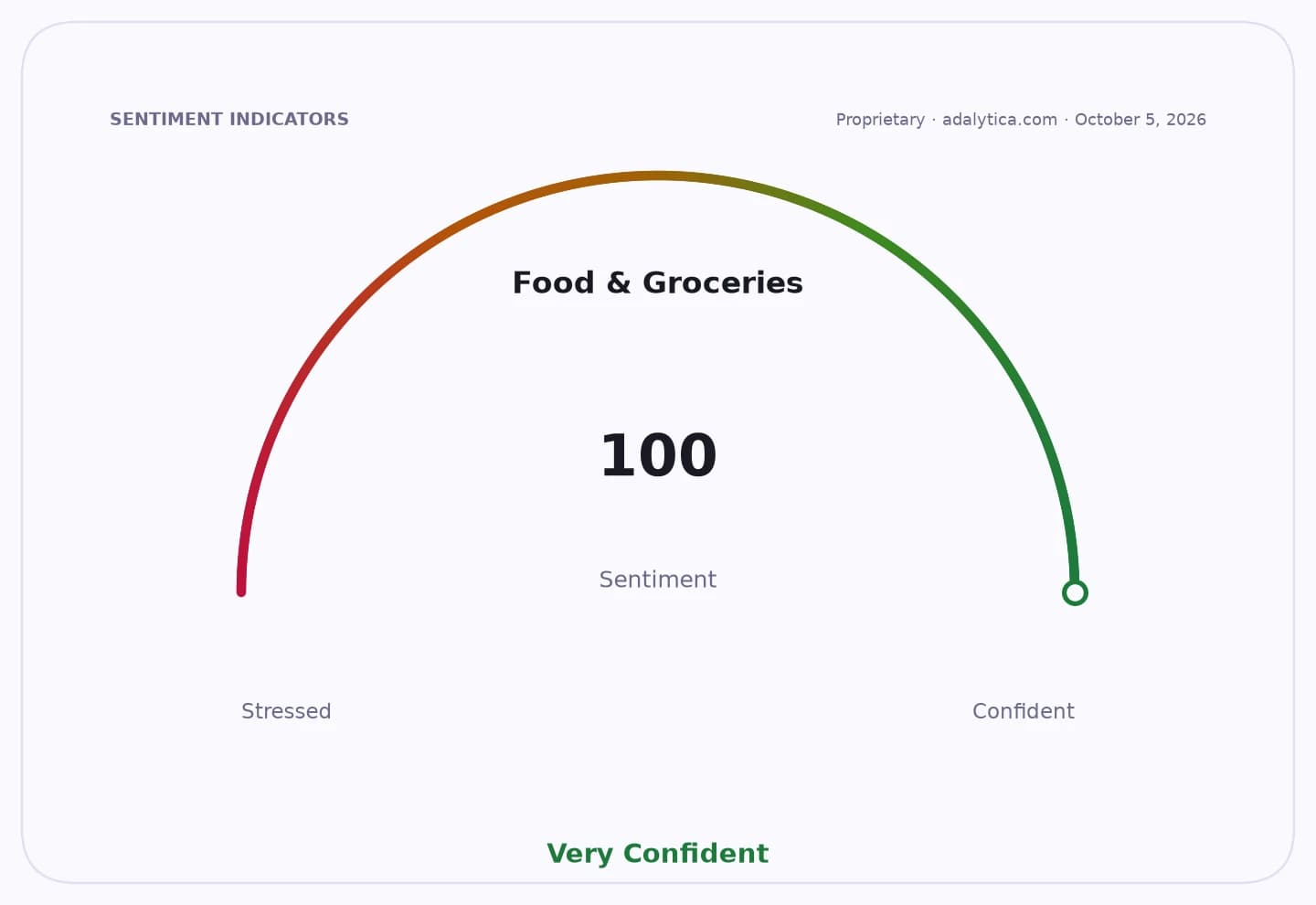
The IELKA index fell 0.75% from a year earlier and 1.65% from August, with the rolling 12-month increase slowing to just 1.07%. For households already squeezed by earlier food-price shocks, that matters immediately: groceries are one of the most frequent and politically sensitive parts of inflation, and any cooling there tends to feed quickly into consumer sentiment and spending behavior.
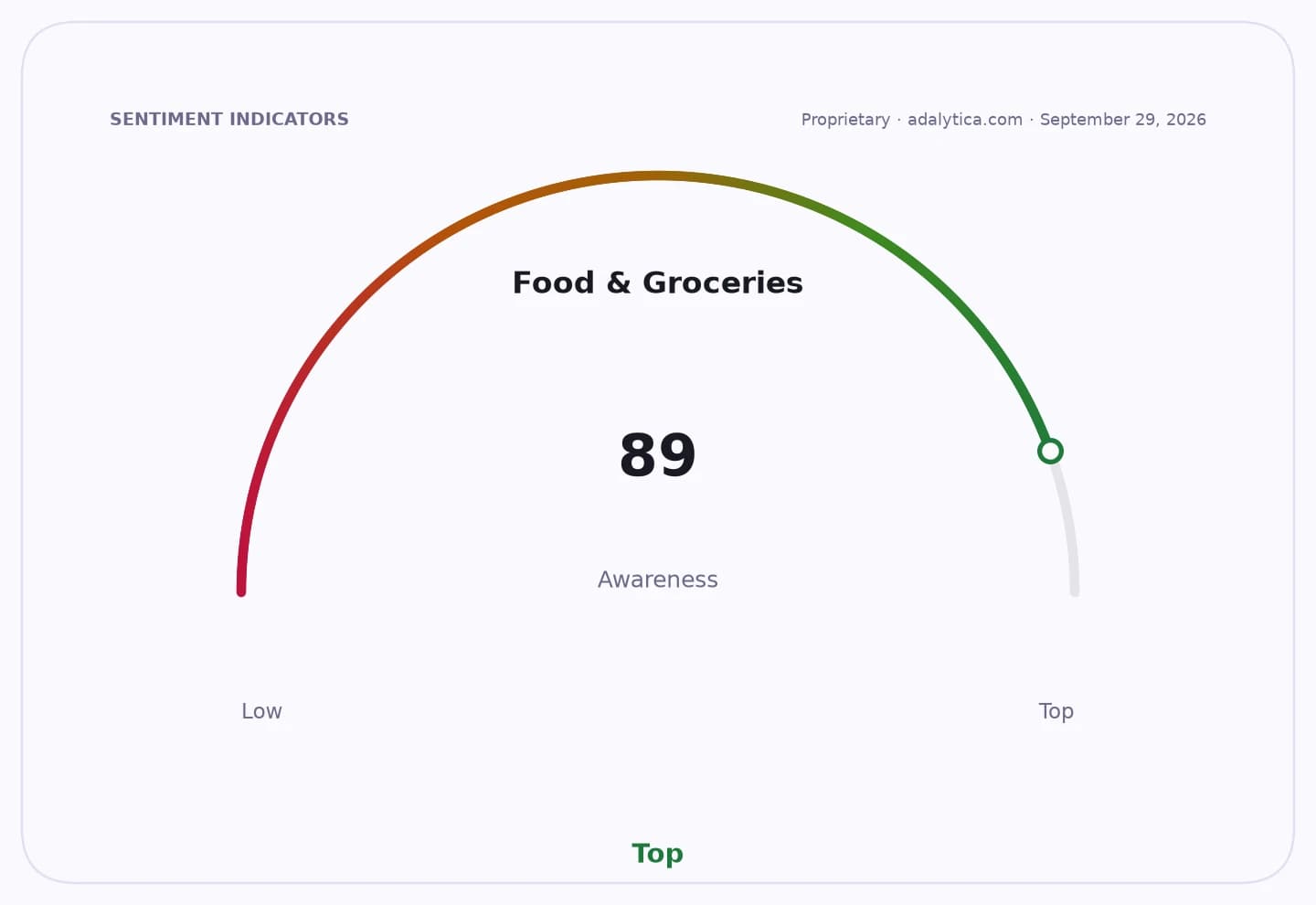
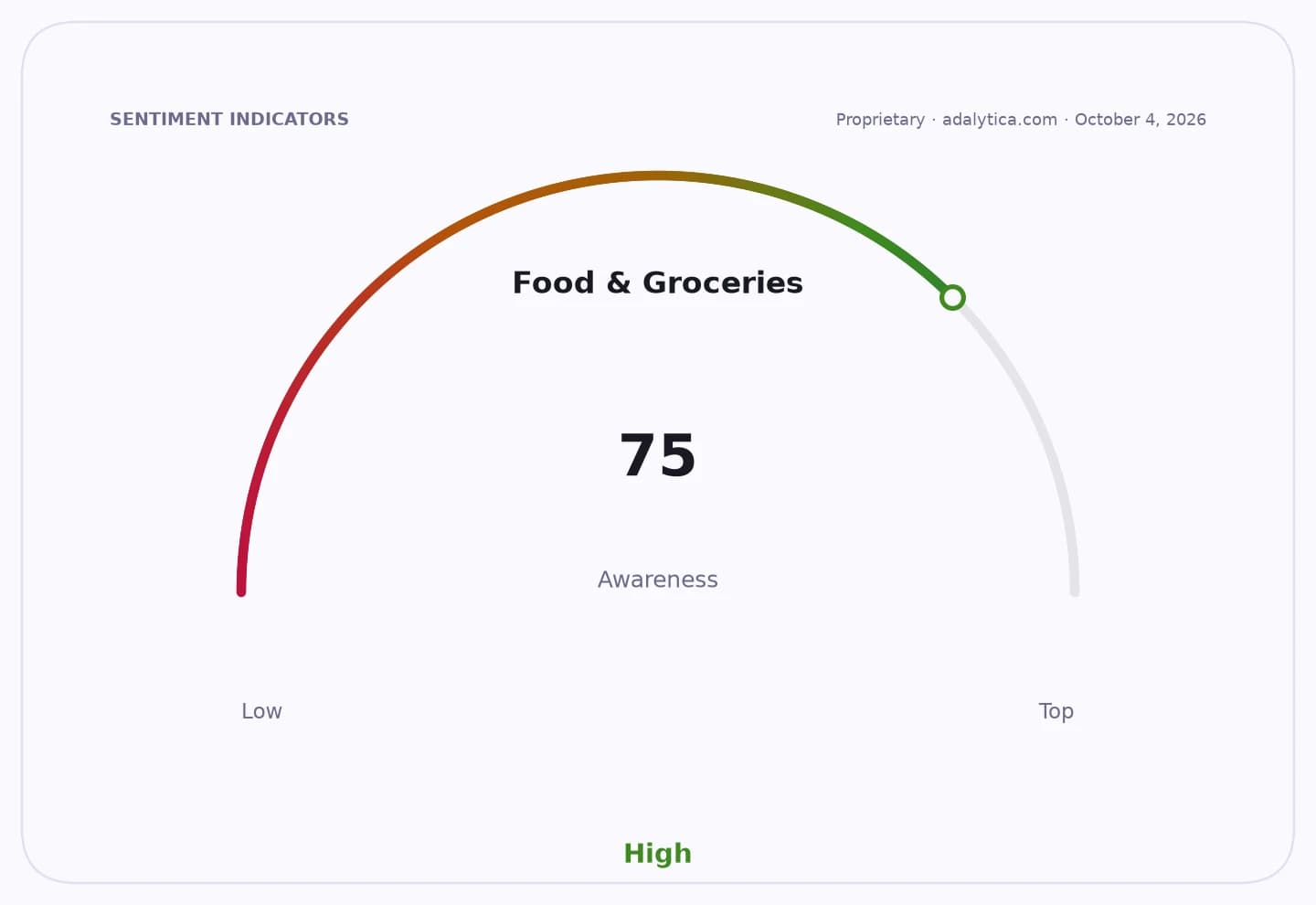
Sentiment IndicatorsⓘProprietary · adalytica.com · October 5, 2026
This is a snapshot — live sentiment, awareness and momentum for 130+ markets update continuously in the dashboard.Open AlphaPulse
The decline was broad enough to matter. Of the 23 categories tracked, 13 still rose and 10 fell, but the biggest moves were down in fresh fruit and vegetables, down 5.46%, breakfast and beverages, down 4.61%, pet food, down 4.20%, fresh fish and seafood, down 2.70%, and fresh and frozen dough products, down 2.53%. Fresh beef also fell 4.21%, as producer and import prices normalized. By contrast, gains were concentrated in nuts, appetizers and preserved items, biscuits and chocolate, baby food and cold cuts, where pricing remained firmer.
For investors, the message is bigger than a single monthly reading. Greek supermarket chains are demonstrating the kind of operating leverage that can protect volume even when inflation fades: scale purchasing, faster inventory turnover, private-label expansion, tighter logistics and aggressive price competition. That is exactly the mix that can keep organized retail resilient when consumers are hunting for value. It also suggests the market may be underestimating which grocers can hold share as shoppers become more price sensitive and promotional intensity rises.
The timing matters. A benign food-price backdrop can support real disposable income, helping offset pressure from other household costs and making it easier for consumers to trade down rather than cut back outright. Adalytica’s Consumer Spending Sentiment gauge still shows Fear, but grocery-spending sentiment has jumped to Extreme Greed, a sign that the category is drawing attention as a defensive necessity rather than a discretionary luxury. That dynamic tends to favor the biggest chains and the strongest private-label players, not smaller competitors with less purchasing power.
The investment case here is straightforward: when inflation cools in staples, the winners are the retailers with scale, data-driven replenishment and pricing power at the shelf, while suppliers and weaker rivals absorb the squeeze. In Greece, that keeps supermarket chains in the spotlight as a defensive exposure with upside from margin discipline and market share gains. If this disinflation broadens, the next leg of the story is not just lower ticket prices — it is a more durable reset in food retail profitability and consumer behavior.
| Entity | Gains | Losses |
|---|---|---|
| Greek supermarket chains | ▲Volume resilience, share gains | ▼Margin pressure from promotions |
| Consumers | ▲Lower grocery bills | ▼Less pricing leverage on premium goods |
| Private-label grocers | ▲Better value proposition | ▼Branded suppliers |
| Food suppliers | ▲Faster demand normalization | ▼Lower shelf prices |