Canadian food banks are seeing record demand because grocery inflation is forcing more families to make impossible trade-offs, and that matters far beyond the charity sector.
Canada food bank demand rises as grocery inflation persists
CPI
Food Banks Canada said monthly visits have climbed to 2.3 million, while nearly 10 million people nationwide are struggling with food insecurity. One in five food banks is running out of food before it can meet client demand, a stark sign that elevated living costs are still outrunning wages for many households.
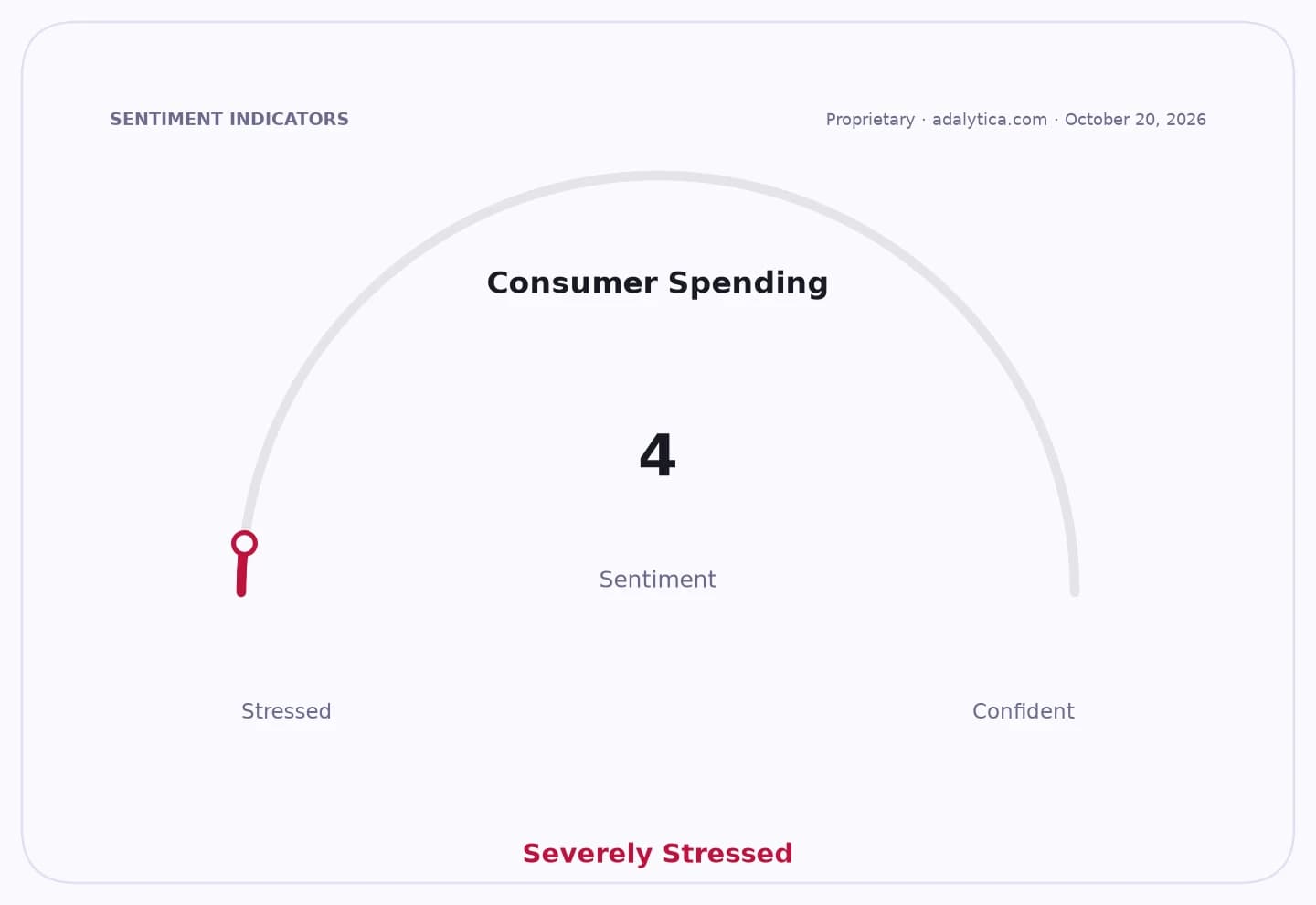
Sentiment Indicators
The report lands against a broader inflation backdrop that explains why the strain is so persistent. Canada’s consumer price index remains well above pre-pandemic norms, with the latest data showing prices still climbing, while food costs have stayed sticky even as some other parts of inflation have cooled. In other words, lower headline inflation does not mean relief at the checkout line.
That is why this matters to investors. When households are under pressure, spending habits change. Canadians trade down to private label, hunt for promotions, and lean harder on discount chains and warehouse clubs. That can be a tailwind for value retailers such as Walmart and Costco, which have long used scale, pricing power and broad grocery assortments to win budget-conscious shoppers. It also raises a warning flag for premium grocers and discretionary retailers that depend on consumers feeling secure enough to spend freely.
The macro signal is just as important. Food insecurity at this scale is not only a social problem; it is a sign that a meaningful slice of the economy is still living paycheck to paycheck. That can restrain broader consumption, keep pressure on policymakers to focus on affordability, and limit how quickly confidence recovers even if inflation eases further.
For long-term investors, the lesson is simple: in inflationary periods, the best businesses are often those that help consumers save money, not spend more of it. That makes grocery value leaders and efficient retailers worth watching, especially if cost pressures keep driving shoppers toward necessity-based spending.
| Entity | Gains | Losses |
|---|---|---|
| Walmart | ▲More value-seeking shoppers | ▼Premium retailers |
| Costco | ▲Membership-driven traffic | ▼Households paying full price |
| Food banks | ▲More awareness and donations | ▼Demand overwhelms supply |
| Canadian consumers | ▲More focus on essentials | ▼Less room in household budgets |