Americans are still feeling squeezed because inflation slowing is not the same thing as prices coming down, and the gap between paychecks and the cost of daily life remains wide.
U.S. Consumers Feel Inflation After Prices Stay High
That distinction matters for investors because consumer spending drives the U.S. economy, and the household budget strain that shows up at the grocery store, the rent check and the utility bill can linger long after the inflation rate cools. In other words, a lower inflation reading may be good macro news, but it does not instantly restore purchasing power.
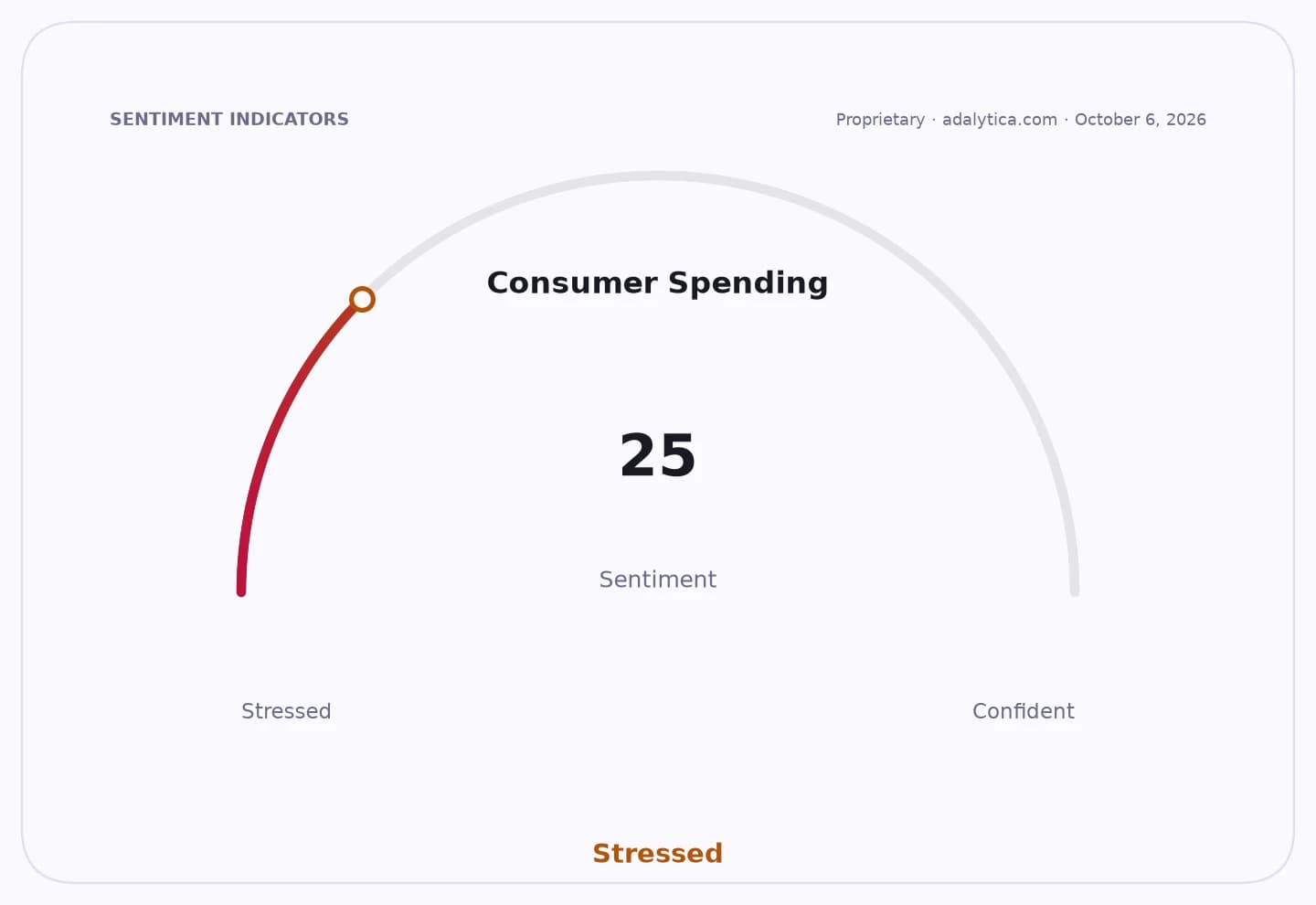
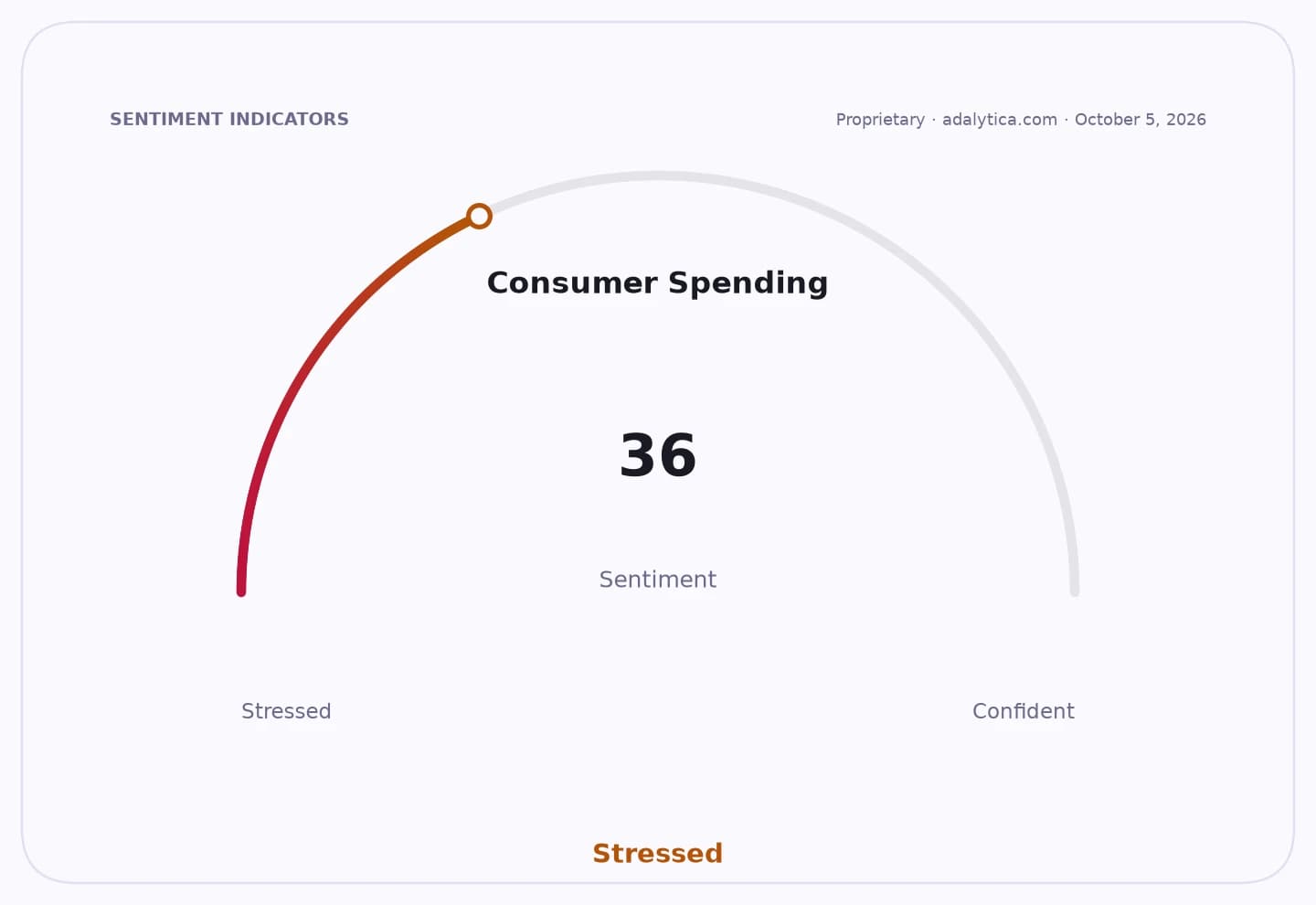
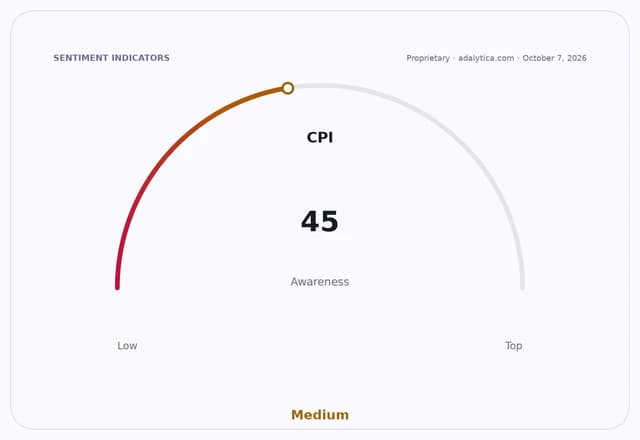
Sentiment IndicatorsⓘProprietary · adalytica.com · October 7, 2026
This is a snapshot — live sentiment, awareness and momentum for 130+ markets update continuously in the dashboard.Open AlphaPulse

Food is the clearest example. One of the sharpest forces keeping households on edge is that common grocery items are still more than 50% more expensive than they were in 2020. Inflation can ease from its peaks, but it does not rewind prices to old levels. Once a family has been forced to reset its budget at a much higher price point, “cooling inflation” can feel like a technical victory rather than real relief.
The second problem is income. Wages have improved for many workers, but for a large share of households they have not caught up with the full cost of living. North Carolina illustrates the point: nearly 41% of households there fall into the ALICE group — Asset Limited, Income Constrained, Employed — meaning they have jobs but still struggle to cover basic needs. That is a powerful reminder that employment alone does not guarantee financial security if housing, energy, transportation and health costs consume most of the paycheck.
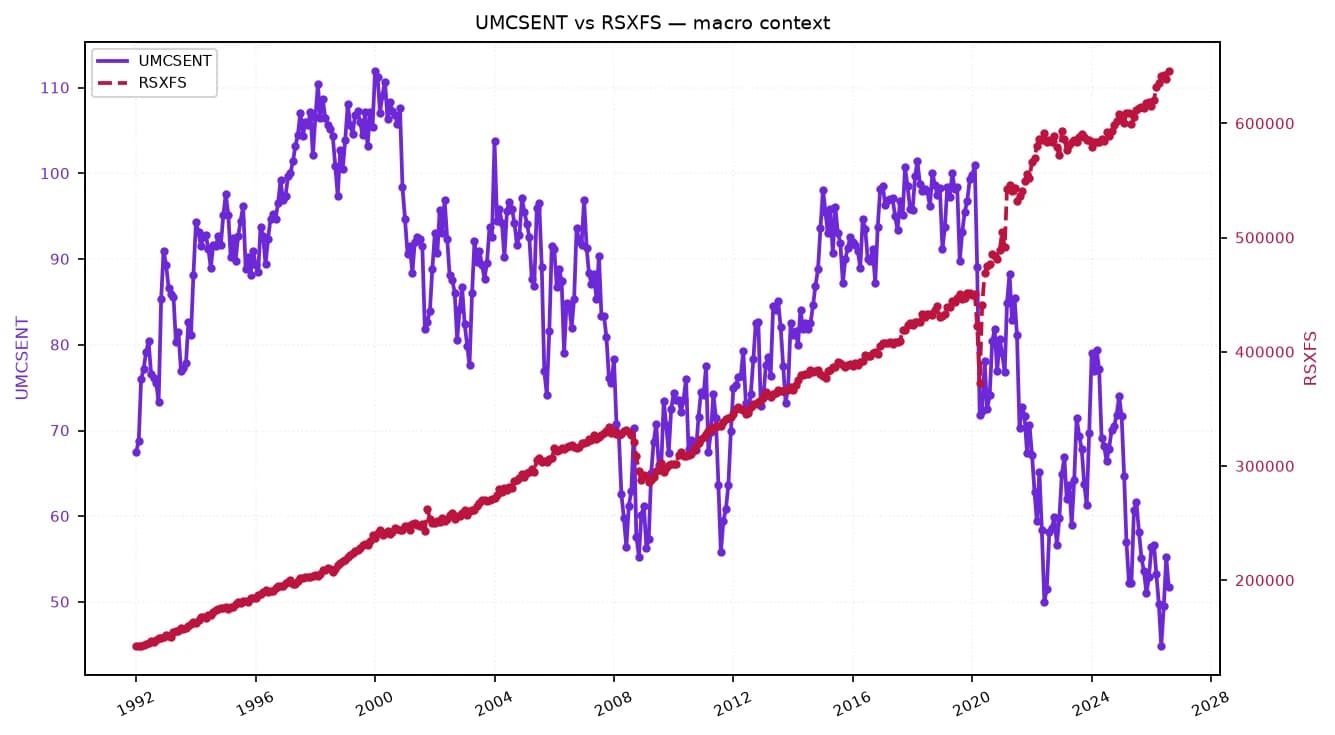
CPIAUCSL vs RSXFS — macro contextadalytica.com
Explore this data interactively — full history, time series and cross-market comparisons.Open AlphaPulse
Housing remains the biggest drag on that equation. When rent or mortgage payments take a large bite out of income, even modest increases in food or transportation costs can force households to cut back elsewhere. Energy and healthcare add another layer of pressure. That is why many families turn to government support: roughly one in six North Carolina residents relies on SNAP to help buy food. When a wealthy economy still needs that much assistance to keep food on the table, the headline inflation rate is only part of the story.
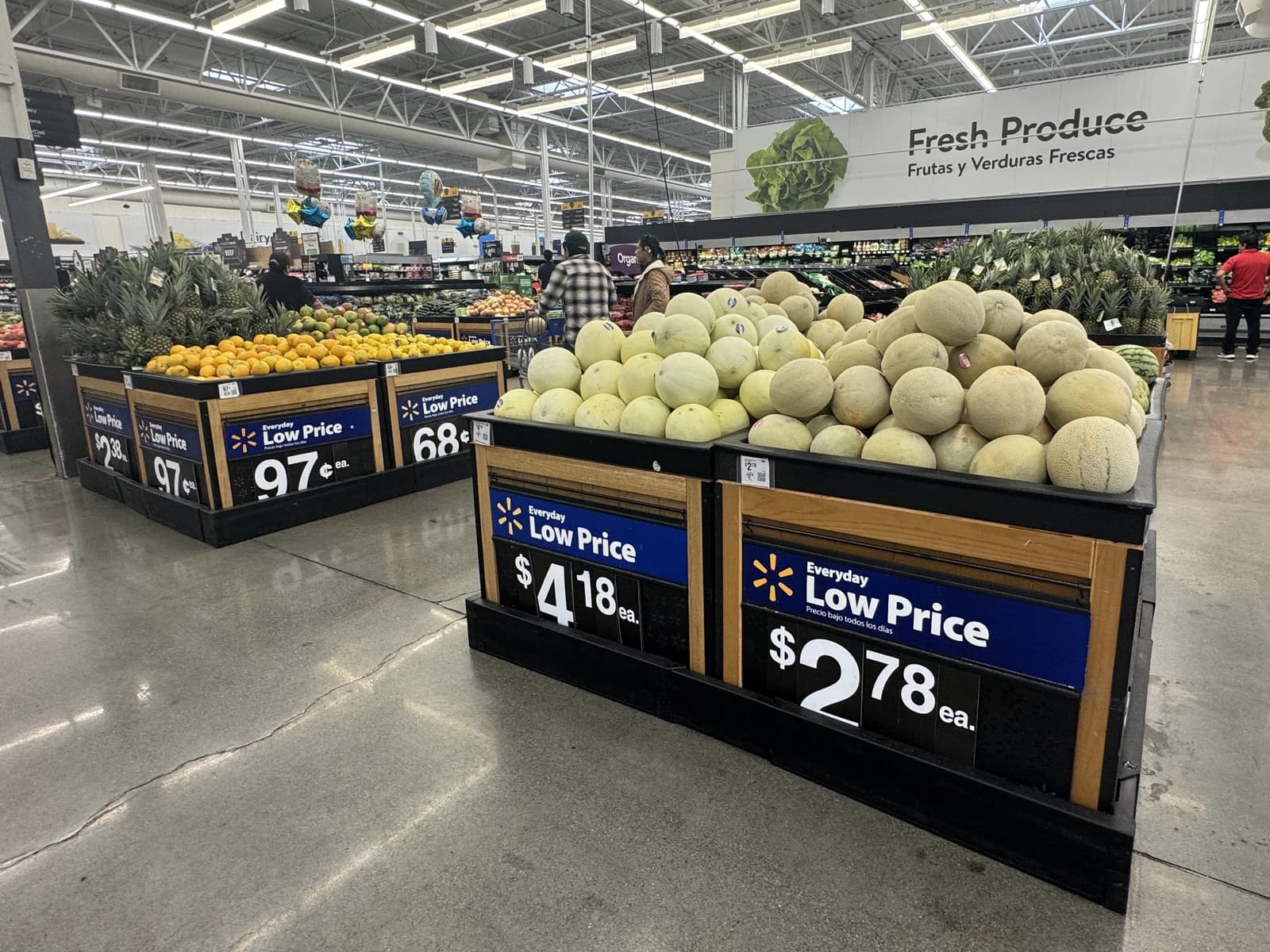
The fourth reason is behavioral, and investors should not miss it. Consumers are changing how they shop. They compare unit prices more aggressively, trade down to store brands and choose smaller packages when cash is tight, even if those packages cost more per ounce. Private-label products now make up about 24% of U.S. grocery sales, and big retailers have responded. Walmart has cut prices on more than 250 products, while Kroger has adjusted prices on everyday items. Packaged-food makers such as PepsiCo, Kraft Heinz, General Mills and Conagra are leaning on promotions and package-size changes to keep volume moving.
That shift has real market consequences. It tells you where pricing power is fading and where value-seeking behavior is strengthening. Retailers with scale and efficient supply chains can use this environment to gain share, while brands that depend on passing through costs may have to work harder to defend margins. For long-term investors, that is the kind of slow-moving change that can reshape winners and losers across consumer staples, grocery, discount retail and food brands.
There is also a broader lesson here: inflation is a measure of price change, not of affordability. What families care about is “ability to pay” — how much income is left after housing, energy, transportation, healthcare and food. Two households can face the same prices and feel very different levels of strain depending on their debts, wages and fixed obligations. That is why some Americans can look at a falling inflation rate and still say they feel poor.
For investors, the takeaway is simple. This is not just a story about disinflation; it is a story about persistent affordability pressure, cautious consumers and the companies that must adapt to them. Value retailers, private-label players and businesses with strong pricing discipline may keep outperforming, while brands that rely on stretched households to keep buying at premium prices could face a longer slog. Worth watching, and for patient investors, it is a theme that could matter for years.
| Entity | Gains | Losses |
|---|---|---|
| Budget retailers | ▲More traffic from value seekers | ▼Premium grocers and brands |
| Private-label products | ▲Share gains in groceries | ▼National branded packaged foods |
| Cash-strapped households | ▲Lower prices on some items | ▼Higher prices at the checkout |
| Food makers with pricing power | ▲Defend margins better | ▼Volume from trading-down consumers |