Rising pay does not guarantee rising wealth, and that is the economic story investors keep underestimating. As incomes climb, household spending often expands just as fast, swallowing the gains through higher consumption, fixed payments and lifestyle creep that leaves little left to save or invest.
Walmart, Amazon Benefit as Consumer Savings Fall

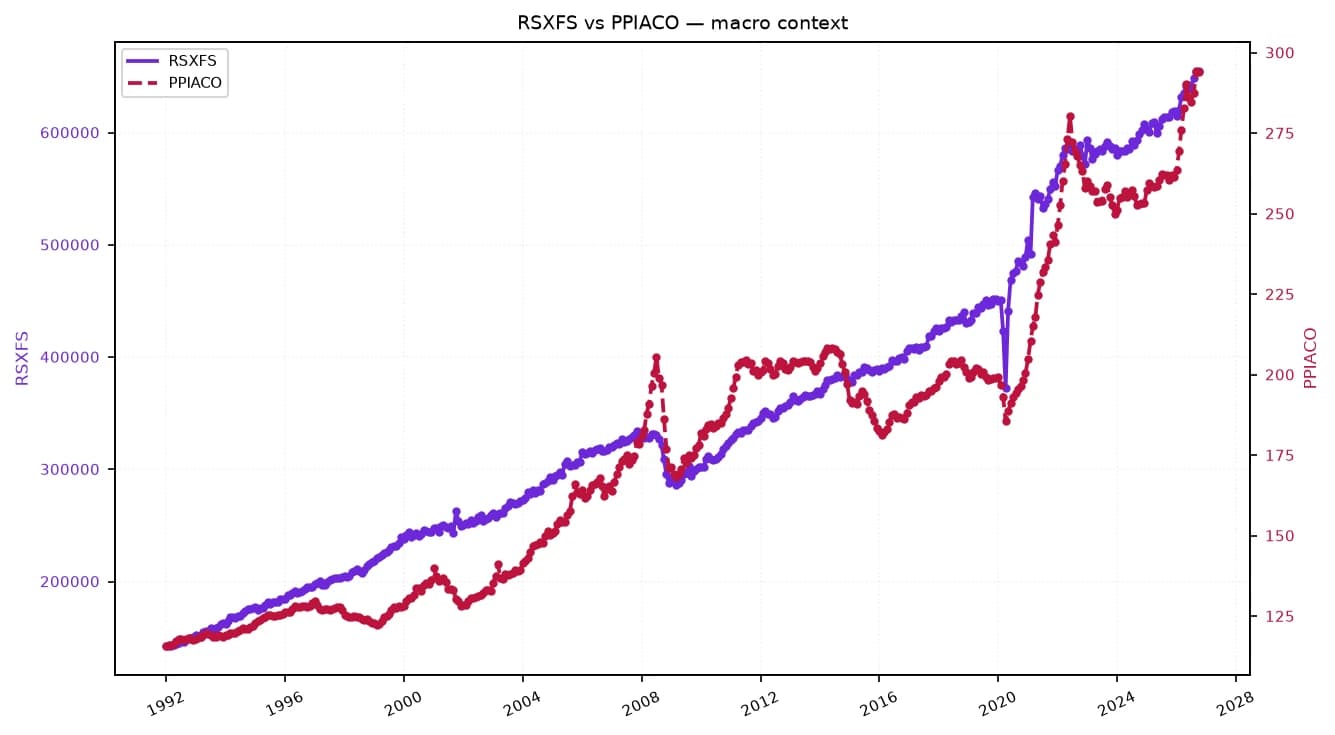
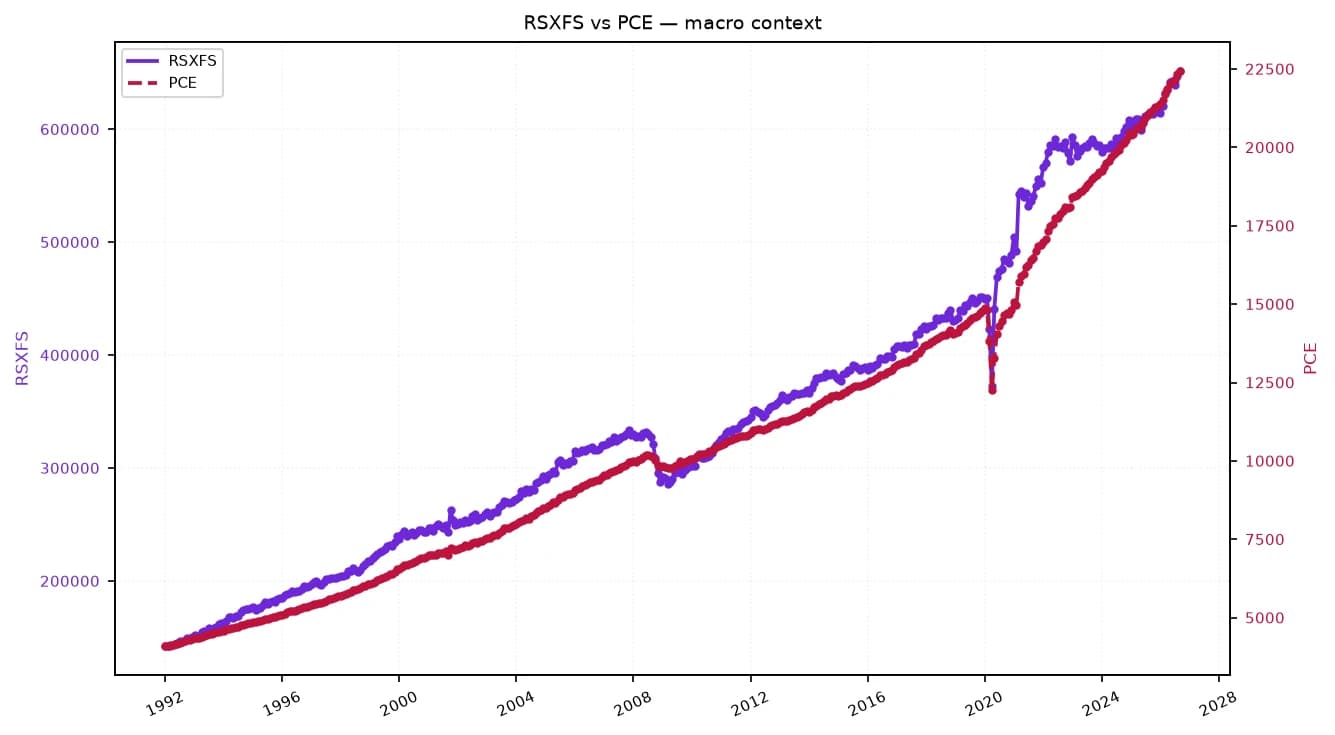
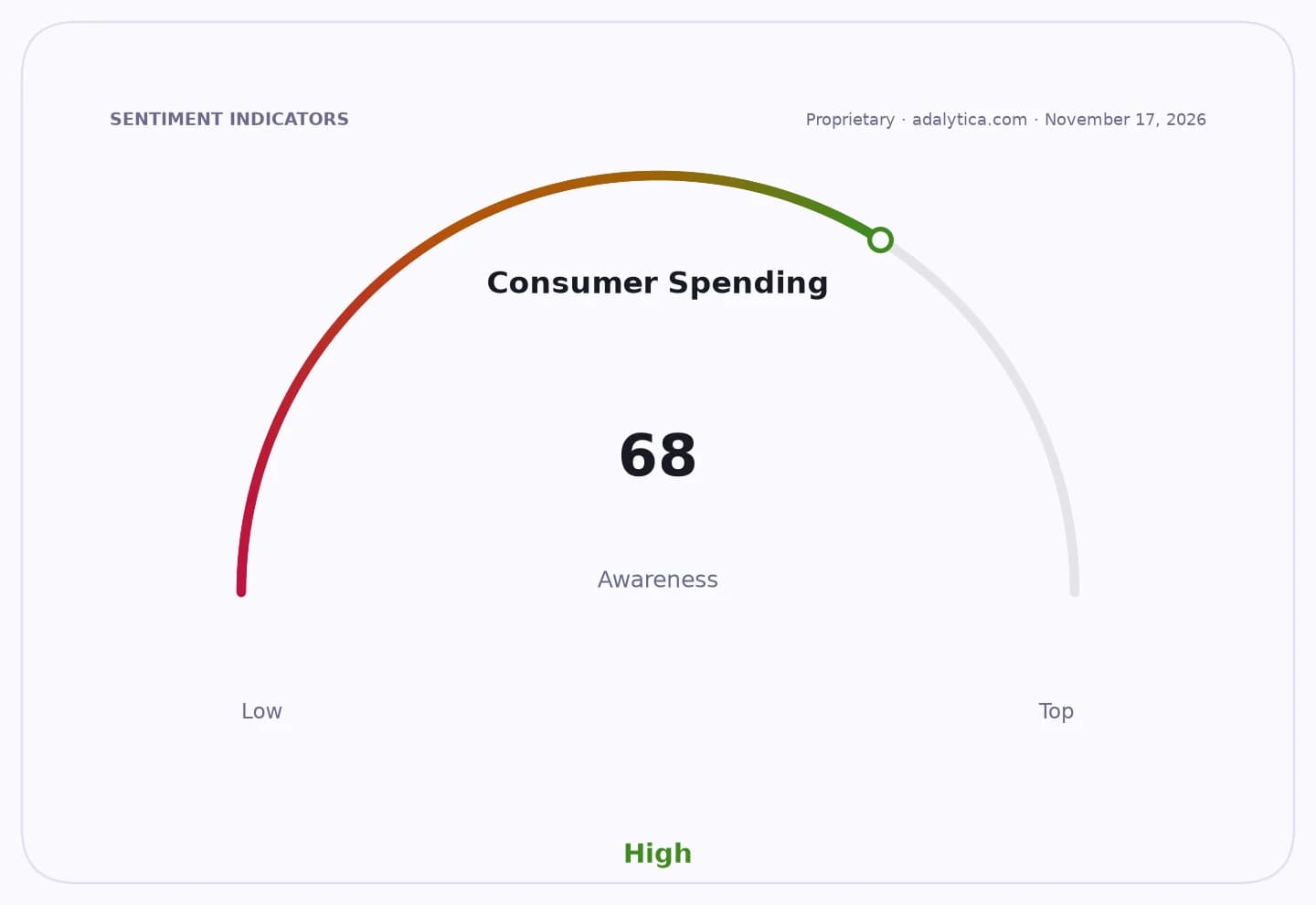
That dynamic matters because it helps explain why so many families feel poorer even when their wages are rising. In the U.S. personal consumption expenditures have risen to 22,452.8 in September from 20,400.4 in January 2025, while personal disposable income slipped to 18,366.1 from 18,416.2 over the same stretch. The result is a savings rate of just 3.8% in September, down from 4.0% in August and far below the 2020-era spike. Forecasts point to only a slight uptick to 3.74% in October, which still leaves consumers in a spend-now, save-later posture.
For markets, that is a critical signal. A consumer that keeps spending can keep the economy growing, but it also leaves less cushion when rates stay elevated, essentials get more expensive or the labor market softens. The pattern is visible in the divergent behavior of consumer-discretionary stocks and defensive retailers. The Consumer Discretionary Select Sector SPDR ETF, XLY, has recovered to 118.15 from a March low near 107, but it remains below its November peak, with price action still whipsawing around its 50-day and 200-day moving averages. That says investors are still debating whether discretionary demand is resilient or simply being financed by lower savings.
Walmart, by contrast, has been rewarded for trading down and value-seeking behavior. Its shares closed at 128.41 on Nov. 16, above both the 50-day and 200-day moving averages, after surging from 108.56 in July. Amazon has also benefited, with the stock at 257.75 after a powerful rebound from summer weakness, a sign that consumers are still spending online even if they are increasingly selective. The message is straightforward: when lifestyle inflation bites, the winners are the platforms and retailers that capture necessity spending and price-sensitive demand, not the brands dependent on discretionary excess.
This is why the best investment angle is not simply “consumer strength.” It is the infrastructure of spending itself — the companies that monetize recurring household outlays while consumers stretch to maintain a higher standard of living. That includes discount retail, digital marketplaces, payment networks and select consumer-credit names tied to everyday purchases. The risk is that the more income rises, the more of it gets pre-committed to rent, food, healthcare, school and financed purchases, turning wage gains into a short-lived illusion.
If that pattern persists, investors should expect a narrower but still durable consumer market: stronger for value, essentials and convenience, weaker for pure discretionary demand. The takeaway is clear — in an economy where spending rises with income, the real opportunity lies in owning the toll roads of consumer behavior, not the fantasies of unlimited purchasing power.
| Entity | Gains | Losses |
|---|---|---|
| Walmart | ▲Value-seeking traffic | ▼Premium discretionary rivals |
| Amazon | ▲Recurring household spending | ▼Smaller e-commerce sellers |
| XLY discretionary basket | ▲Recovery trade | ▼Higher-savings households |
| Consumers | ▲Immediate consumption | ▼Long-term wealth accumulation |