Amazon’s early Black Friday blitz, with discounts of up to $1,500 on everything from Apple Watches to Dyson vacuums and 3D printers, is not just a holiday shopping story — it is a test of who has pricing power, who can move inventory, and who can still win the consumer when spending sentiment is in freefall.
Amazon, Walmart, eBay Benefit From Black Friday Deals
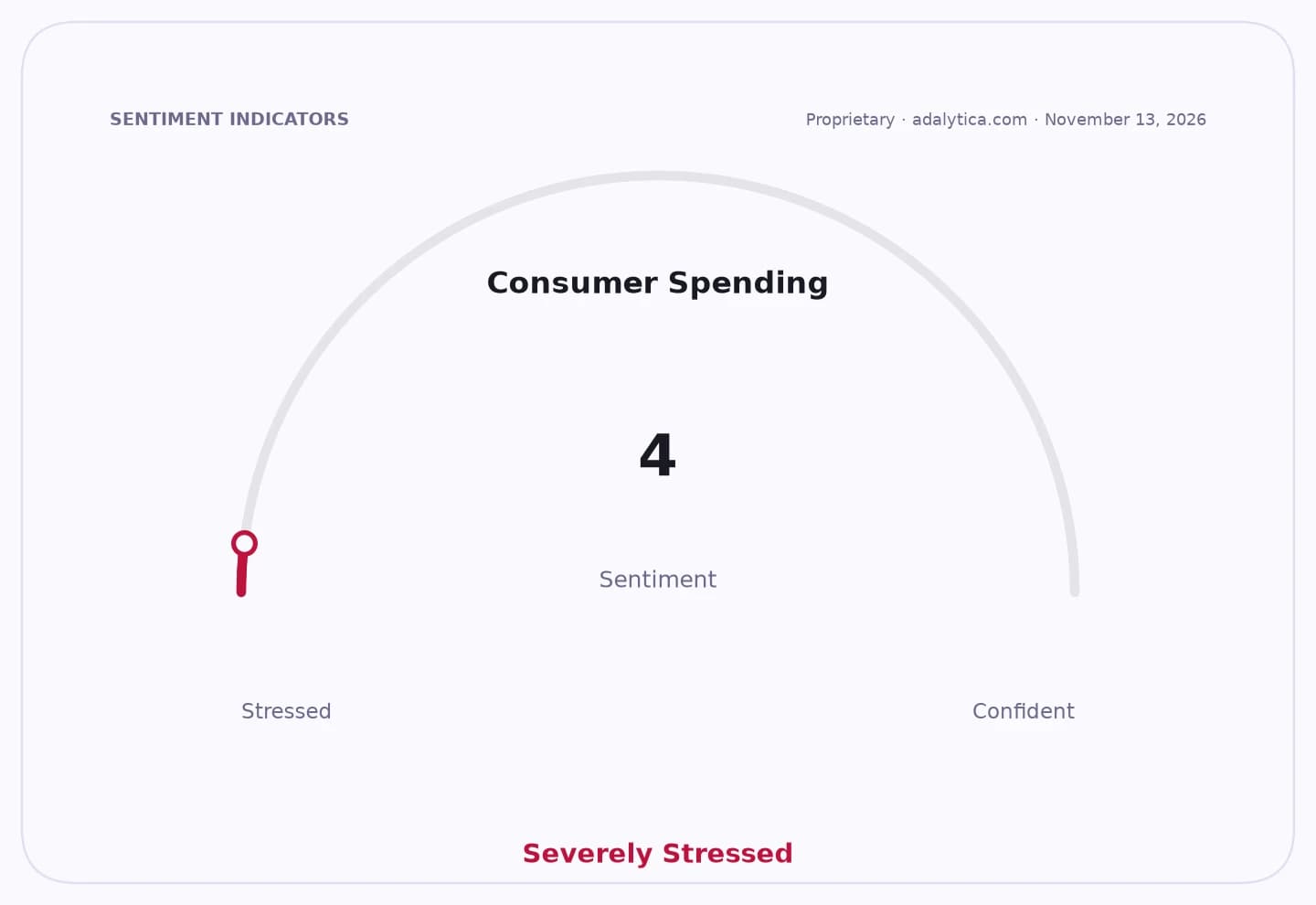
Consumer Spending
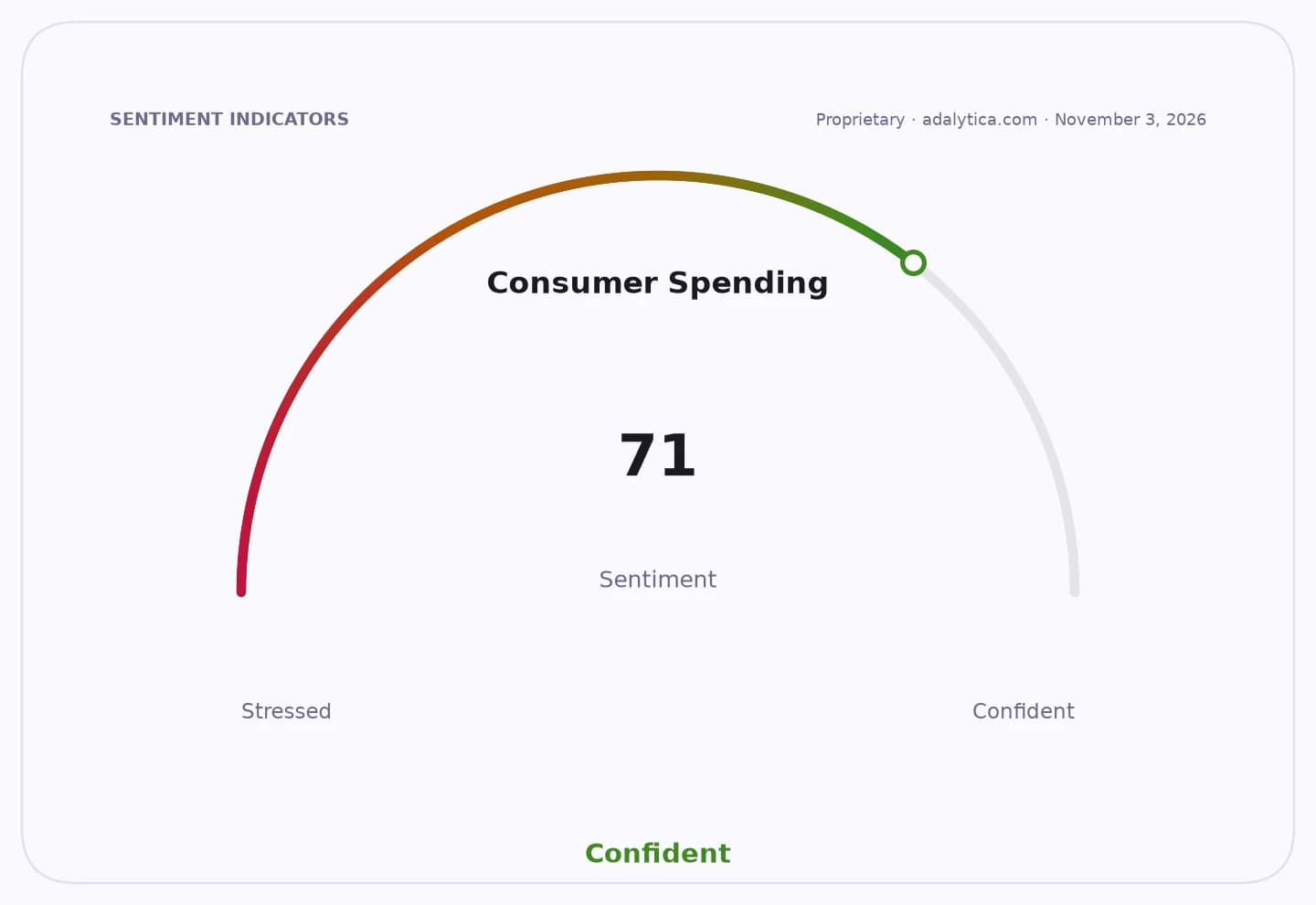
That matters because the latest Adalytica consumer spending snapshot shows “Extreme Fear,” with retail goods spending sentiment also at “Extreme Fear” and awareness collapsing over the past month. In plain English, shoppers are cautious, selective and highly deal-driven. For investors, that environment tends to reward the biggest platforms, the leanest operators and the sellers able to turn promotions into traffic without destroying margins.
Sentiment Indicators
Amazon is positioned to benefit first. Its stock has climbed back above both its 50-day and 200-day moving averages, and the recent price action suggests buyers are betting that holiday volume can offset discount pressure. That is the key setup: Amazon does not need every item to carry a fat margin. It needs the traffic, the basket expansion and the ecosystem leverage that come from being the default destination when consumers go bargain hunting.
The same dynamic explains why eBay deserves attention too. While Amazon is the headline name, eBay’s marketplace model can thrive in a discount-heavy season because it is built around price discovery, secondhand inventory and seller flexibility. Its shares have also held above the 50-day and 200-day moving averages, showing investors are warming to the idea that value-seeking shoppers could lift transaction volume even if the broader retail backdrop stays weak.
Walmart is the other obvious beneficiary, but for a different reason. The stock has outperformed and sits comfortably above key moving averages, reflecting confidence in its ability to take share from weaker retailers. In a consumer climate defined by fear, scale matters. Walmart can use grocery traffic, membership ties and omnichannel reach to capture spend that might otherwise leak to smaller chains with less room to maneuver on price.
The bigger macro takeaway is that Black Friday is increasingly becoming a liquidity event for retailers: a short, intense window where demand is pulled forward, inventories are cleared and the market gets a read on consumer resilience. This year, the early start to promotions suggests retailers are trying to smooth out demand and avoid a single-day bottleneck, but it also tells you something more important — competition is fierce enough that even the strongest names are willing to lean harder into discounting earlier.
That is why the opportunity is not simply “holiday retail.” The opportunity is in the infrastructure of bargain-hunting. Amazon, Walmart and eBay are the toll roads. The weaker discretionary names are the ones most exposed to margin compression if they have to match the discounts without the traffic or balance-sheet strength to absorb them.
If you are looking for the most asymmetric trade, I would focus on the retailers and platforms that can monetize fear rather than fight it. Black Friday is no longer a one-day sale; it is a stress test for consumer demand, and the companies with the best logistics, pricing algorithms and customer reach should emerge with the clearest advantage heading into 2027.
| Entity | Gains | Losses |
|---|---|---|
| Amazon (AMZN) | ▲Holiday traffic, basket share | ▼Margin pressure from discounts |
| Walmart (WMT) | ▲Share gains from cautious shoppers | ▼Smaller rivals undercut on price |
| eBay (EBAY) | ▲Value-seeking marketplace volume | ▼Sellers facing lower realized prices |
| Smaller retailers | ▲— | ▼Pricing power and inventory leverage |