Amazon’s early Black Friday push for coffee and espresso machines is likely to draw value-seeking shoppers away from chains that depend on holiday traffic, even as the broader consumer backdrop points to growing caution.
Amazon Black Friday coffee deals draw early shoppers
The most important development is not the discounts themselves but the timing: Amazon is surfacing more than 60 coffee and espresso machine deals ahead of Black Friday week, using an aggressive promotions window to pull forward spending before competitors can capture it. That matters because small kitchen appliances are a high-visibility, gift-friendly category, and the early start suggests retailers are already leaning harder on markdowns to protect volumes in a nervous consumer environment.
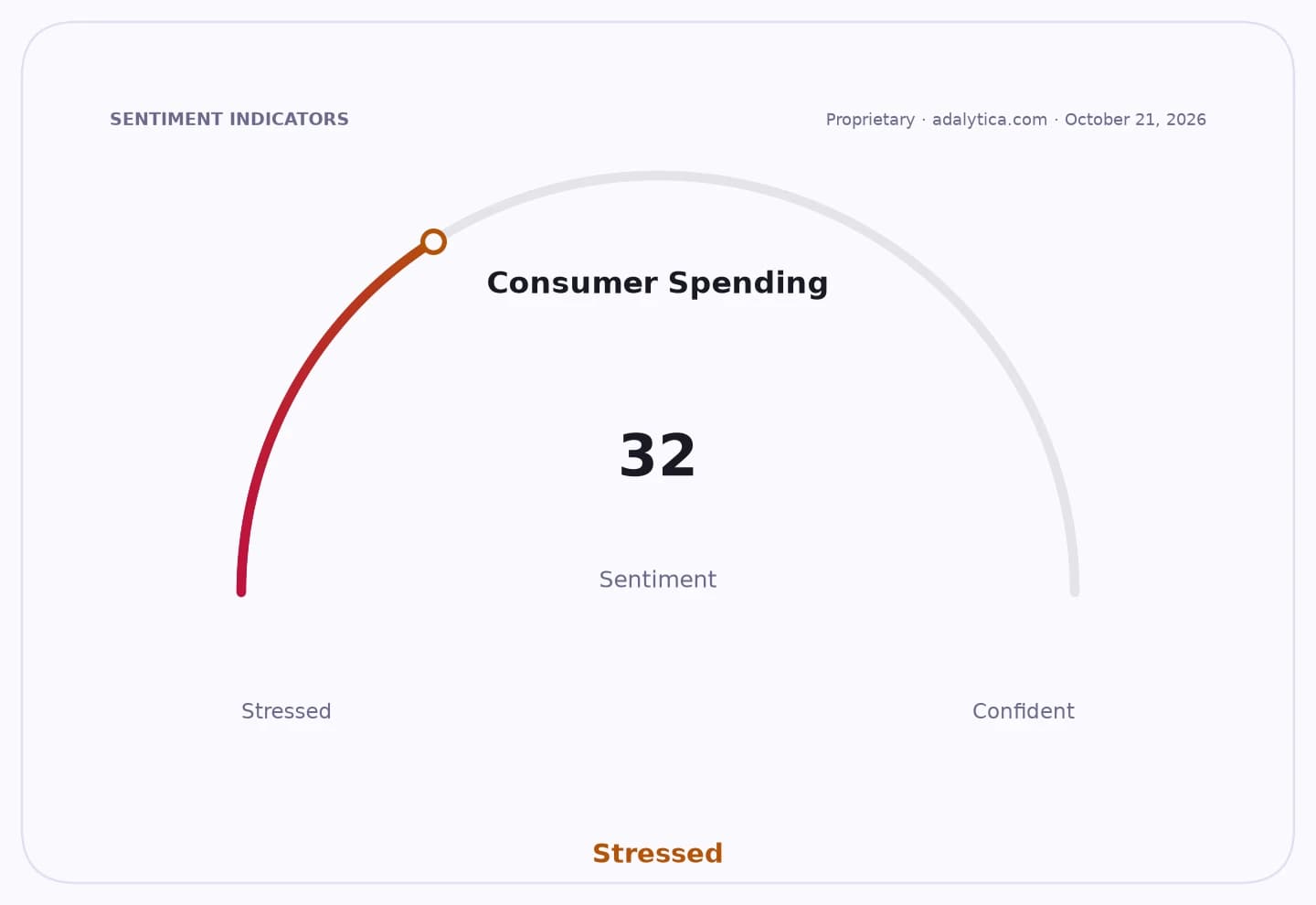
Sentiment Indicators
The backdrop is weak. Adalytica’s Consumer Spending Sentiment gauge is at 7, described as “Extreme Fear,” while Retail Goods Spending Sentiment is in “Fear” at 29 with awareness readings near extreme fear. Those signals point to a shopper base that is still spending, but selectively, and increasingly through promotions. In that kind of market, price leadership can matter more than brand loyalty, especially on discretionary purchases such as espresso machines that are easy to compare across platforms.
Amazon’s stock has been resilient enough to suggest investors remain comfortable with its ability to convert traffic into sales. The shares closed at $256.70 on Nov. 17, above both the 50-day moving average of $254.79 and the 200-day moving average of $244.76, while the RSI reading of 51.4 and a positive MACD show neither a stretched nor a broken technical setup. That leaves room for the market to reward continued holiday share gains, even if margin pressure follows. Investors will be watching whether Amazon can use these promotions to expand basket size and Prime engagement without a deeper erosion in retail profitability.
The competitive read-through is less flattering for traditional retailers. Best Buy’s shares fell to $99.32 on Nov. 17 from a recent high above $106, though the stock remains well above its 200-day average, indicating investors still expect holiday execution to matter. Macy’s and Nike face a different but related issue: if Amazon captures a larger share of holiday electronics and home-goods spending, foot traffic and discretionary apparel demand may be harder to sustain. In a cautious spending cycle, whoever controls the first and best deal often captures the sale.
For consumers, the deals reinforce a familiar Black Friday pattern: big-ticket but not luxury items are being discounted early to secure demand before the main event. For investors, the key question is whether this is a demand pull-forward that supports holiday revenue, or a margin trade-off that simply buys volume at the expense of pricing power. The answer will show up in conversion rates, average order values and how much promotional intensity spills into the rest of the season.
| Entity | Gains | Losses |
|---|---|---|
| Amazon | ▲Holiday traffic and unit volume | ▼Gross margin pressure |
| Shoppers | ▲Lower prices on appliances | ▼Fewer deals later in season |
| Best Buy | ▲Holiday demand if it matches promotions | ▼Foot traffic to Amazon |
| Macy’s / Nike | ▲Brand exposure from holiday shopping | ▼Discretionary spending diverted online |