The biggest holiday spending story this season is not that consumers are splurging less out of fear — it is that they are becoming more deliberate, and that shift is good news for retailers with scale, value and everyday essentials at the center of their business models.
Walmart, Target and Amazon Benefit From Cautious Shoppers
Consumer Spending
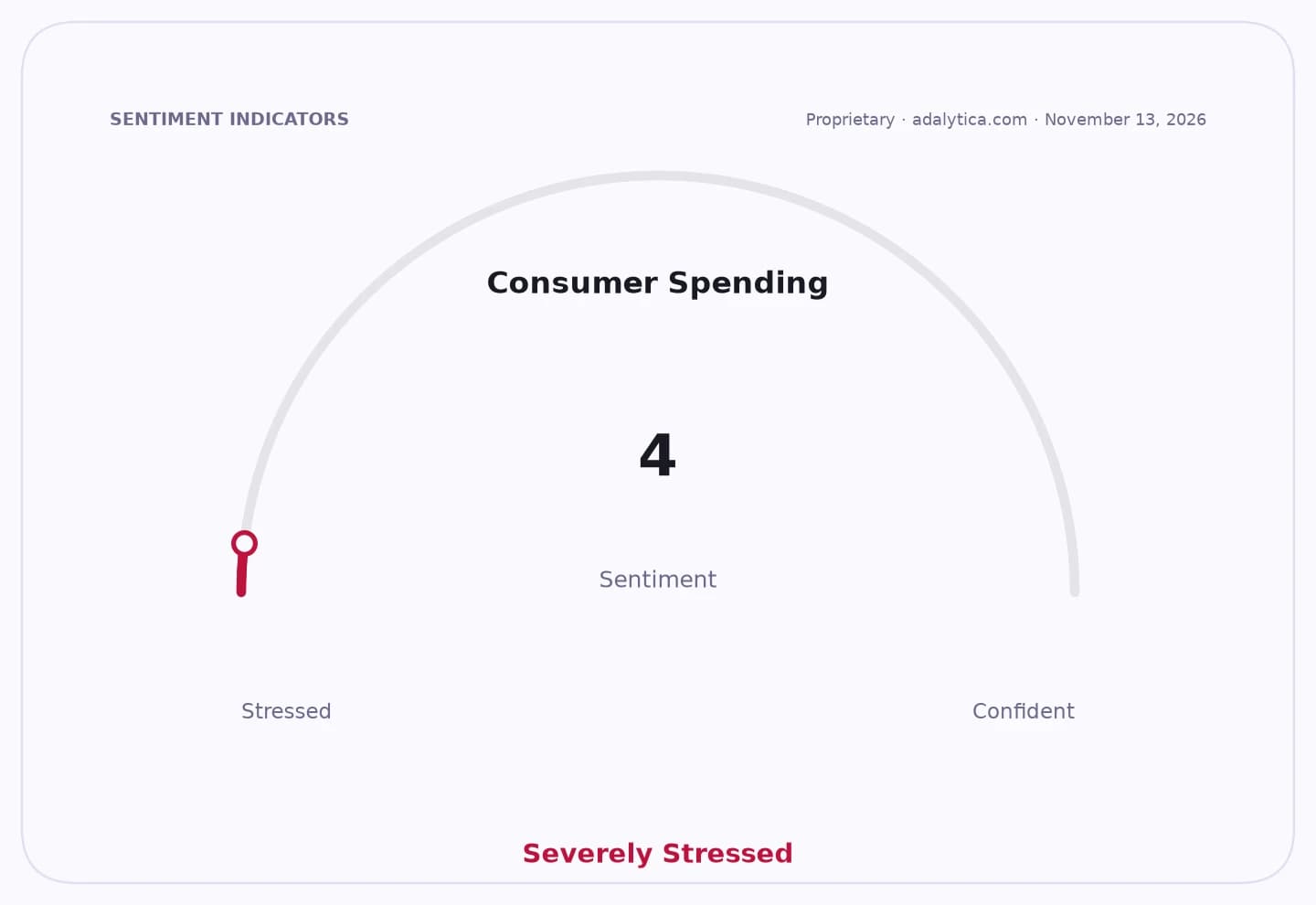
For investors, that matters because “spending less” does not automatically mean “earning less.” If households trim the gift list, hunt for deals and favor practical purchases over impulse buys, the winners tend to be companies that can capture a bigger share of each wallet while protecting margins through scale, logistics and private-label strength. That is exactly why Walmart and Target remain central to the holiday retail narrative, even as broader consumer sentiment around spending has fallen to extreme fear in Adalytica’s Consumer Spending Sentiment gauge.
Sentiment Indicators
Walmart, in particular, has the kind of moat that tends to shine when shoppers trade down. Its shares recently hovered around $125.67, far above the 50-day moving average of $113.74 and still comfortably above the 200-day average of $118.50, showing how much investor confidence has built around the company’s defensive positioning. Target has also rewarded patience: after a strong run, it was trading near $162.70, with its 50-day moving average at $155.42 and its 200-day average at $134.09. Both stocks have been volatile, but the longer-term message is clear — investors are betting that a cautious consumer can still support solid retailers.
That is the key lesson for long-term investors. A tighter holiday budget does not have to be bad for companies that help shoppers save money. In fact, it can strengthen them. Walmart can win on groceries, necessities and low-price traffic. Target can benefit if consumers want affordable seasonal goods, home products and curated gifting without blowing up their budgets. In a weaker spending environment, convenience and value become even more important, and the retailers best positioned to deliver both can still compound earnings over time.
Amazon also fits into this trend, though in a different way. Its shares were near $266.17, above both the 50-day average of $254.41 and the 200-day average of $244.35, reflecting steady investor appetite for its mix of e-commerce, advertising and cloud income. When shoppers become more selective, they often migrate toward platforms that offer price comparison, fast delivery and broad selection. That is not just a holiday-season tailwind; it is a secular advantage.
The broader backdrop matters too. Adalytica’s Retail Goods Spending Sentiment is sitting in fear territory, while consumer confidence has improved from recent lows but remains uneven. That combination usually produces a more disciplined shopper, not a vanished one. And disciplined shoppers often prefer national chains and marketplaces that can offer clear value, easy returns and one-stop convenience.
For investors, the takeaway is simple: a “save your cash” Christmas can still be a good Christmas for well-run retailers. The winners are not the merchants that depend on indiscriminate overspending, but the ones that make cautious consumers feel smart. That is why Walmart, Target and Amazon are worth watching — and why long-term investors should keep a diversified list of consumer winners on the watchlist rather than trying to time every holiday swing.
| Entity | Gains | Losses |
|---|---|---|
| Walmart | ▲Trade-down shoppers | ▼Luxury and impulse sellers |
| Target | ▲Budget-conscious gift buyers | ▼High-price discretionary retailers |
| Amazon | ▲Deal-seeking online consumers | ▼Brick-and-mortar laggards |
| Consumers | ▲Lower holiday bills | ▼Retailers dependent on overspending |