Consumer behavior in retail is becoming more aggressive, and the shift matters because it is no longer just a matter of poor etiquette: it is raising operating risk, pressuring store labor, and adding friction to the customer experience that large chains must absorb or price into margins.
Walmart, Amazon Face Retailer Store Friction Costs
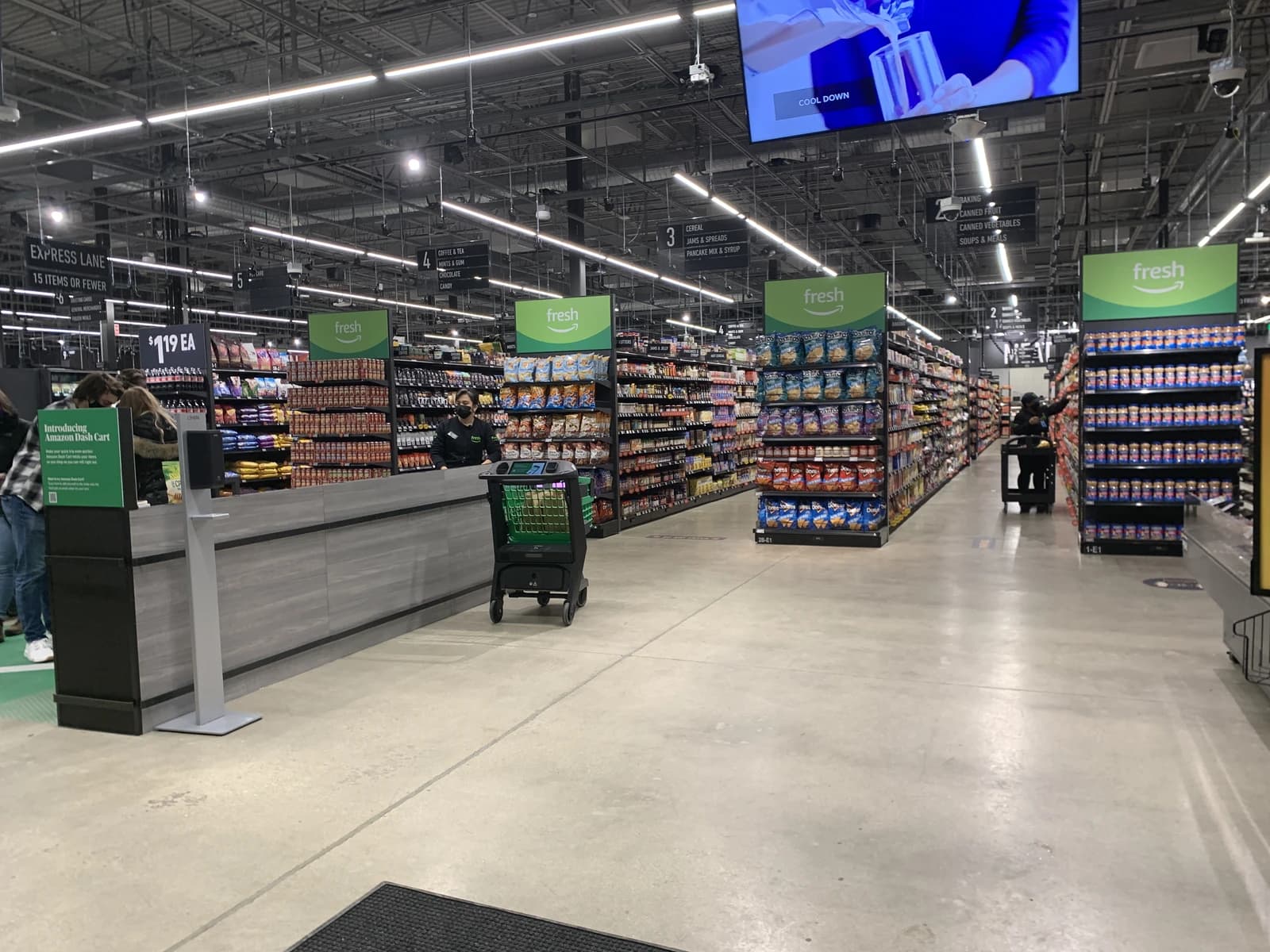
The clearest signal comes from a wave of incidents in stores in which routine staff interventions — from safety warnings to checkout questions — are met with shouting, hostility or intimidation. What used to be a complaint now more often escalates into confrontation. For retailers, that changes the economics of front-line service. More conflict means slower transactions, higher training and security costs, greater staff turnover and, in some cases, more shrink-related risk as employees become less willing to intervene.
Sentiment IndicatorsⓘProprietary · adalytica.com · October 22, 2026
This is a snapshot — live sentiment, awareness and momentum for 130+ markets update continuously in the dashboard.Open AlphaPulse
That matters particularly for the biggest consumer-facing names, including Walmart and Amazon, whose scale makes them both beneficiaries and victims of harsher shopper behavior. Walmart’s shares have held above their 50-day moving average and its 200-day average, with the stock near $117.80, suggesting investors still see the chain as a defensive winner in a cautious consumer backdrop. But the stock’s elevated relative-strength index near 90 also points to a stretched move, leaving little room for operational disappointment if store-level friction worsens.
Amazon’s equity picture is more mixed but still relevant. At about $262.37, the stock is above both its 50-day and 200-day moving averages, and momentum indicators remain positive. Yet the issue for Amazon is not only online demand; it is the broader retail ecosystem, including its physical stores and third-party sellers, where abusive or confrontational consumer behavior can raise service costs and weaken fulfillment efficiency. If shoppers become more combative, retailers tend to respond with tighter policies, more automation and less tolerance for exceptions — all of which can improve control but also reduce the customer goodwill that supports repeat business.
Target sits in a more delicate position. Its shares at roughly $152.38 are below the 50-day moving average and just above the 200-day average, after a sharp run earlier in the year that left the stock vulnerable to cooling momentum. For a discretionary retailer that depends heavily on in-store experience and traffic quality, more aggressive consumer behavior is a double-edged sword: it can force higher spending on labor and security while also encouraging stricter service standards that may alienate shoppers further.
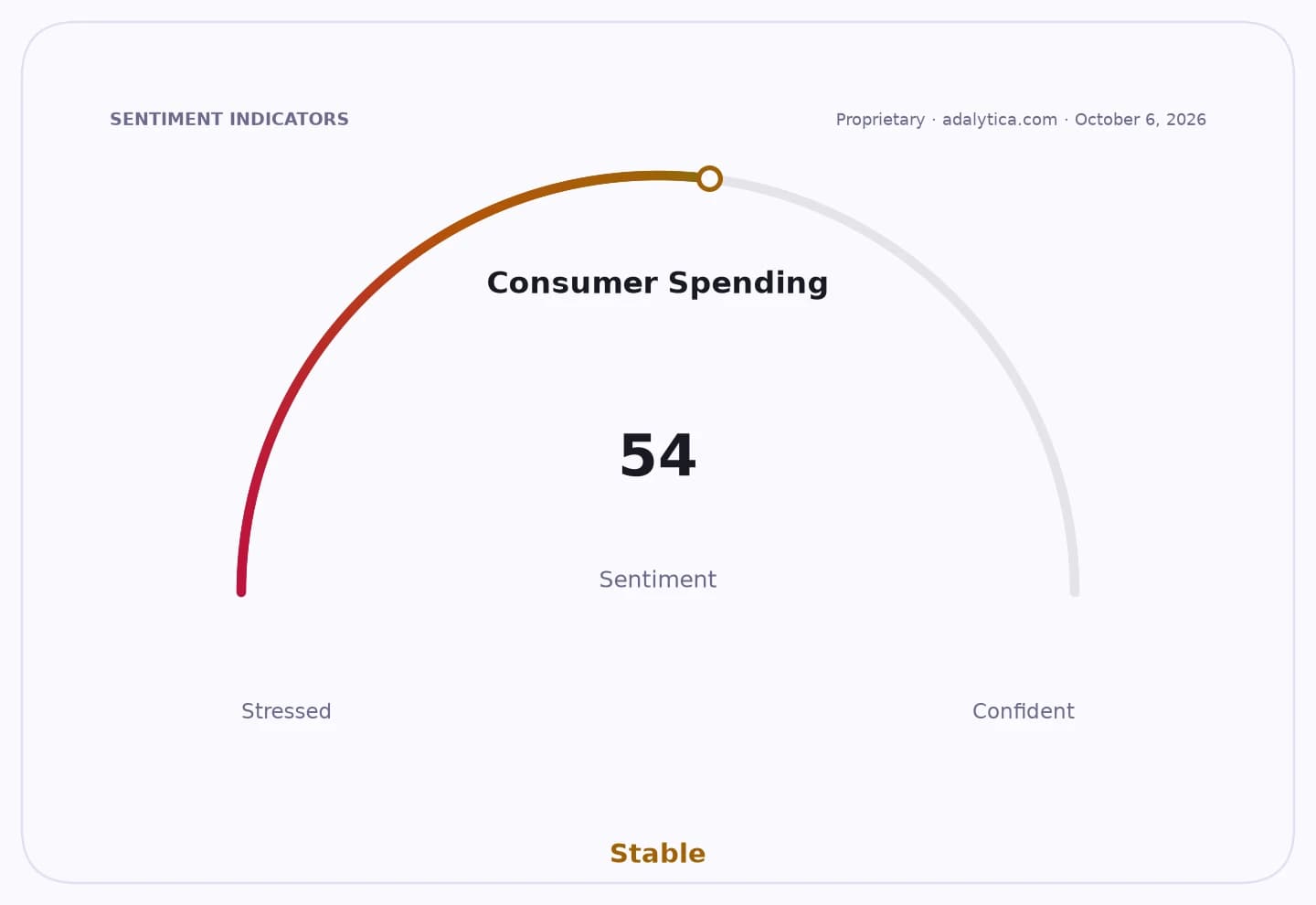
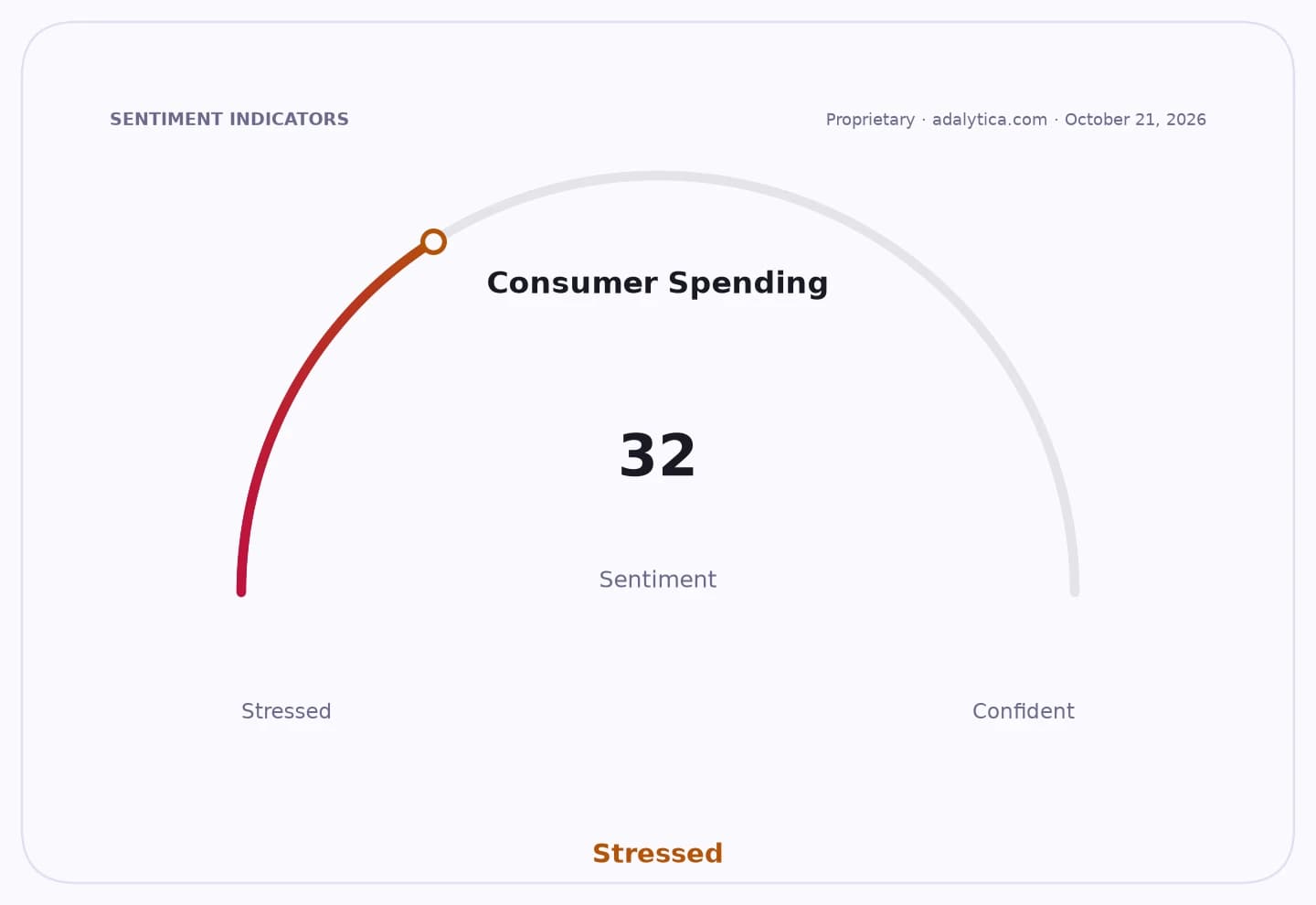
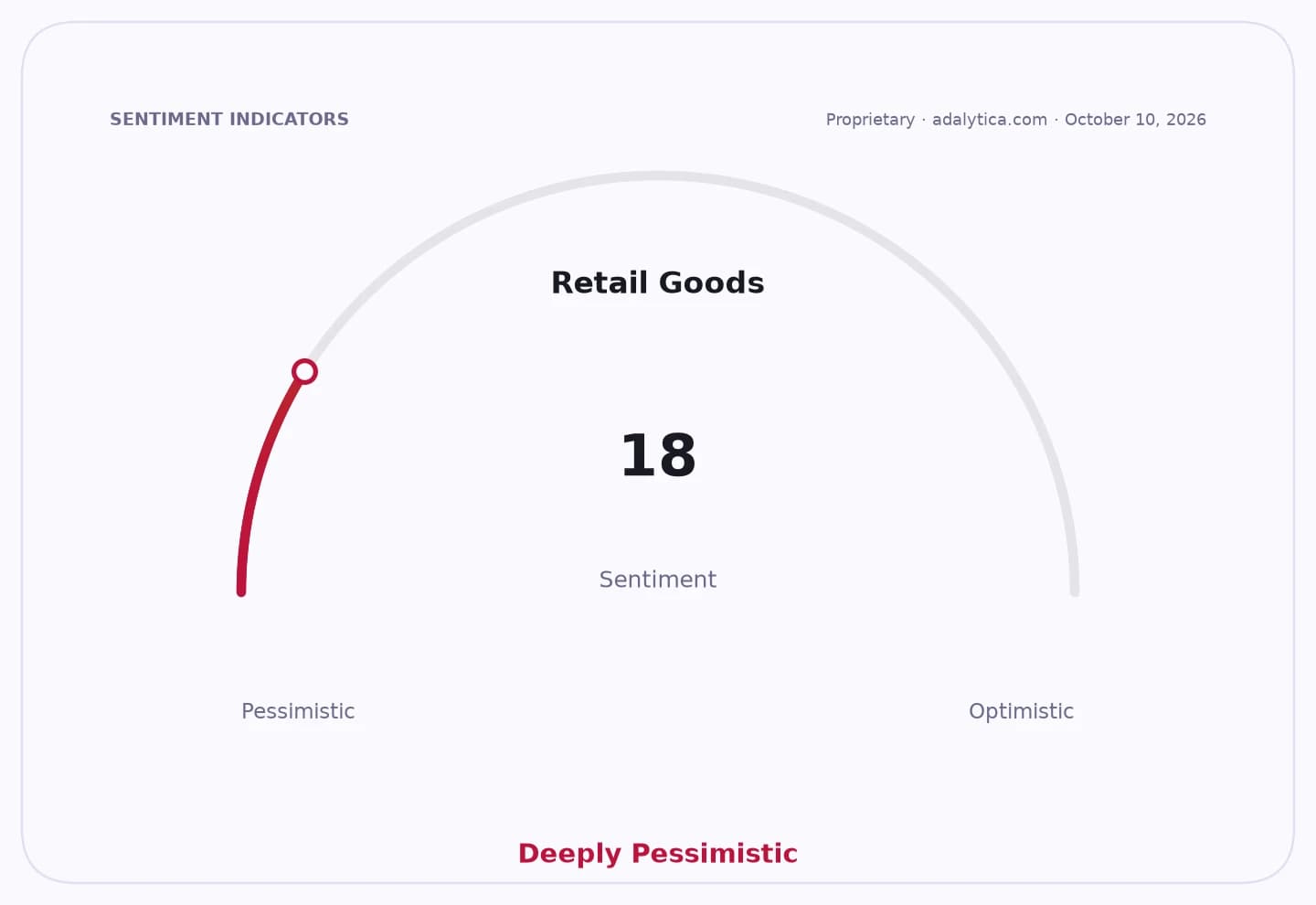
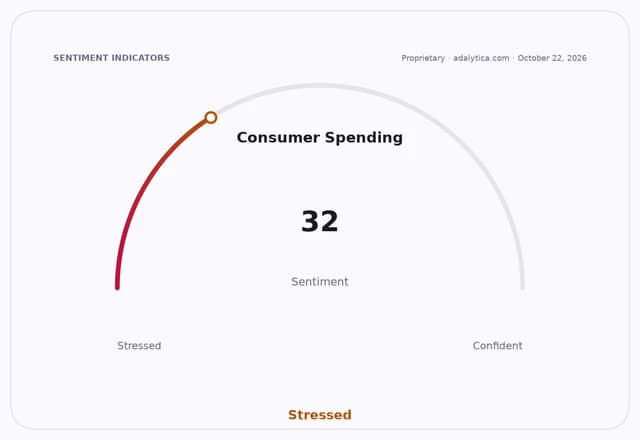
The broader macro backdrop helps explain why the tone in stores may be worsening. Adalytica’s Consumer Spending Sentiment gauge is at 32, with awareness at an “Extreme Fear” reading of 4, while retail goods spending sentiment stands at 64 but with fear still embedded in the data. That combination suggests consumers are not uniformly retrenching, but are operating in a more defensive, tense environment. In that setting, everyday interactions can become more transactional and less tolerant, especially when households feel financially pressured, crowded, or frustrated by rising prices and service constraints.
For investors, the implication is that retail margins may face a less visible but increasingly important headwind. The bull case is that major chains can use scale, self-checkout, automation and standardized procedures to contain the problem. The bear case is that aggressive consumer behavior becomes another incremental cost in a sector already managing labor shortages, margin pressure and a more selective shopper. The companies best able to absorb higher friction without degrading throughput or brand trust are likely to outperform.
What to watch next is whether retailers begin to quantify the issue through higher security spend, slower store productivity, or more emphasis on automated checkout and digital ordering. If so, the story moves from a social media nuisance to a measurable operating cost — and that is when investors start to care.
| Entity | Gains | Losses |
|---|---|---|
| Large retailers | ▲More automation adoption | ▼Higher labor and security costs |
| Walmart | ▲Defensive traffic share | ▼Margin pressure from friction |
| Amazon | ▲More digital-first behavior | ▼Physical-store service strain |
| Shoppers | ▲Faster, stricter store processes | ▼Less forgiving service culture |