Amazon is trimming jobs in its retail business just as it finished one of its biggest shopping events, a reminder that even the world’s most formidable e-commerce machine is still under pressure to run leaner while it pours money into the next growth engine.
Amazon cuts retail jobs after Prime Big Deal Days
The company said it is adjusting parts of its Stores business to better support its priorities, and Reuters reported the latest round affects fewer than 1,000 white-collar workers across customer service, seller support and other retail-related teams. Workers in the U.S., India and the U.K. are said to be included. For investors, the significance is not the headcount alone. It is the timing: Amazon is cutting back in the very business that powers its massive online shopping franchise right after October Prime Big Deal Days, underscoring a long-running effort to squeeze more productivity from a mature retail operation.
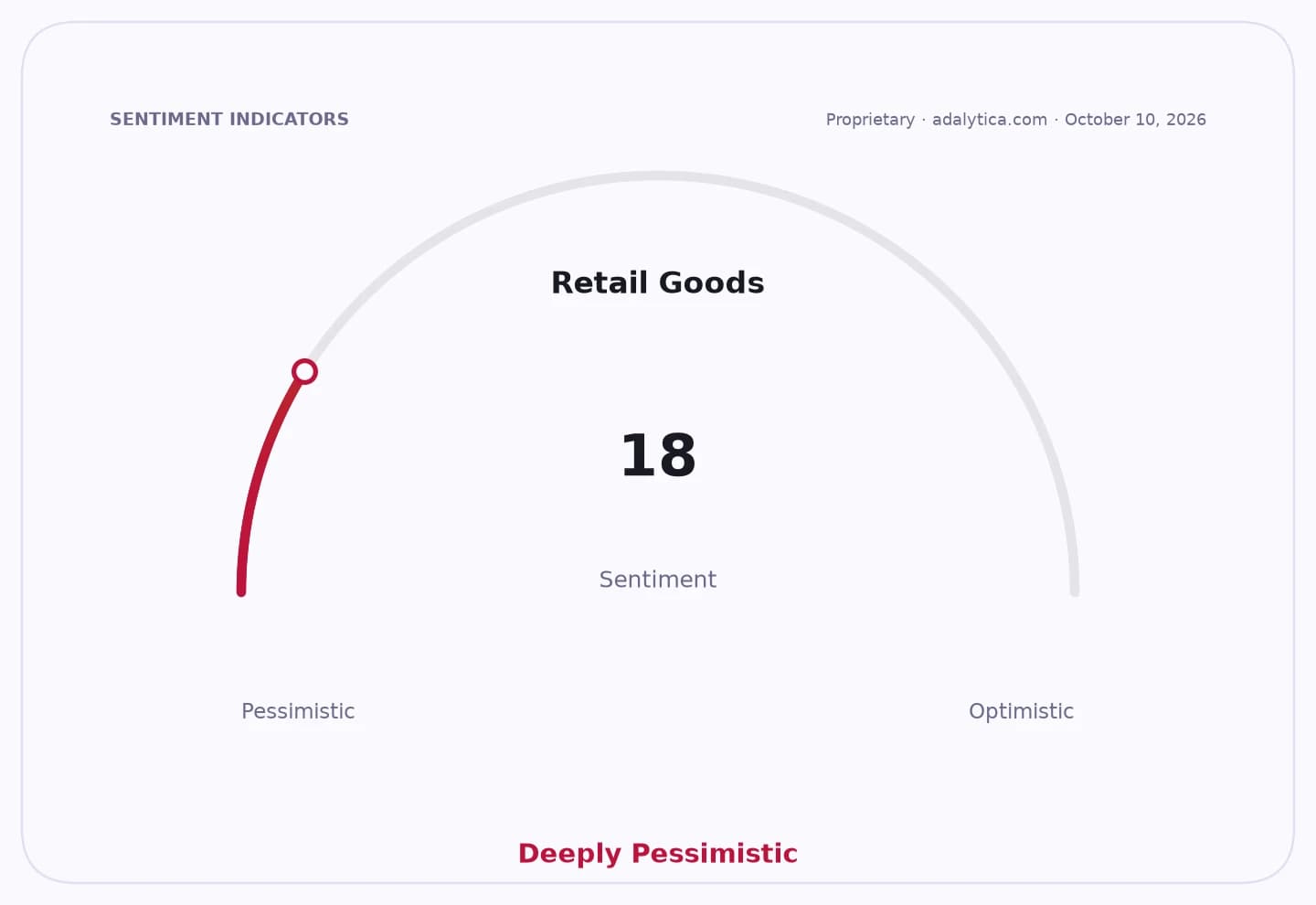
Sentiment IndicatorsⓘProprietary · adalytica.com · October 10, 2026
This is a snapshot — live sentiment, awareness and momentum for 130+ markets update continuously in the dashboard.Open AlphaPulse
That matters because Amazon’s retail segment still sets the tone for a huge part of consumer commerce, even if AWS and advertising carry more of the profit story. When management pares staff in retail, it usually reflects a push to remove layers, reduce duplication and protect margins in a low-growth, high-volume business where small efficiency gains can translate into billions of dollars over time. The company already cut roughly 16,000 jobs earlier this year, and founder Jeff Bezos has said Amazon expanded too quickly during the pandemic. This latest move suggests that the cleanup is still going on.
For long-term investors, the more important question is whether these cuts help Amazon preserve its moat. In many ways, yes. A retailer with Amazon’s scale does not need excess bureaucracy to win; it needs fast decision-making, automated systems and enough investment in logistics and technology to keep delivery speeds and selection ahead of rivals. If job reductions help fund that, the trade-off can be attractive over several years. But there is also a risk: too much cost cutting in customer service and seller support can hurt the very experience that keeps shoppers and third-party merchants loyal.
The broader backdrop is a retail sector still fighting for efficiency. Amazon’s stock has been volatile, but its long-term case has rested on compounding earnings from cloud, ads and the constant optimization of its commerce engine. The company’s shares recently traded well above both the 50-day and 200-day moving averages, while RSI readings remained constructive, suggesting the market is still willing to give management the benefit of the doubt. That confidence is easier to maintain when investors believe Amazon can keep trimming fat without weakening the customer flywheel.
Add in a still-cautious consumer backdrop and the message is straightforward: Amazon is trying to stay aggressive on price and selection while keeping its corporate structure tighter. That is exactly the kind of discipline that can support durable free cash flow over time, even if it makes headlines for the wrong reason in the short run. For patient investors, Amazon remains a name worth watching, especially if management can prove it is cutting from strength rather than necessity.
| Entity | Gains | Losses |
|---|---|---|
| Amazon shareholders | ▲Better margins, leaner overhead | ▼Risk of service friction |
| Amazon management | ▲Greater operating discipline | ▼Near-term scrutiny |
| Workers in retail/support | ▲— | ▼Job losses |
| Rival retailers | ▲— | ▼More pressure to match efficiency |