Amazon’s latest push higher in the stock market is a reminder that its fight with Walmart is no longer just about selling more stuff online — it is about who controls the next era of consumer spending, logistics and profit margins.
Amazon, Walmart Battle for Retail Spending
For investors, that matters because both companies are trying to own the same customer journey from different directions. Amazon has spent years moving deeper into groceries, fast delivery and physical retail, while Walmart has poured billions into e-commerce, pickup and last-mile fulfillment to defend its core. The result is a retail duel that could shape earnings growth for years, not just quarters.
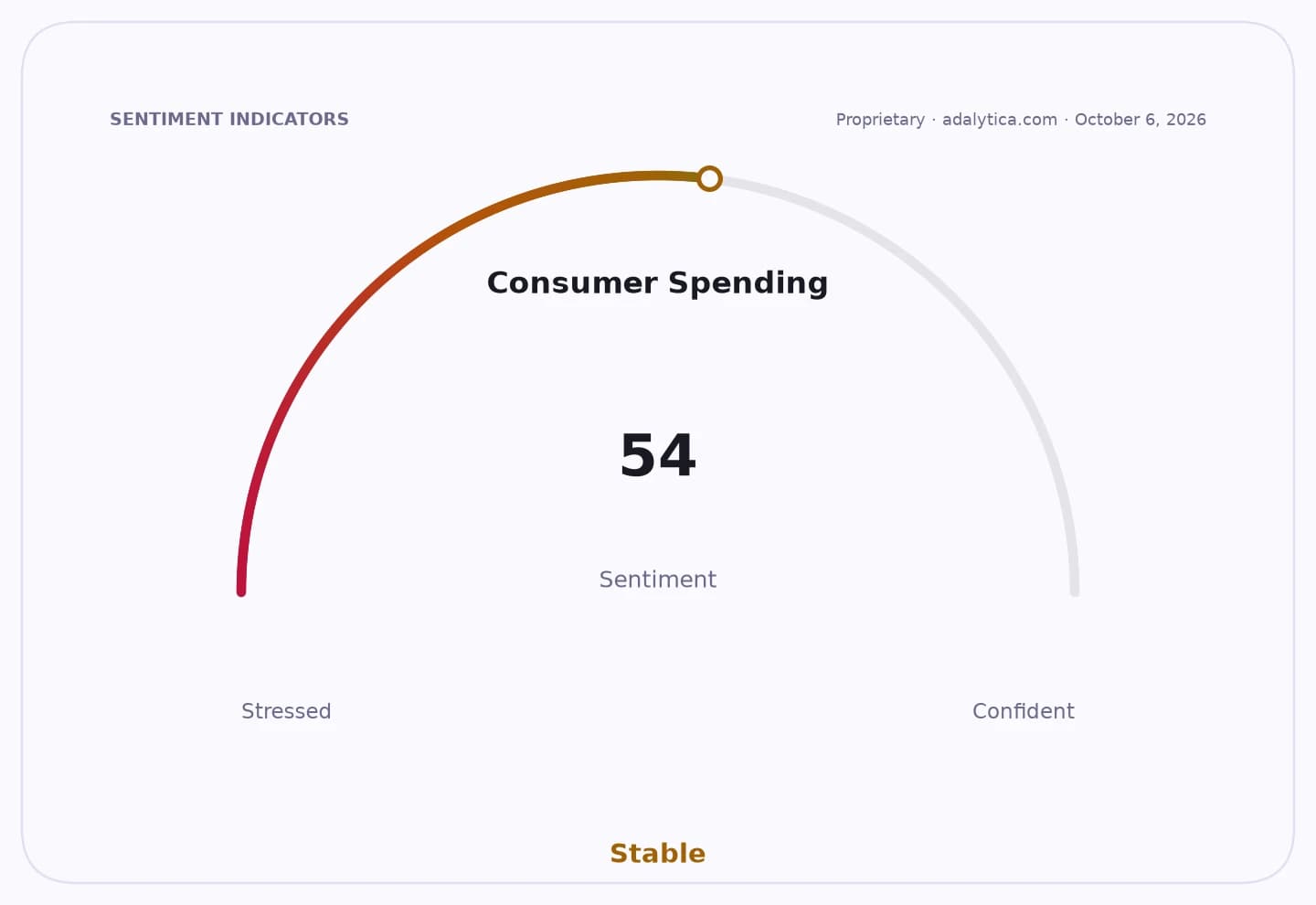
Sentiment IndicatorsⓘProprietary · adalytica.com · October 6, 2026
This is a snapshot — live sentiment, awareness and momentum for 130+ markets update continuously in the dashboard.Open AlphaPulse
Amazon shares closed at $256.04 on Oct. 6, above both their 50-day moving average of $257.42 and 200-day moving average of $241.68 by only a narrow margin, after swinging between a 2026 low near $210 and a high above $284. Walmart, meanwhile, finished at $106.39, still below its 200-day moving average of $117.79 even as it stabilized after a rough stretch. Costco, the sector’s benchmark for pricing power and member loyalty, sat at $930.20, just under its 50-day average and close to a year of heavy volatility.
That split tells a bigger story: investors are rewarding the retailer best positioned to turn scale into durable cash flow, not just sales. Amazon’s broader platform — cloud, advertising and marketplace economics on top of retail — gives it a different margin profile from Walmart, whose strength remains grocery, value and store traffic. But Walmart’s push into digital has made it a far more credible online competitor than it was five years ago, and that has kept pressure on Amazon to keep spending on fulfillment and speed.
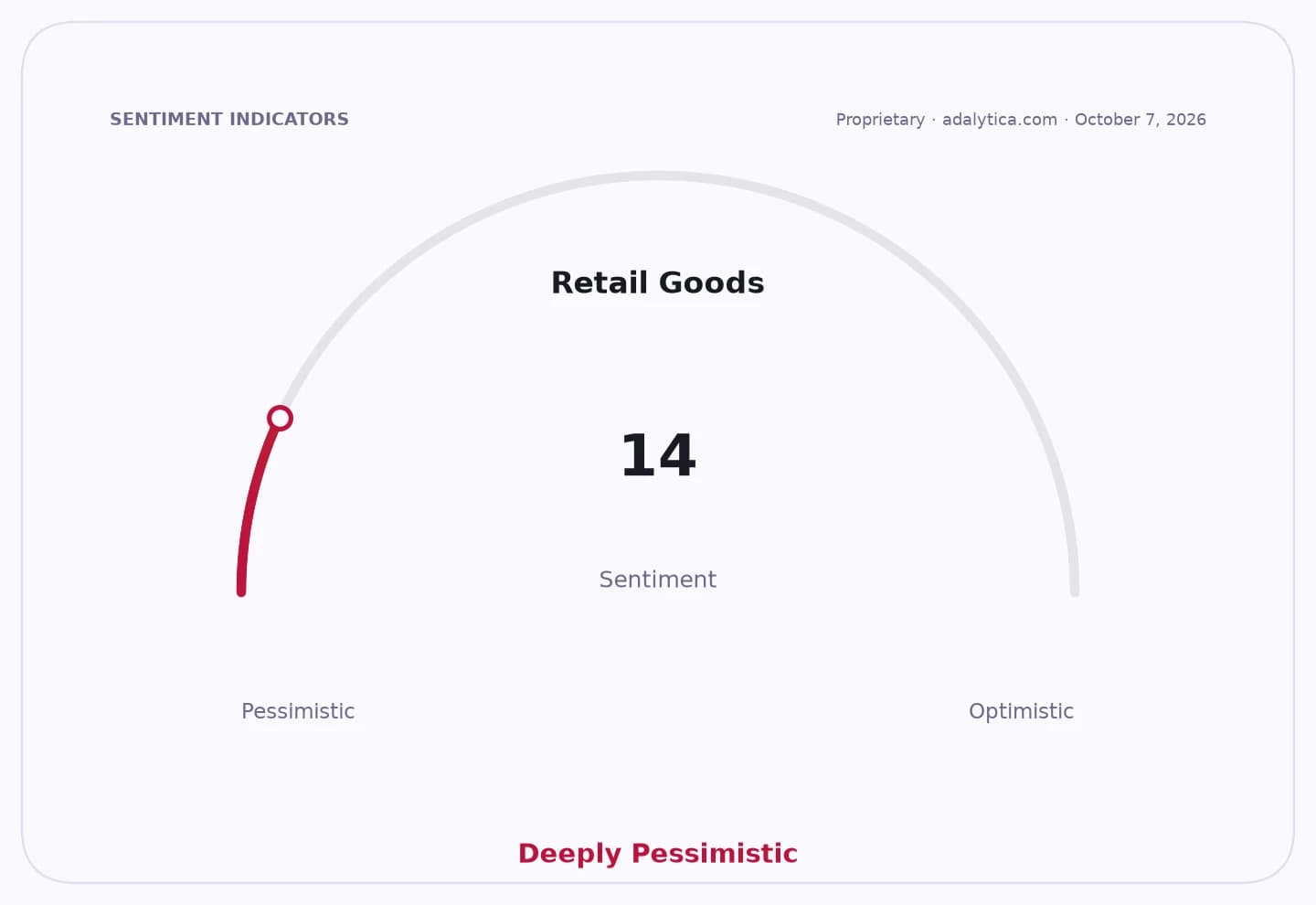
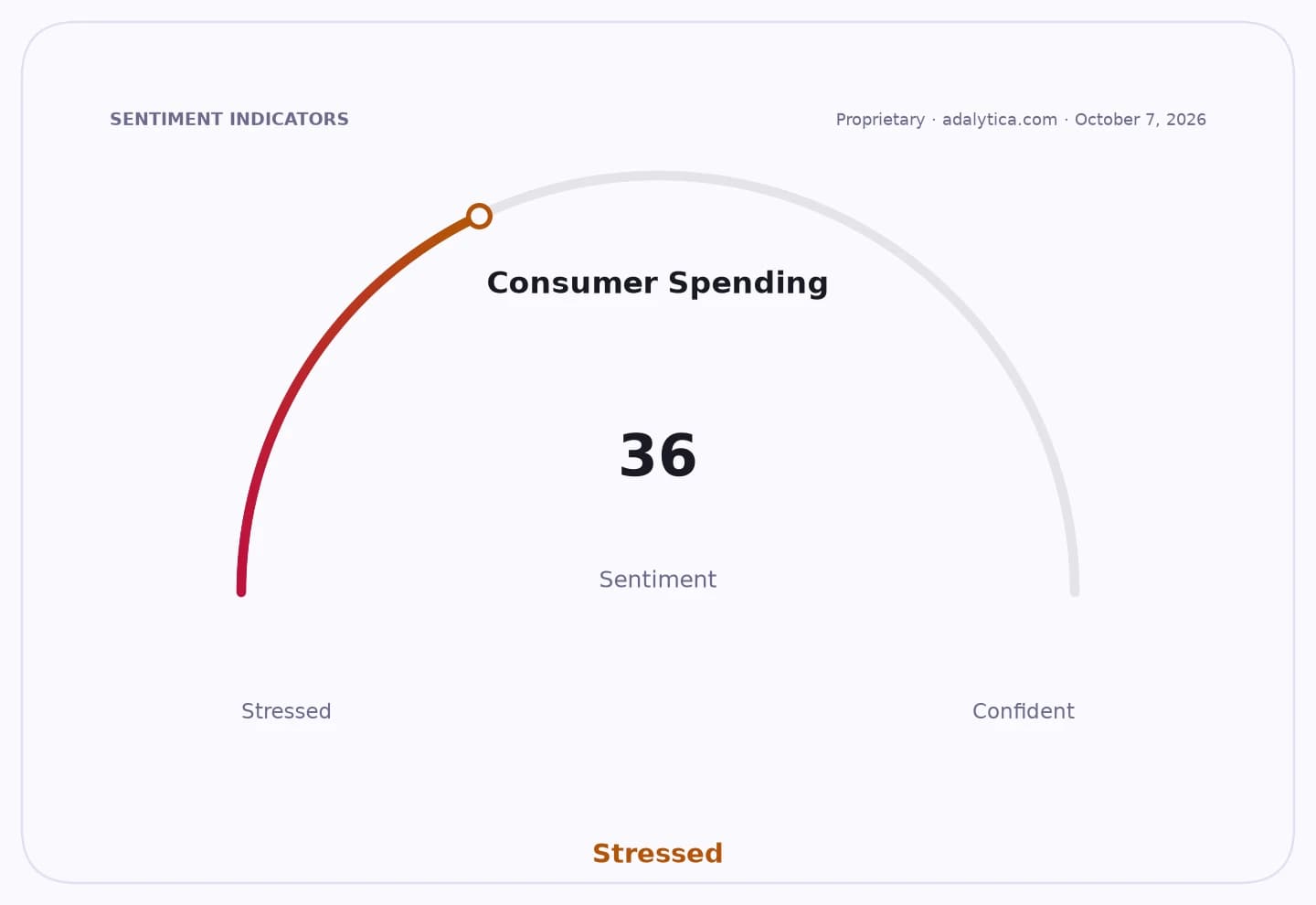
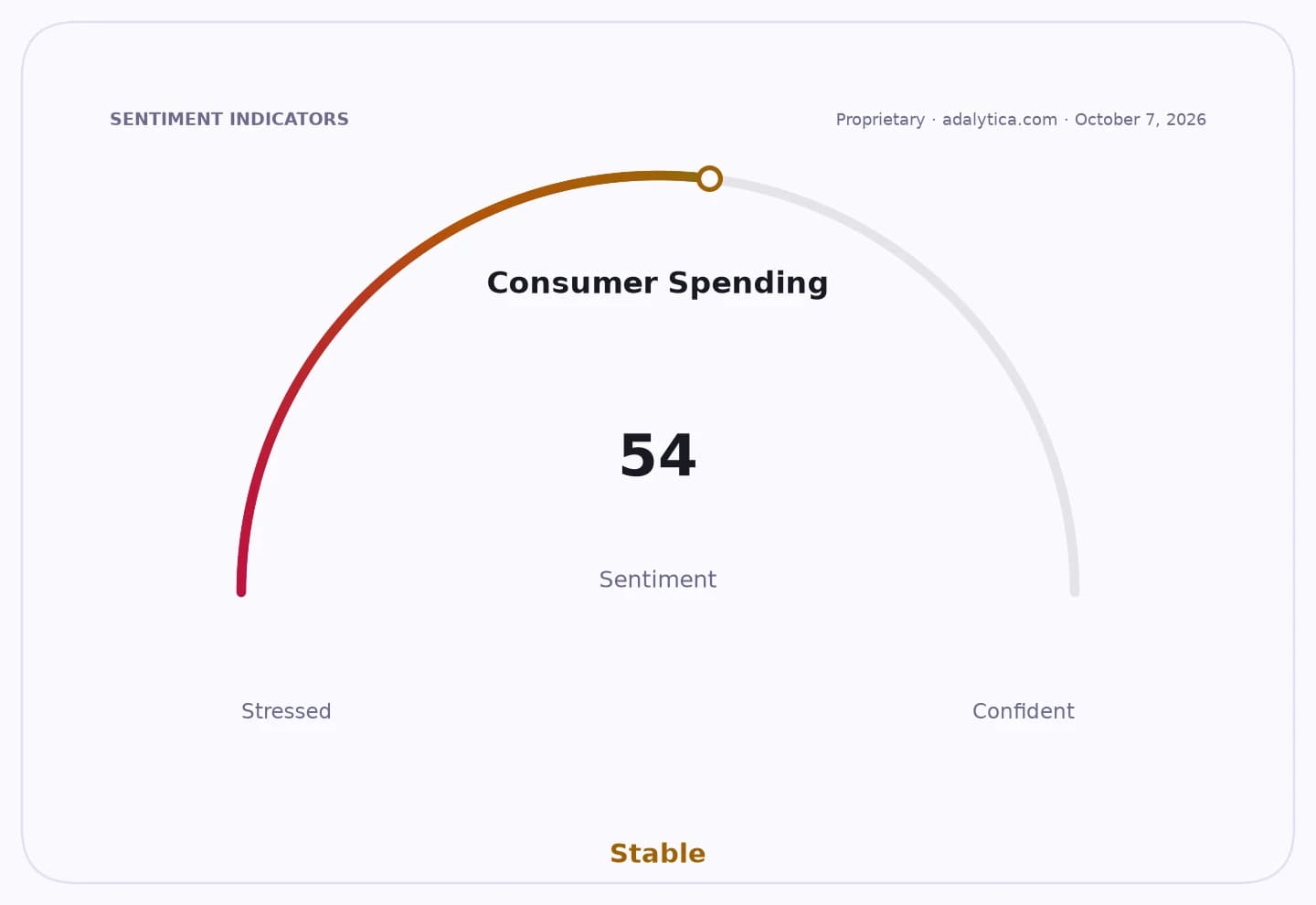
The macro backdrop helps explain why this rivalry keeps intensifying. Adalytica’s Consumer Spending Sentiment snapshot sits at 54, neutral, while Retail Goods Spending Sentiment remains in extreme fear at 14. In plain English, shoppers are still cautious, and that tends to favor the chains with the best prices, fastest delivery and broadest selection. It also means competition is likely to stay fierce, because weak spending gives consumers more room to switch between Amazon, Walmart and Costco in search of value.
That is why the stock market is watching this contest through a long-term lens. Amazon’s retail business is capital intensive, but every improvement in fulfillment efficiency, grocery penetration and delivery density can compound over time. Walmart’s advantage is its physical network, which gives it unmatched reach for curbside pickup and same-day grocery. Costco’s model, built on membership loyalty and tight merchandising, shows there is still plenty of room for disciplined retail models to thrive even as Amazon and Walmart battle over convenience.
The risk for both Amazon and Walmart is that the arms race stays expensive. Faster delivery, higher labor costs and ongoing technology spending can compress margins before scale benefits arrive. But that is also the opportunity for patient investors: the winner of this fight will not be the company that spends the least, but the one that converts that spending into more repeat purchases, more efficient logistics and better lifetime customer value.
For long-term investors, the takeaway is simple. This is one of the most important competitive battles in U.S. retail, and it is still being decided. Amazon looks stronger on growth and diversification, while Walmart remains a formidable defensive franchise with real digital momentum. Both deserve a place on any watchlist, and both are the kind of businesses investors can own for years if they believe scale, convenience and operating leverage will keep compounding.
| Entity | Gains | Losses |
|---|---|---|
| Amazon | ▲Scale in delivery and ads | ▼Margin pressure from logistics spending |
| Walmart | ▲Grocery loyalty and store network | ▼Shares if e-commerce gains stall |
| Costco | ▲Value-focused traffic | ▼Shoppers if pricing power erodes |
| Consumers | ▲More choice and faster service | ▼Higher costs if competition heats up |