Greens’ claim that it could assemble a $25 billion grocery empire is colliding with a market that is still rewarding scale, pricing power and balance-sheet discipline, not financial engineering.
Kroger, Walmart, Costco Diverge on Grocery Valuations
The pushback matters because supermarkets are one of the most defensively valued corners of the consumer sector: they are low-margin, capital-intensive businesses where small changes in pricing, traffic and sourcing costs can wipe out much of the profit pool. A transaction priced at $25 billion would have to clear a very high bar on synergies, financing and regulatory approval, especially at a time when consumers are still trading down, food inflation remains sensitive, and investors are scrutinizing every basis point of margin.
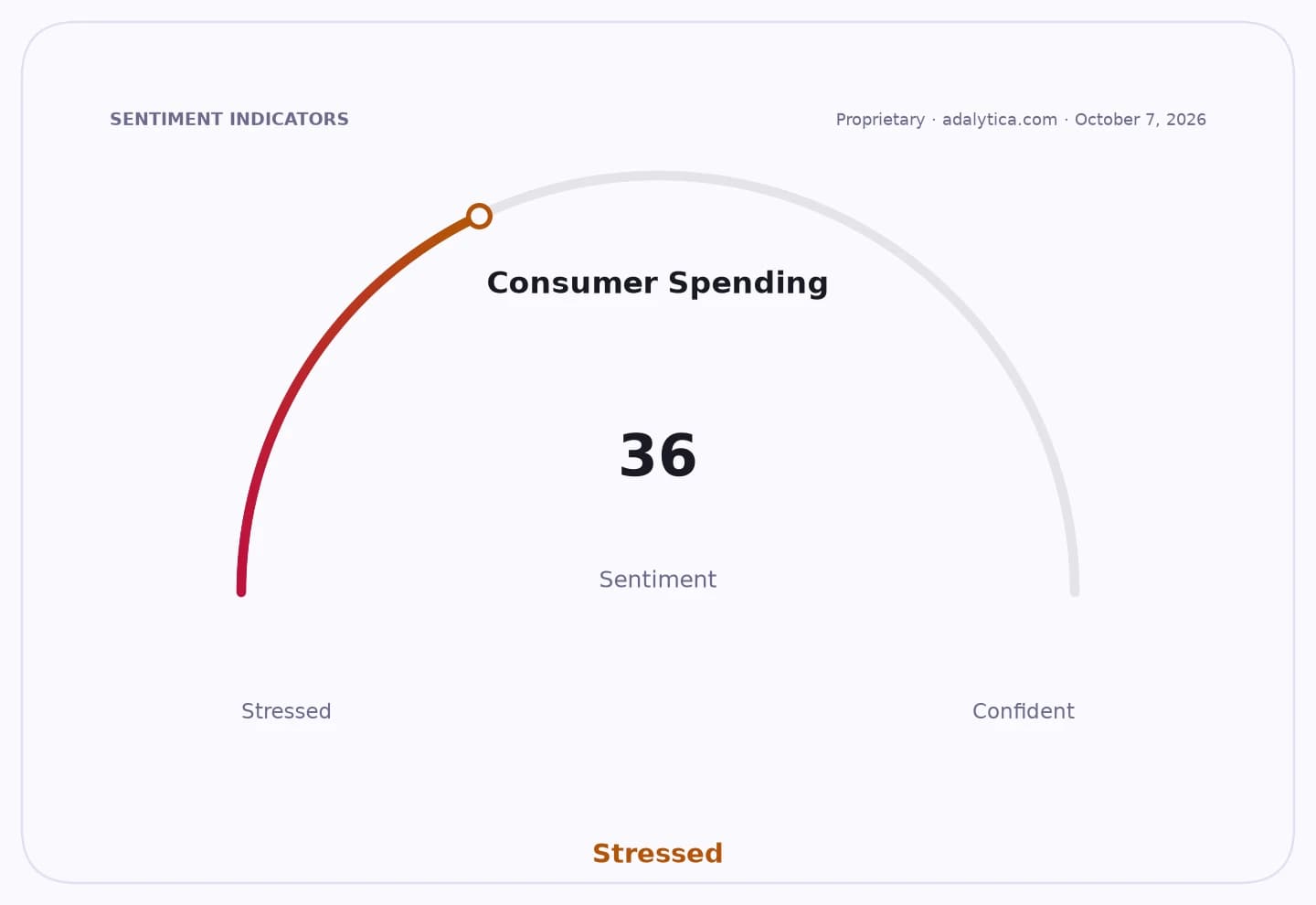
Sentiment IndicatorsⓘProprietary · adalytica.com · October 7, 2026
This is a snapshot — live sentiment, awareness and momentum for 130+ markets update continuously in the dashboard.Open AlphaPulse
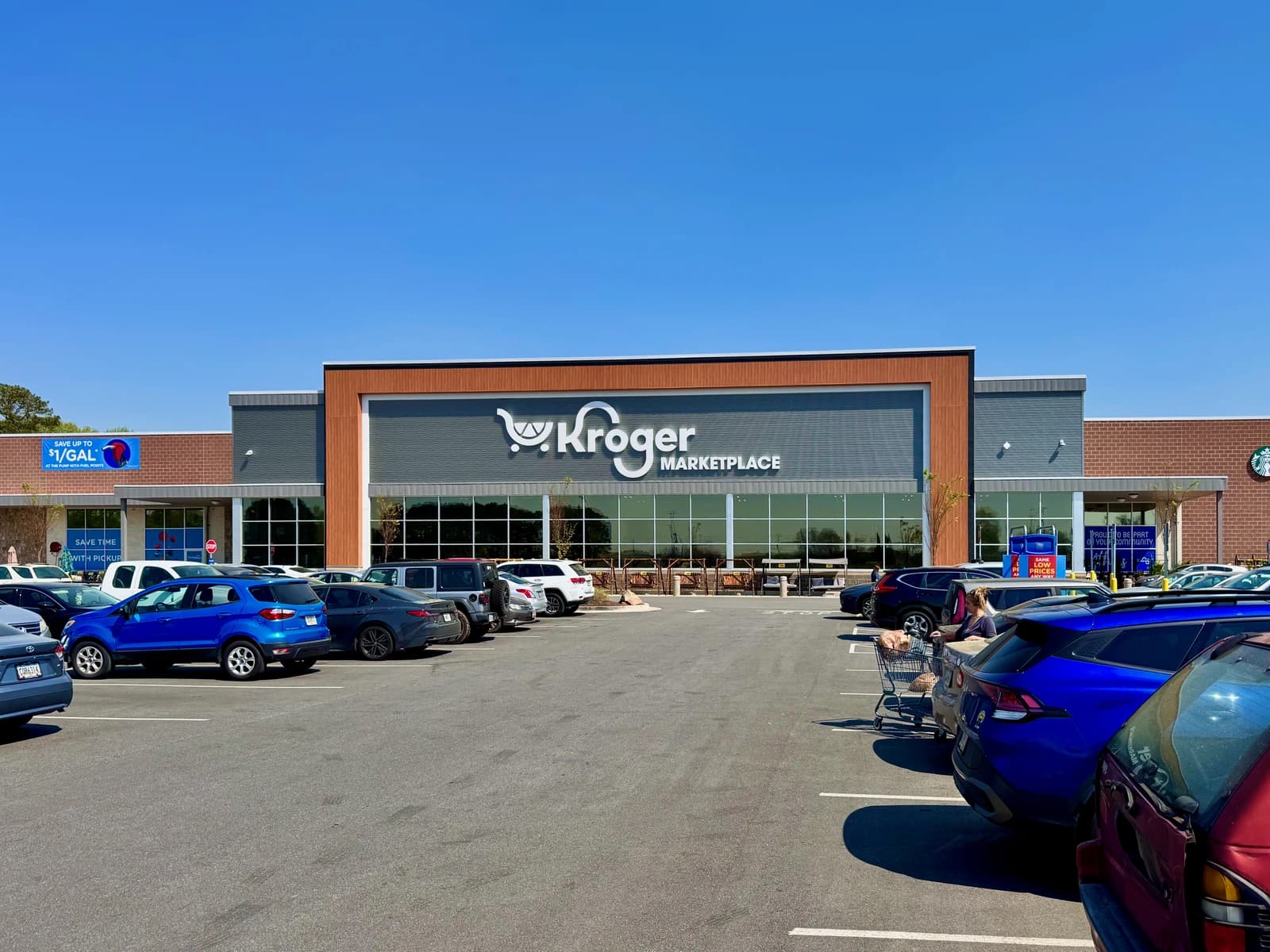
The stock tape shows why the economics are being questioned. Kroger shares have recently recovered to about $59.25 after a sharp mid-year selloff, but still sit below the stock’s 200-day moving average of roughly $62.86, a sign the market has not fully embraced a rerating. Walmart, by contrast, has climbed back to about $108.16, roughly in line with its 50-day average and far ahead of Kroger on relative momentum, while Costco trades near $942.25, slightly above its 50-day average and comfortably above its 200-day line. That gap underscores the market’s preference for the strongest operators rather than a leveraged roll-up story.
Technical readings reinforce the same message. Kroger’s relative strength index has only recently improved to 43.5 from deeply oversold levels, suggesting stabilization rather than conviction, while Walmart’s RSI sits at 54 and Costco’s at 75.9, pointing to firmer demand for the category leaders. In other words, investors appear willing to pay for operational consistency, but not for a speculative supermarket consolidation thesis.
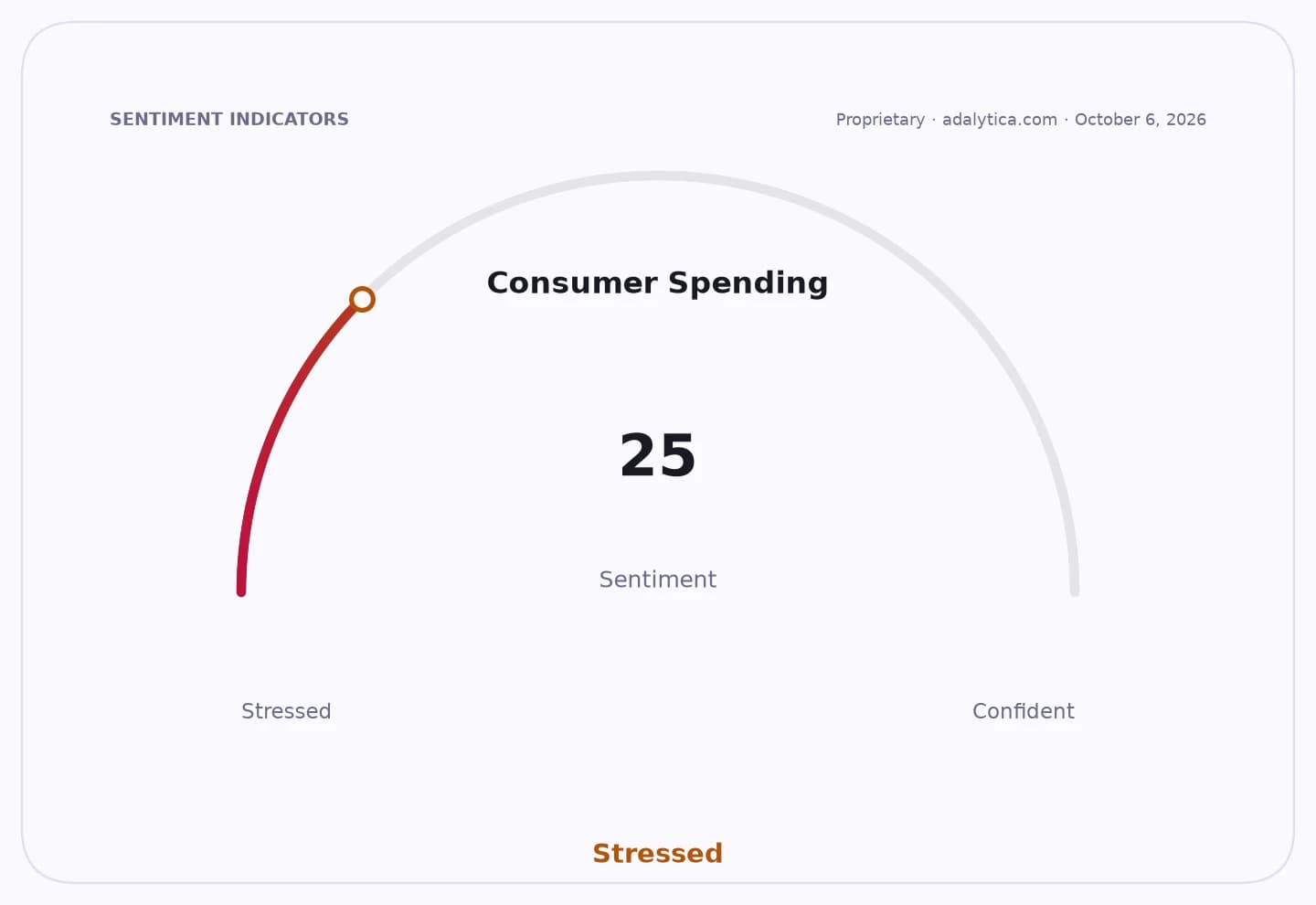
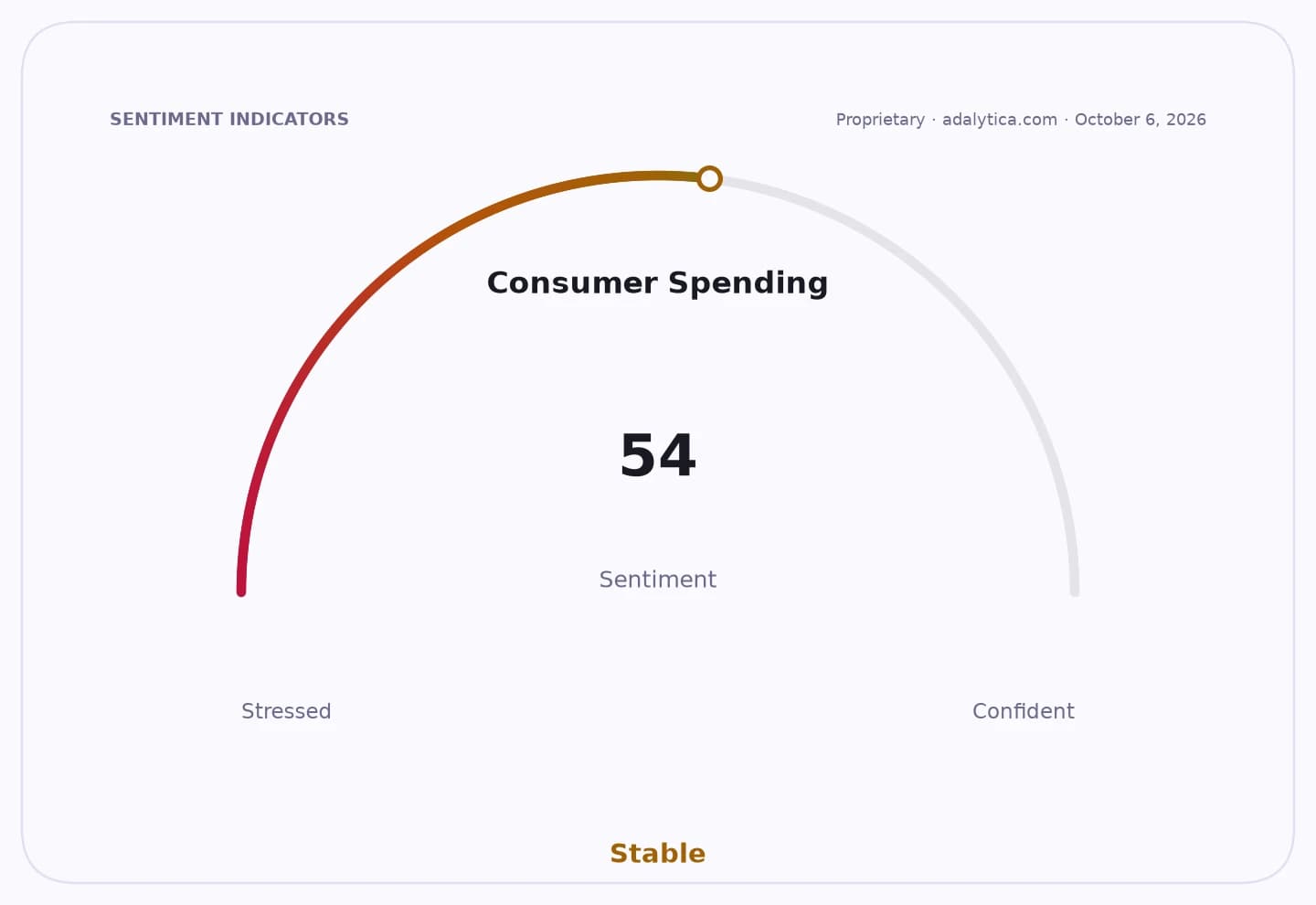
The broader consumer backdrop also argues for caution. Adalytica’s Consumer Spending Sentiment gauge has slipped to 36, with a 39-point decline over the past week and month, even as awareness remains elevated. That fits the news flow across the food sector: Lindt has cut sales expectations after demand weakened under the weight of high prices, a reminder that grocery and food companies cannot simply pass on every cost increase without risking volume losses. For a deal like Greens’ to work, it would need to assume that shoppers absorb higher prices, lenders remain patient, and regulators allow meaningful store overlap to be rationalized. None of those assumptions looks comfortable.
The investment case therefore splits into two camps. Bulls on consolidation will argue that a larger scale player could extract purchasing leverage, logistics savings and digital-efficiency gains in a fragmented grocery market. Bears will counter that supermarket economics rarely reward size at any price, and that a $25 billion valuation implies synergy expectations that may be difficult to realize without hitting consumers, workers or antitrust limits. The market’s current preference for Walmart and Costco over Kroger suggests investors are already leaning toward the bear case.
For now, the bigger message is that grocery remains a test of operating execution, not financial bravado. If Greens wants the market to take a $25 billion bid seriously, it will need to show that the deal improves margins without relying on assumptions that look detached from consumer behavior, financing costs and regulatory reality.
| Entity | Gains | Losses |
|---|---|---|
| Walmart | ▲Defensiveness premium | ▼Less room for rivals |
| Costco | ▲Investor preference for quality | ▼Limited sector disruption |
| Kroger | ▲Scale narrative if deal proceeds | ▼Credibility if bid is overreaching |
| Greens | ▲Expansion if synergies work | ▼Capital and regulatory risk |