The Street Target is charging more for its annual holiday grocery offer, a small but telling move that underscores how retailers are testing what inflation-strained consumers will still pay as the year-end shopping season begins.
Target raises holiday grocery basket price

For investors, the pricing decision matters because grocery traffic is still one of the clearest real-time gauges of household stress, especially heading into the most important spending window of the year. A higher-priced holiday basket can lift revenue per trip, but it also risks pushing shoppers toward rivals, private-label substitutes or fewer items in the cart. That tradeoff is exactly where the market’s next read on consumer resilience will come from.
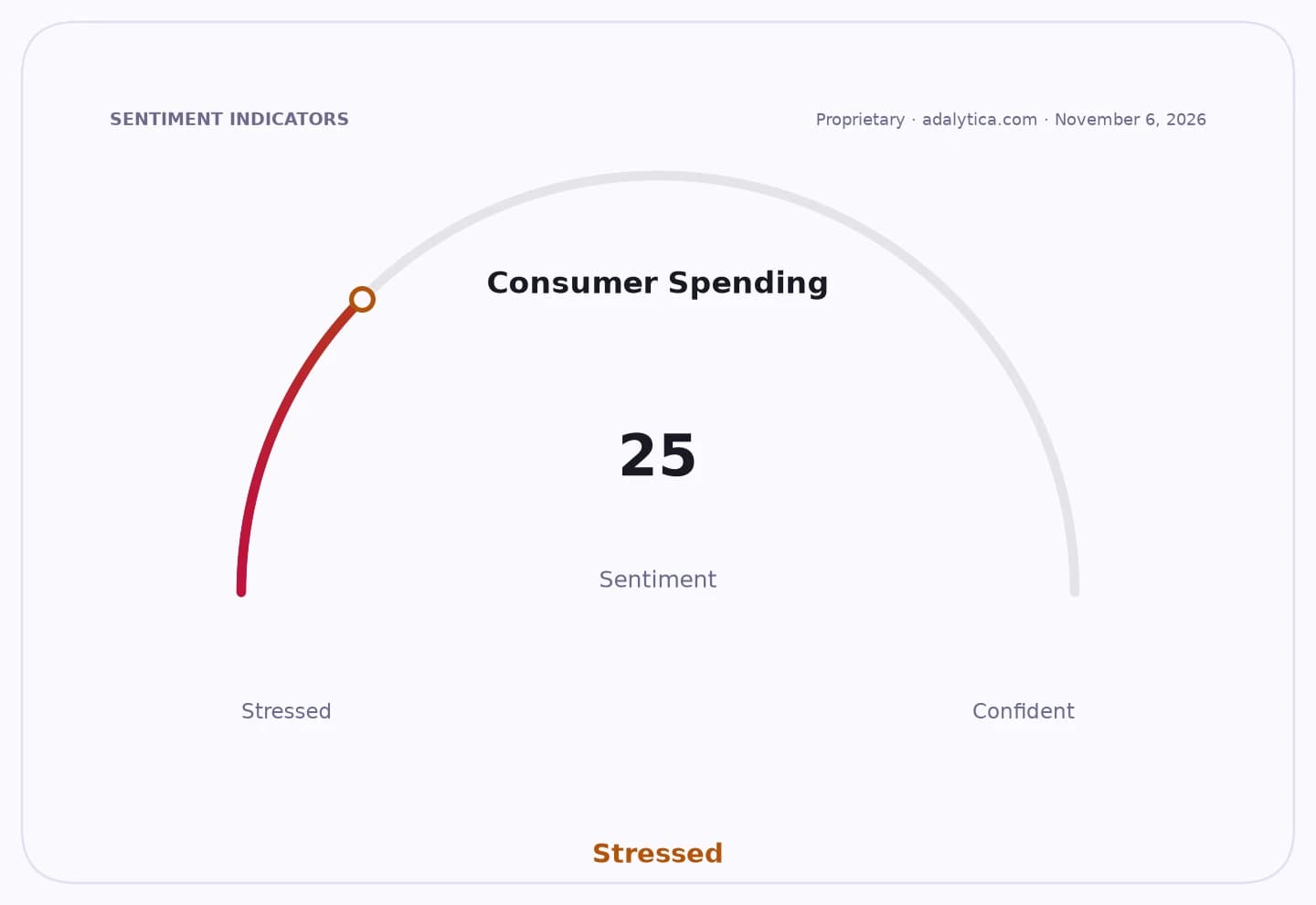
Sentiment Indicators
The broader backdrop is not friendly. Consumer spending sentiment in Adalytica’s gauge sits at 18, or “Fear,” while food and grocery spending sentiment is still elevated at 89, or “Extreme Greed,” suggesting shoppers remain focused on essentials even as their willingness to stretch is fragile. At the same time, holiday food inflation is reappearing across markets, with reports of tighter supply and higher prices for seasonal staples such as Christmas trees, turkey and chicken. That means grocers and discounters are entering a period where pricing power can still exist, but only selectively.
Target’s stock has already been acting like a retailer with leverage to the category mix. The shares closed at $158.41 on Nov. 6, well above the 50-day moving average of $156.42 and far above the 200-day average of $134.11, with momentum indicators still constructive even after the recent pullback from the autumn highs. That suggests investors are willing to reward any sign that holiday merchandising can defend margins without destroying demand.
The real investment question is whether this higher-priced holiday basket is a one-off or part of a broader reset in food retail pricing. If shoppers accept the increase, Target can preserve profitability and validate a more disciplined promotional strategy into year-end. If they balk, the pressure shifts to peers with bigger grocery exposure, where basket size and loyalty are even more sensitive to price.
My view is that the market underestimates how powerful holiday grocery economics can be when essentials are scarce and consumers are hunting for convenience. The winners are the chains that can bundle value, convenience and perceived affordability at scale. The losers are the operators forced into margin-eroding discounting just to keep traffic from leaking away.
That makes this more than a holiday pricing tweak. It is an early read on whether retailers can still pass through inflation in the one category consumers cannot skip, and that will shape margins, traffic and stock performance across grocery and discount retail into the new year.
| Entity | Gains | Losses |
|---|---|---|
| Target | ▲Higher basket revenue | ▼Price-sensitive shoppers |
| Grocery retailers with pricing power | ▲Margin protection | ▼Promo-heavy competitors |
| Discounters/private label sellers | ▲Trade-down traffic | ▼Premium grocers |
| Consumers | ▲Convenience and availability | ▼Holiday budgets |