Visa’s forecast for 4.5% U.S. holiday retail sales growth points to a consumer still spending, even as confidence is collapsing and shoppers turn more selective. The projection, if borne out, would mark the strongest holiday-season pace since 2021 and suggests that wage gains, a steady labor market and resilient card use are still outweighing the drag from high prices and caution.
Visa Forecasts 4.5% U.S. Holiday Sales Growth

The estimate matters because the holiday period remains the most important quarter for U.S. retailers and a key test of household balance sheets. A 4.5% increase is not just a nominal number: it implies retailers can still grow top line despite a tougher demand backdrop, but likely by leaning more heavily on promotions, earlier discounting and payments volumes rather than broad-based pricing power. In a season when merchants often chase traffic with markdowns, Visa’s call suggests spending is shifting, not disappearing.
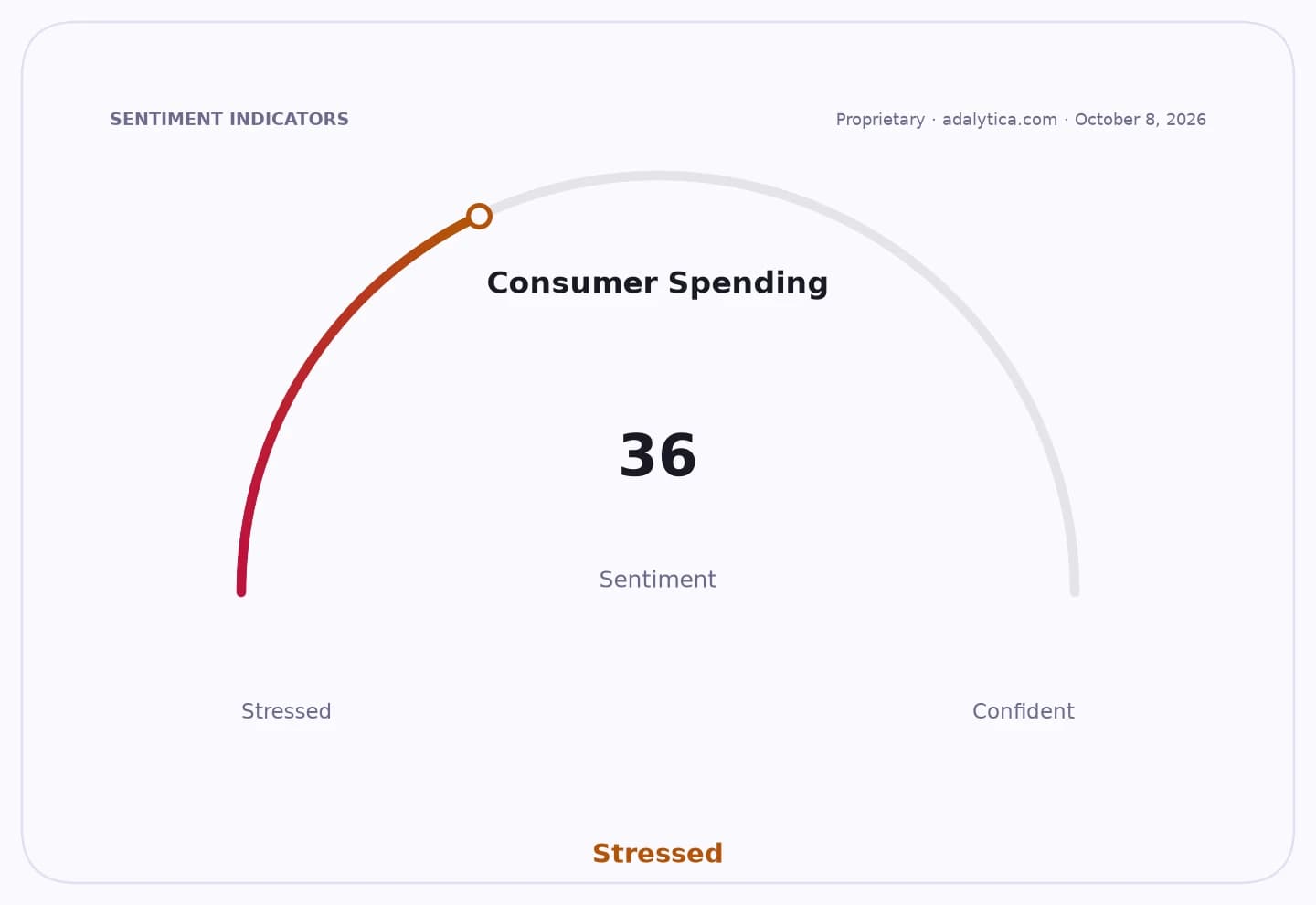
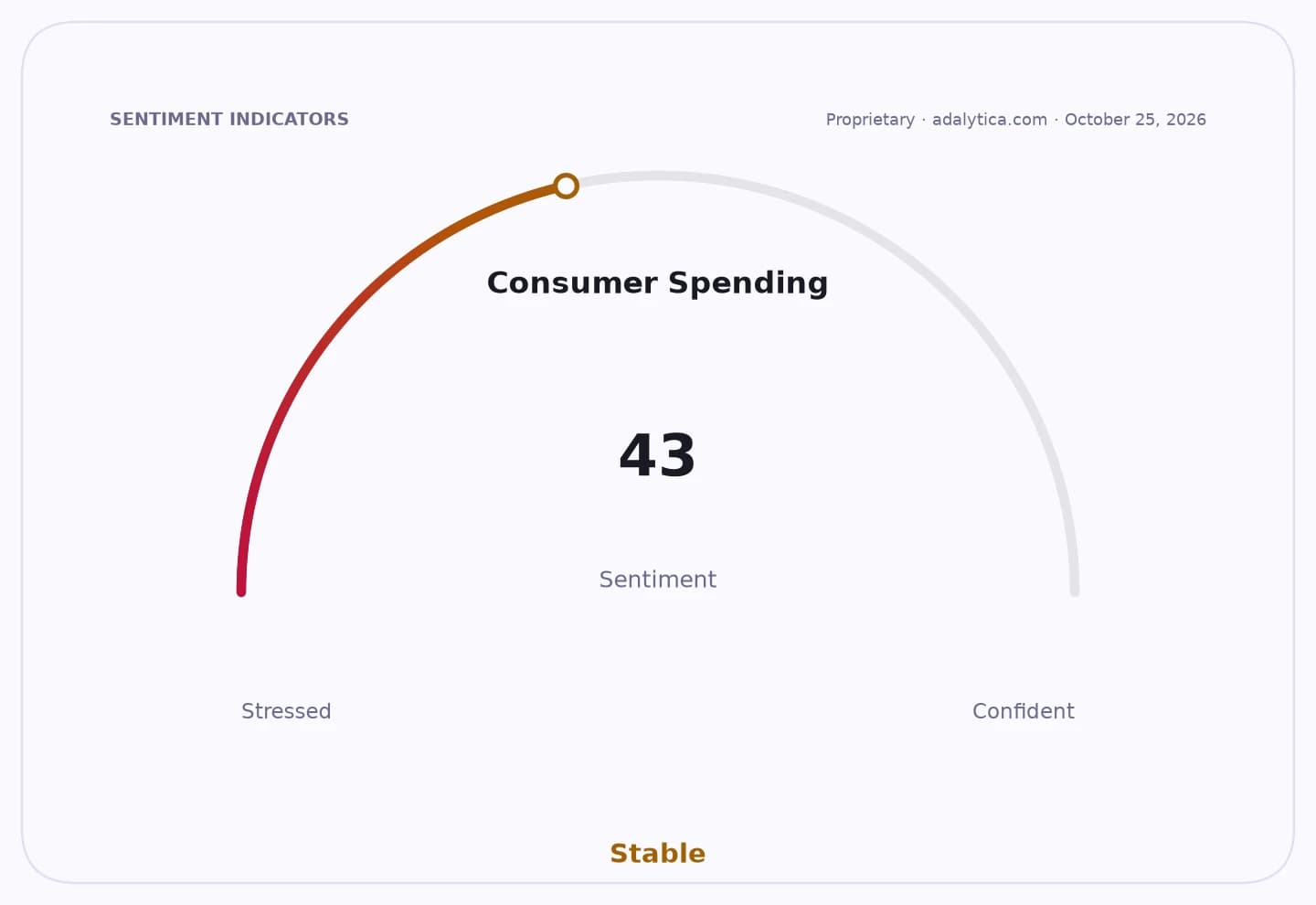
Sentiment Indicators
That tension is visible in the broader data. U.S. retail sales have continued to grind higher, with the latest reading pointing to a 652,115 million level in September and a forecast that leaves October essentially flat, underlining a market that is growing but not accelerating meaningfully. At the same time, consumer sentiment remains deeply subdued. Adalytica’s Consumer Spending Sentiment gauge is at 5, in “Extreme Fear,” while its Consumer Confidence Recession Sentiment sits at 7, also in “Extreme Fear.” Yet the same dashboard shows Retail Sales Sentiment at 81, or “Greed,” indicating that households may be worried about the outlook but still willing to spend on the holidays.
For investors, that mix is constructive for payment networks and select consumer-facing names, but less so for retailers counting on easy full-price demand. Visa’s shares have rallied sharply, with the stock recently trading above $420 and well above both its 50-day and 200-day moving averages, while momentum indicators such as RSI and MACD show the market has priced in a stronger spending backdrop. Mastercard has also been firm, reflecting similar expectations for payment volume growth. PayPal, meanwhile, has recovered from a sharp early-year selloff but remains more sensitive to consumer caution and competitive pricing pressure.
The macro backdrop helps explain why the spending outlook is holding up despite the gloom. Unemployment remains low at 4.1% to 4.2%, giving households income support even as confidence deteriorates. That supports Visa’s view that holiday sales can grow faster than headline sentiment would imply. But it also means the season is likely to be uneven: affluent consumers and credit users may keep spending, while lower-income shoppers remain more exposed to higher costs and deeper discounting.
For retailers, the implication is that volume can still be won, but at a cost. Early promotions from chains such as Target, Best Buy and Carter’s point to a season shaped by value-seeking behavior rather than exuberance. For payments firms, the upside is clearer: even a cautious consumer can still generate transaction growth if holiday spending shifts online, becomes more card-based and is spread across a longer promotional window. The key risk is that stronger nominal sales mask weaker real demand and thinner margins, leaving merchants with more revenue but less profitability.
If Visa’s forecast proves right, the holiday season will reinforce a familiar post-pandemic pattern: consumers remain uneasy, but they are still spending. That makes the environment supportive for payments networks and the strongest retailers, while punishing companies that need full-price growth or discretionary splurging to hit targets.
| Entity | Gains | Losses |
|---|---|---|
| Visa | ▲Higher payment volumes | ▼Less pricing relevance |
| Retailers with promotions | ▲Traffic and sales growth | ▼Margin pressure |
| Mastercard | ▲Similar card-spend tailwind | ▼Limited if spending slows |
| Value-sensitive consumers | ▲More discounts | ▼Higher holiday costs |