US consumer sentiment slipped to a five-month low in October as inflation fears and elevated borrowing costs continued to squeeze households, reinforcing the risk that spending will cool into year-end.
US consumer sentiment falls to five-month low
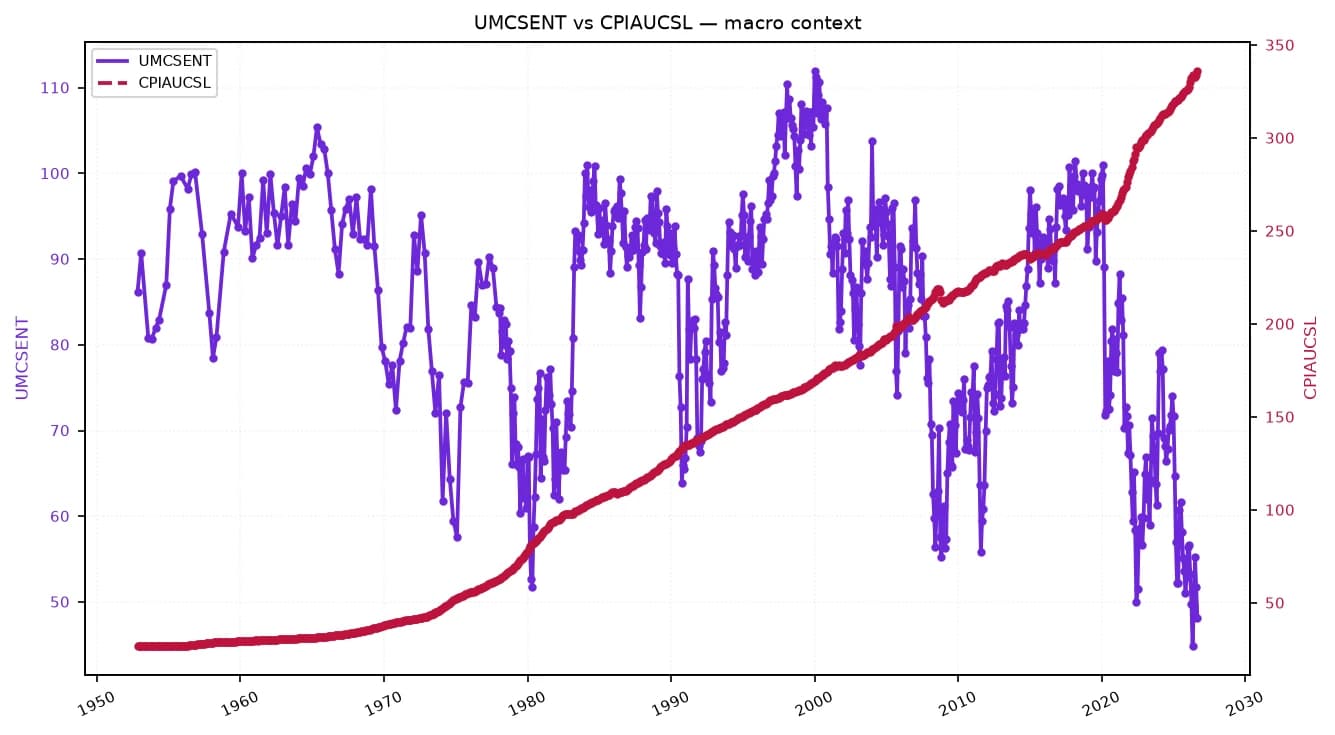
The University of Michigan’s consumer sentiment index edged down to 48.0 from 48.1 in September, while current economic conditions dropped to 46.7 from 50.9, a sharper fall that underscores how households are reacting to the cost of financing purchases. Joanne Hsu, who leads the survey, said the decline in current conditions was driven entirely by deteriorating buying conditions for durable goods, which fell 18% as higher interest rates and worsening affordability weighed on big-ticket purchases.
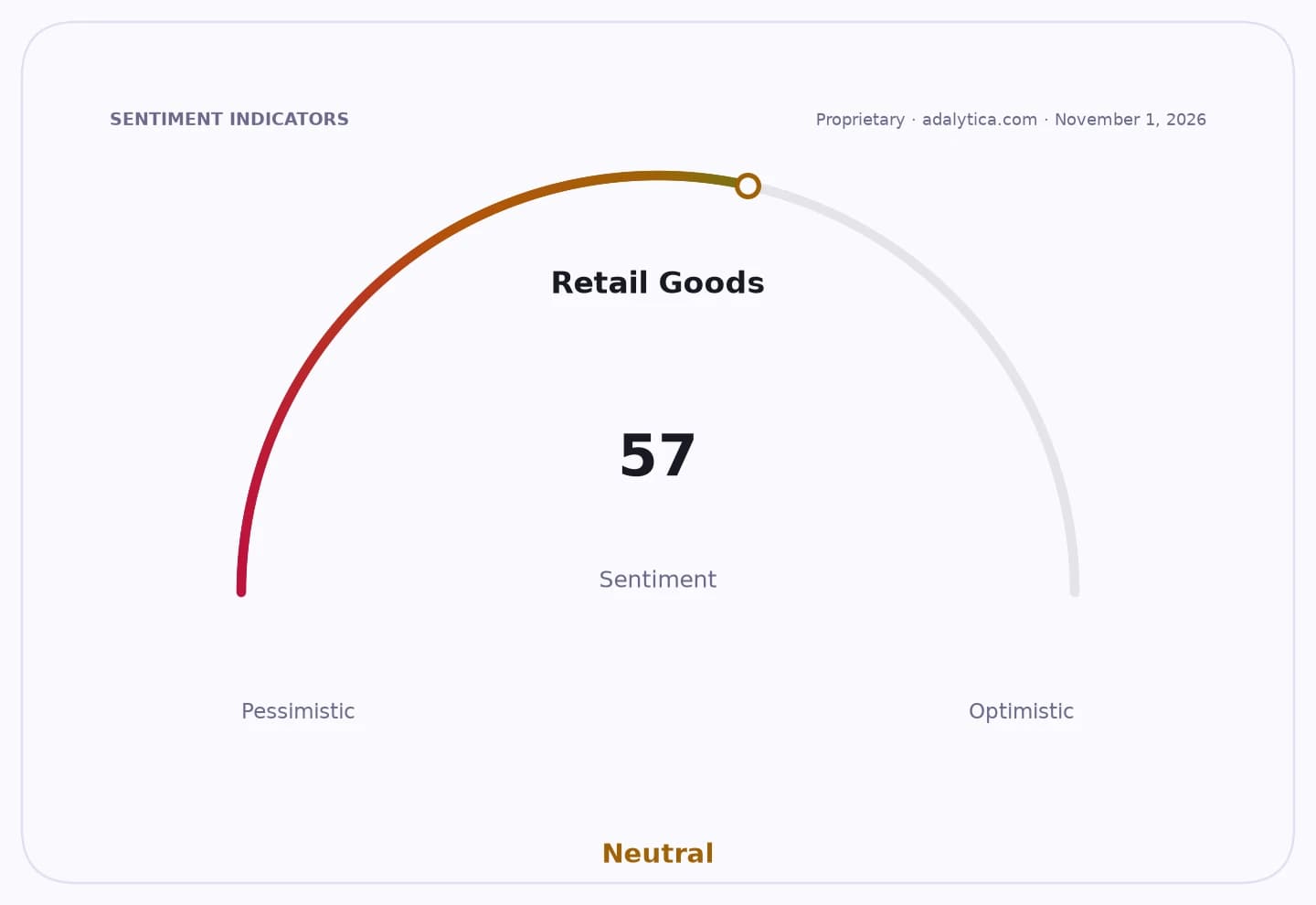
Sentiment Indicators
That matters because consumer spending remains the main engine of the US economy, and weaker confidence can feed directly into slower demand for autos, appliances and other financed purchases. The report also showed the mood remains well below recent levels, with sentiment 10% lower than a year ago and 15% below February, before the conflict with Iran intensified market and household unease.
Inflation expectations moved the wrong way as well. Consumers now expect prices to rise 4.7% over the next 12 months, up from 4.6% in September, while long-run inflation expectations climbed to 3.5% from 3.4%. Both readings were the highest since May, signaling that households still see inflation as sticky even as economic activity cools.
For investors, the combination of weaker sentiment and firmer inflation expectations is a mixed signal for markets: it points to softer consumer demand, but also to less room for the Federal Reserve to ease policy aggressively. That combination can pressure retail, autos and consumer discretionary shares while keeping yields and rate-sensitive assets volatile.
The next focus is whether softer sentiment starts to show up in hard data on spending and sales. If households keep pulling back on durable goods, businesses tied to consumer credit and discretionary purchases may face a tougher holiday season even if headline growth holds up.
| Entity | Gains | Losses |
|---|---|---|
| Inflation hedge assets | ▲More support from sticky expectations | ▼Less urgency for rapid rate cuts |
| Consumer discretionary retailers | ▲Potential promotions to clear inventory | ▼Weaker demand for big-ticket goods |
| Federal Reserve | ▲More evidence inflation is not fully contained | ▼Fewer reasons to ease quickly |
| Households | ▲None | ▼Lower purchasing power, higher financing costs |