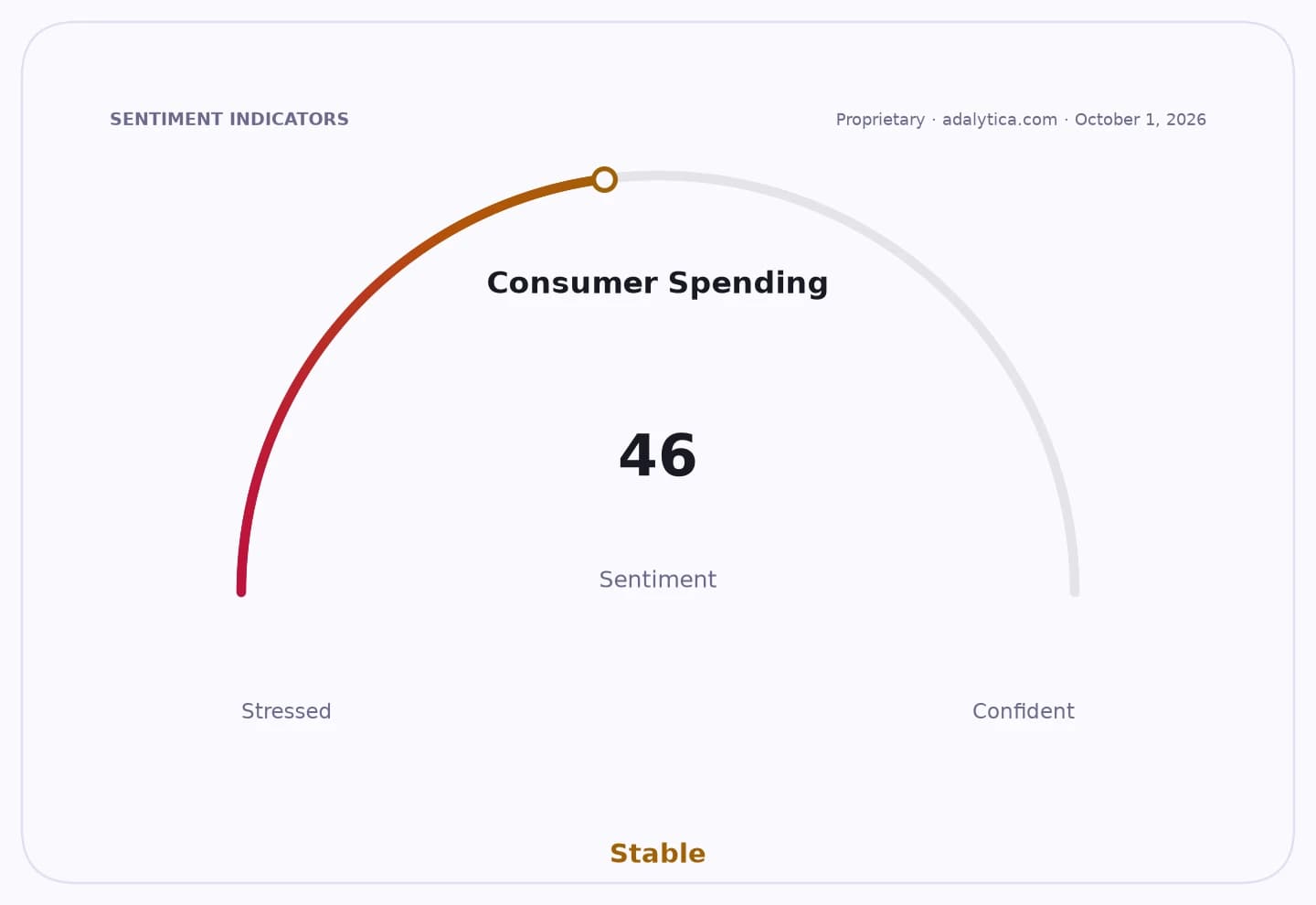
Too many households are heading into the winter with little room left in the budget, and that matters because strained consumers eventually hit everything from retail sales to local services and tax receipts.
Consumer Discretionary Weakens as Households Cut Spending
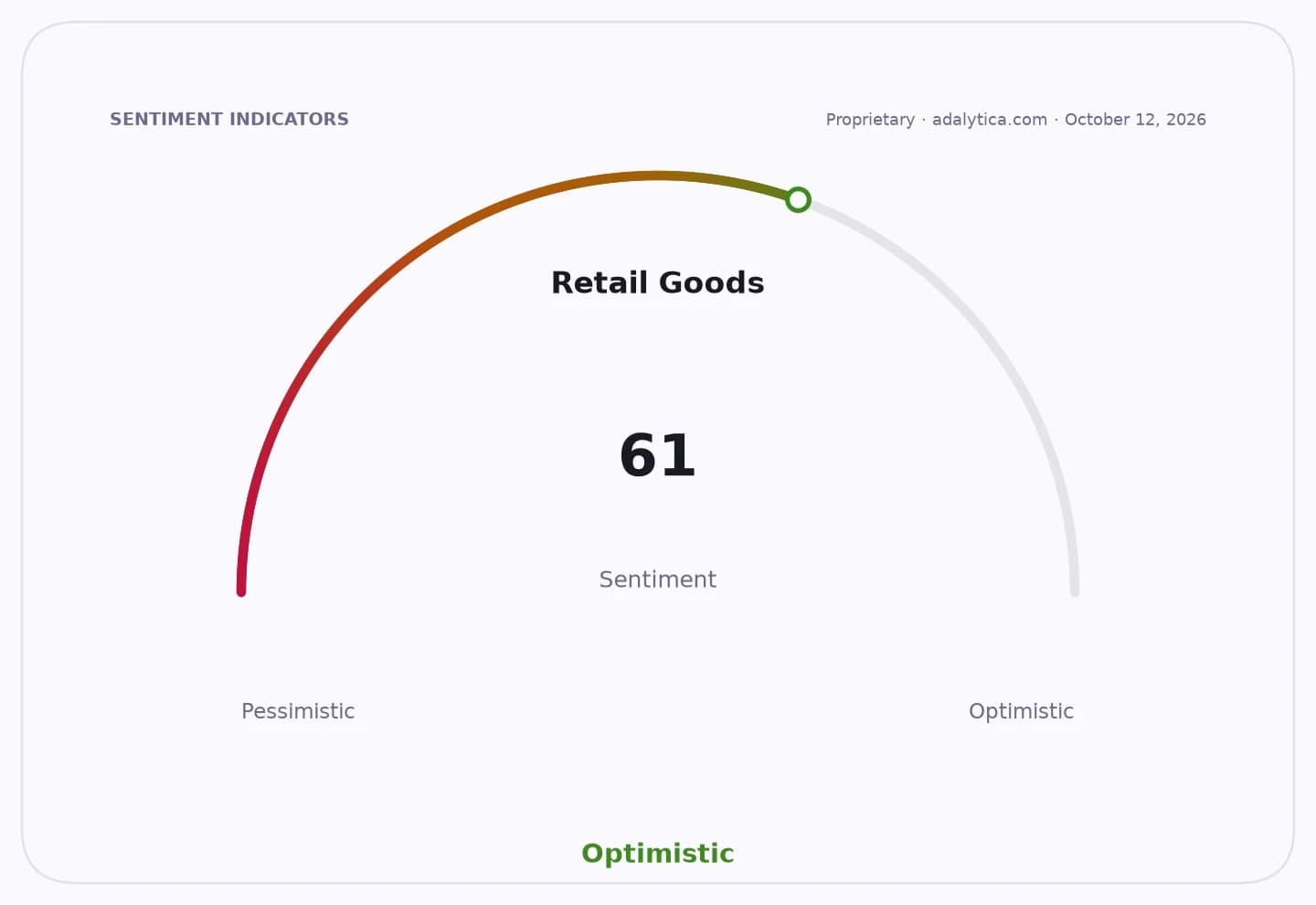
Retail Goods
The clearest message in the data is not a single weak month or one-off bill shock, but a slow grind higher in mandatory payments that leaves families making hard trade-offs. In the Finnish source material, people are talking openly about skipping Christmas spending, cutting electricity use, and even foregoing basic seasonal purchases. That kind of language usually shows up when households have moved past trimming extras and are already cutting into normal life.
Sentiment Indicators
For investors, that is the important economic story: when the payment burden gets heavy enough, discretionary spending becomes fragile. Consumer-discretionary stocks have reflected that tension. The XLY consumer-discretionary ETF has been choppy and, at 115.38 on the latest close, sits only modestly above its 200-day moving average of 115.16, after earlier weakness that pushed the relative strength index deep into oversold territory. By contrast, the defensive XLP consumer-staples ETF has held up better, closing at 89.42 and trading comfortably above both its 50-day and 200-day moving averages. In plain English, investors are still paying up for stability while being more selective on what consumers can postpone.
That caution makes sense when you look at the broader backdrop. U.S. unemployment remains low at 4.2%, so this is not a classic jobs recession. But low unemployment does not prevent a cost-of-living squeeze if rent, utilities, transport, insurance and debt service keep climbing faster than wages. The result is a household balance sheet that feels tighter even without mass layoffs. That tends to favor companies selling essentials and value-oriented goods, while pressuring higher-ticket retailers, restaurants and brands that depend on confident shoppers.
Consumer Spending vs XLYadalytica.com
Explore this data interactively — full history, time series and cross-market comparisons.
Adalytica’s consumer-spending sentiment snapshot shows the same split. Consumer Spending Sentiment is at 96, labeled “Extreme Greed,” while Consumer Confidence Recession Sentiment sits at 29, labeled “Fear.” That gap suggests consumers may still be spending in places, but they are doing it from a position of anxiety rather than comfort. When confidence weakens while spending sentiment stays elevated, it often means households are leaning on promotions, substituting down, or pulling demand forward before the belt-tightening deepens.
The long-term investing takeaway is straightforward: the winners in this environment are companies that can help households stretch every euro or dollar further. That includes discount retailers, private-label groceries, value chains and utilities or service providers with sticky demand. The losers are businesses tied to impulse spending, premium upgrades and anything that requires a confident consumer to say yes without hesitation. For buy-and-hold investors, this is a reminder to favor durable cash flow and pricing power over short-term hype — and to keep a close watch on how long this payment squeeze lasts.
| Entity | Gains | Losses |
|---|---|---|
| Discount retailers | ▲Trade-down traffic | ▼Premium chains |
| Grocery and staples brands | ▲Steady demand | ▼Discretionary sellers |
| Utilities and essential services | ▲Sticky billing | ▼Households’ budgets |
| Consumer discretionary stocks | ▲— | ▼Slower spending growth |