US consumer spending is still growing, but the most important shift is who is carrying it: lower-income households are driving the next leg of demand while broader spending cools only modestly.
US Consumer Spending Shifts Toward Lower-Income Households

That matters because household consumption remains the backbone of the US economy, and this is not a story of broad-based exuberance so much as a story of resilience under pressure. The latest data show household spending rising 4.9%, while the personal consumption expenditures measure climbed to 22,452.8 in September from 22,339.7 in August, leaving spending trends firm even as inflation, measured by the CPI, sits at 336.298. For investors, the message is clear: the consumer is not breaking, but it is getting more uneven.
Sentiment Indicators
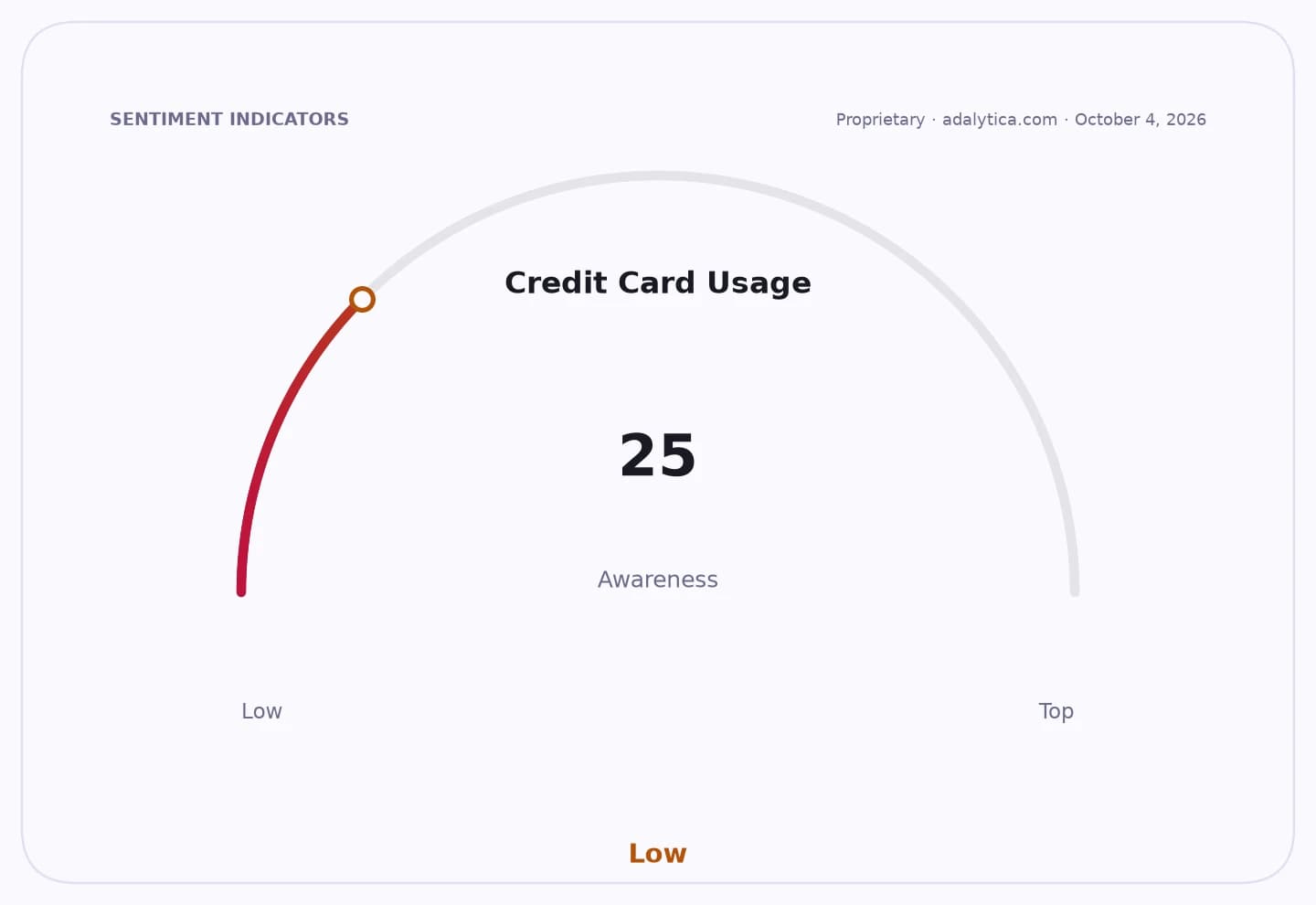
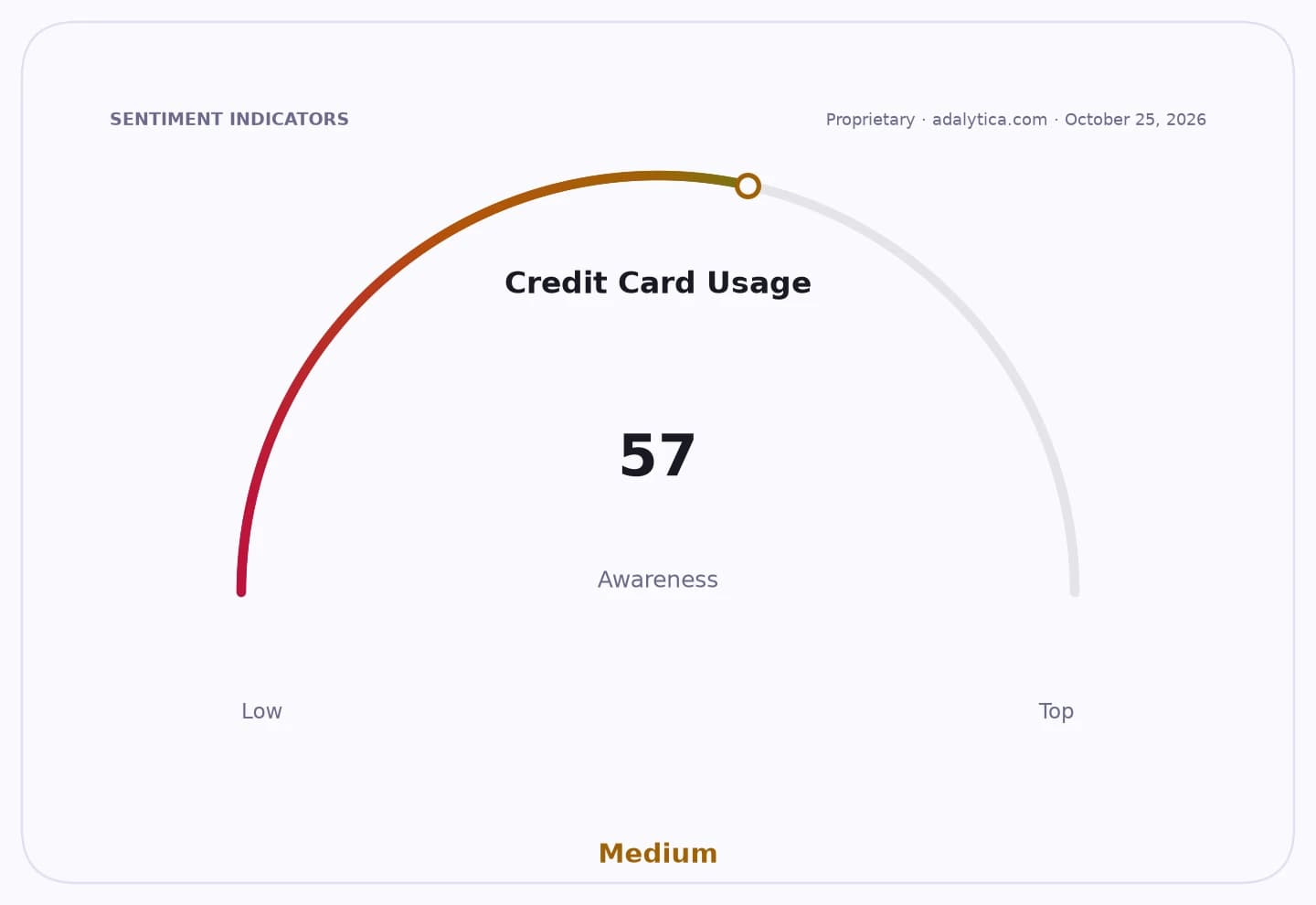
Credit Card Usage
This split economy has immediate market implications. Lower-income households tend to spend a larger share of every additional dollar they receive, so their outperformance can keep traffic flowing through discount retailers, value-oriented restaurants, big-box chains and payment networks even when wealthier consumers get more selective. At the same time, it can weigh on margin-sensitive discretionary names that rely on affluent shoppers for premium-ticket purchases and pricing power. The market underestimates how much this kind of spending pattern reshapes earnings durability across consumer sectors.
The stock tape is already hinting at that divide. The Consumer Discretionary Select Sector SPDR Fund, XLY, has recovered to 116.20 after a turbulent stretch, while the Consumer Staples Select Sector SPDR Fund, XLP, has climbed to 88.18, suggesting investors are still hedging between growth exposure and defensive cash flow. XLY remains above its 50-day moving average of 113.16 and near its 200-day average of 115.19, while XLP has been stronger relative to trend, with its 50-day average at 84.29 and its 200-day at 83.53. That tells you the market is pricing a consumer that is still spending, but not cleanly accelerating.
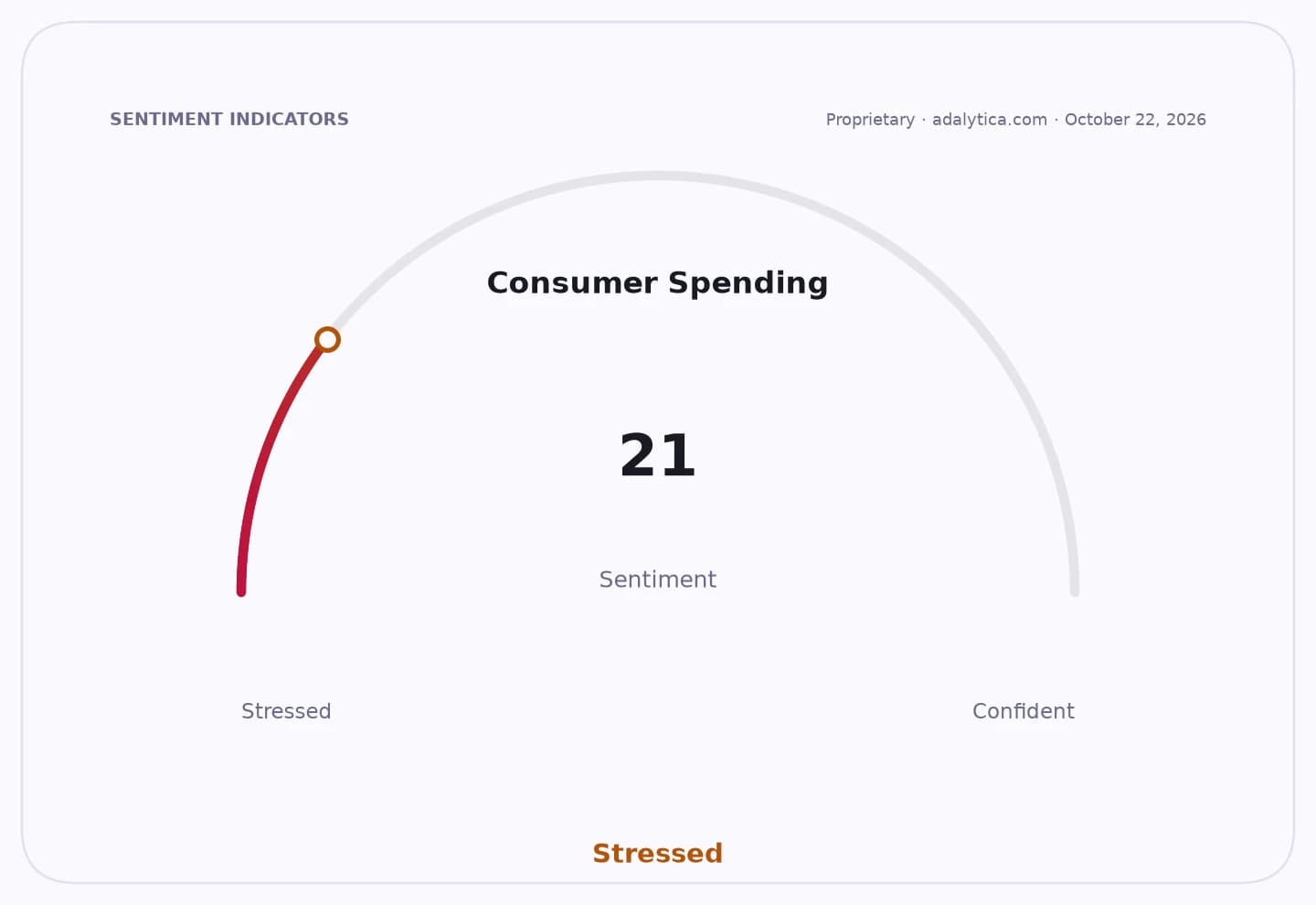
Adalytica’s Consumer Spending Sentiment gauge sits at 96, labeled Extreme Greed, which underscores how much optimism has rushed back into the spending trade. But the credit-card usage gauge remains in Fear at 18, a warning that spending is being sustained by a more strained and selective consumer base rather than by easy confidence. That combination usually favors disciplined operators with exposure to essentials, lower price points and repeat purchase behavior.
The investment takeaway is straightforward: this is not the moment to chase broad consumer cyclicals indiscriminately. The better trade is to lean into the companies that capture value-seeking spending and daily necessity purchases, while being selective on premium discretionary names that depend on higher-income elasticity. If lower-income households stay active, the winners will be the retailers, grocers, discount chains and payment processors that sit closest to essential demand.
For now, the consumer remains a tailwind for the economy, but the composition of that tailwind is changing. That is exactly where the next round of alpha will come from.
| Entity | Gains | Losses |
|---|---|---|
| Discount retailers | ▲value traffic | ▼premium pricing power |
| Grocery and staples chains | ▲steady volumes | ▼margin expansion |
| Payment networks | ▲transaction flow | ▼luxury discretionary sellers |
| XLP vs. XLY | ▲defensive support | ▼broad discretionary upside |