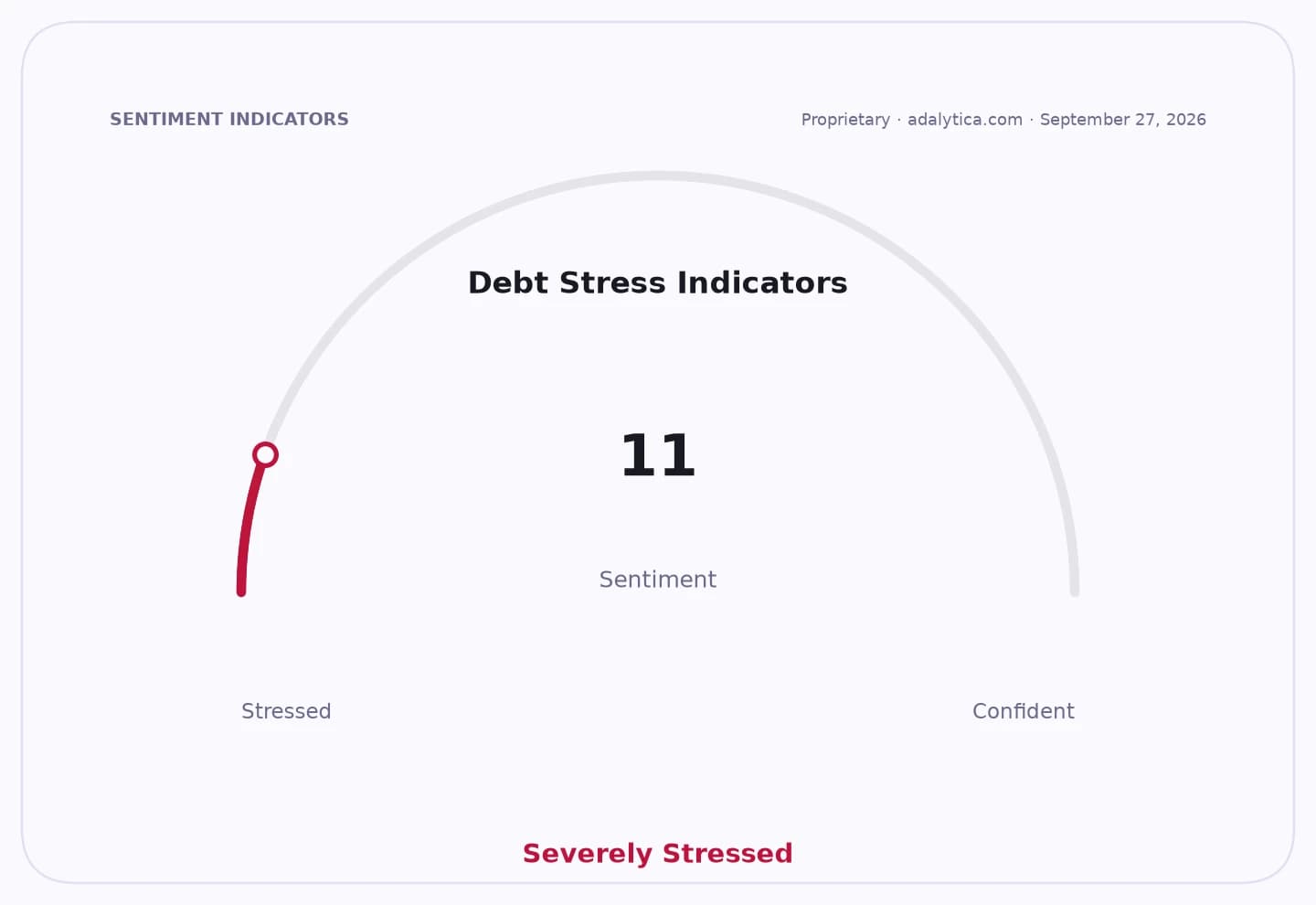
Household debt is worsening as utility bills stay elevated, leaving consumers with less room to absorb other expenses and increasing the risk that a softening labor market could tip more families into distress.
US Households Face Higher Utility Bills and Debt Strain
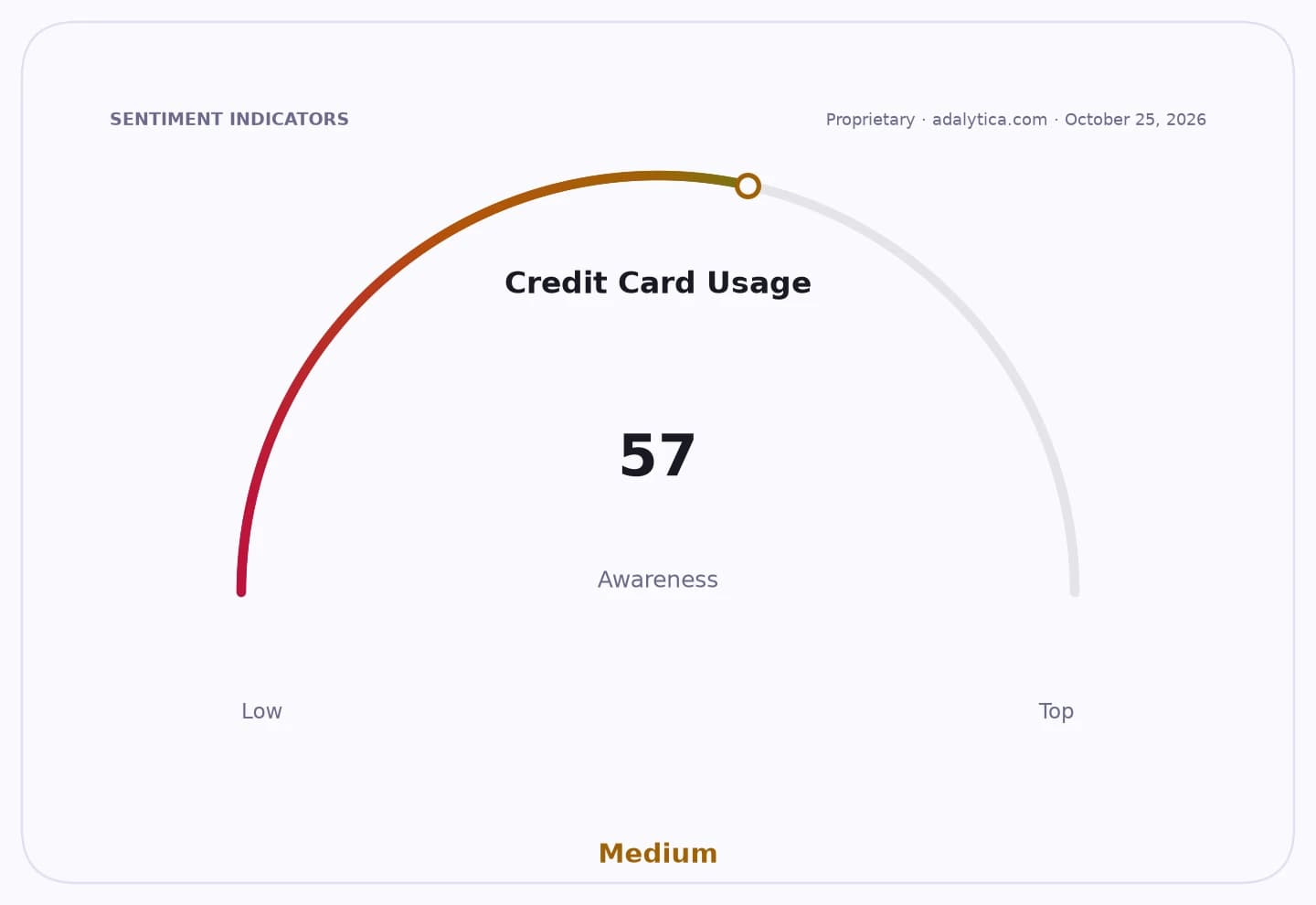
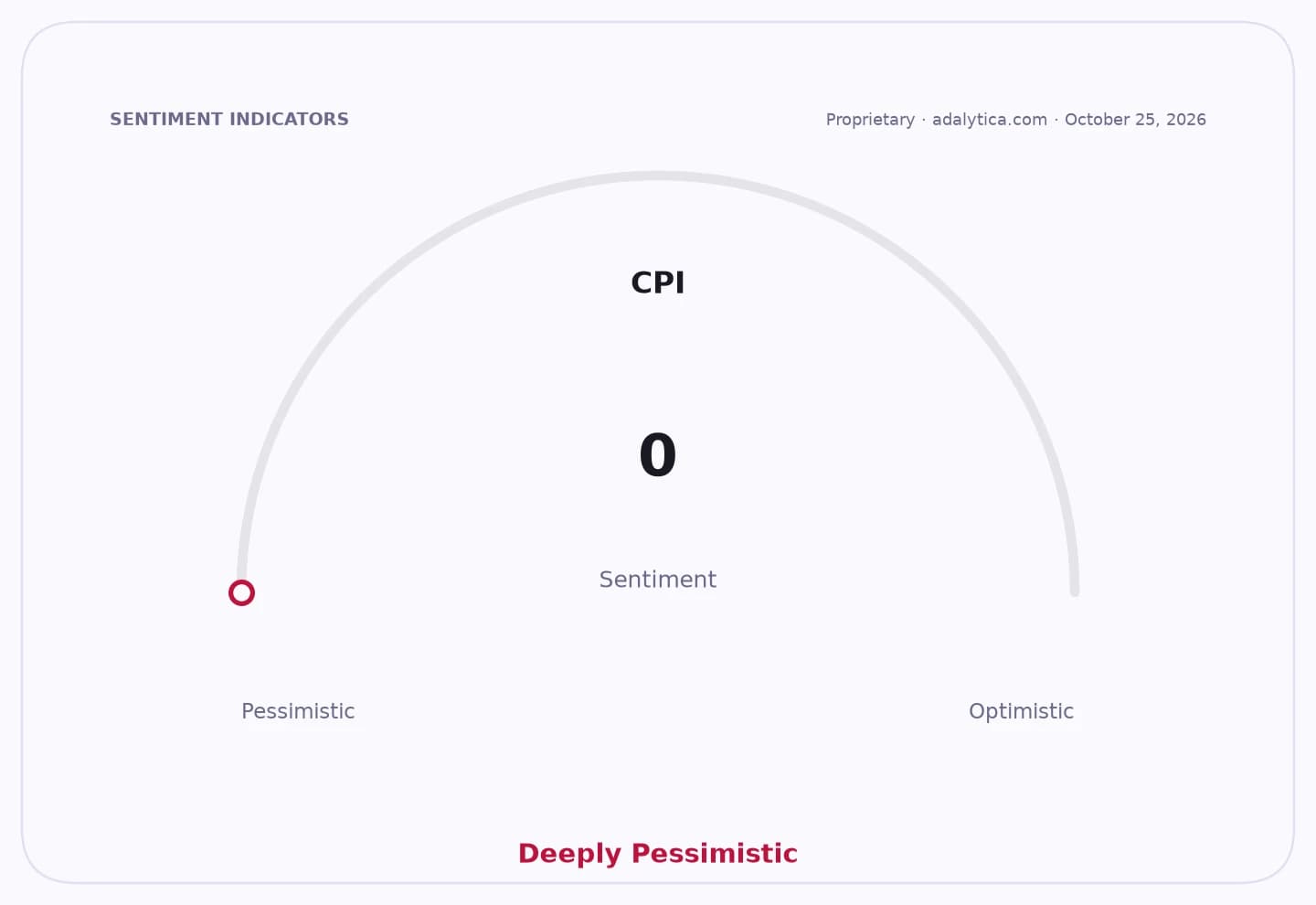
That strain is showing up against a backdrop of still-firm consumer prices and a cooling but not collapsing jobs market. US inflation, measured by the consumer price index, is forecast to edge down only slightly to 335.8 in October from 336.3 in September, underscoring that electricity, gas and other household essentials remain sticky even as broader price growth moderates. The unemployment rate is expected to hold near 4.1% to 4.2%, which helps prevent a full-blown credit event, but does little to relieve pressure on lower- and middle-income households whose budgets are already stretched by recurring utility payments.
Sentiment IndicatorsⓘProprietary · adalytica.com · October 25, 2026
This is a snapshot — live sentiment, awareness and momentum for 130+ markets update continuously in the dashboard.Open AlphaPulse
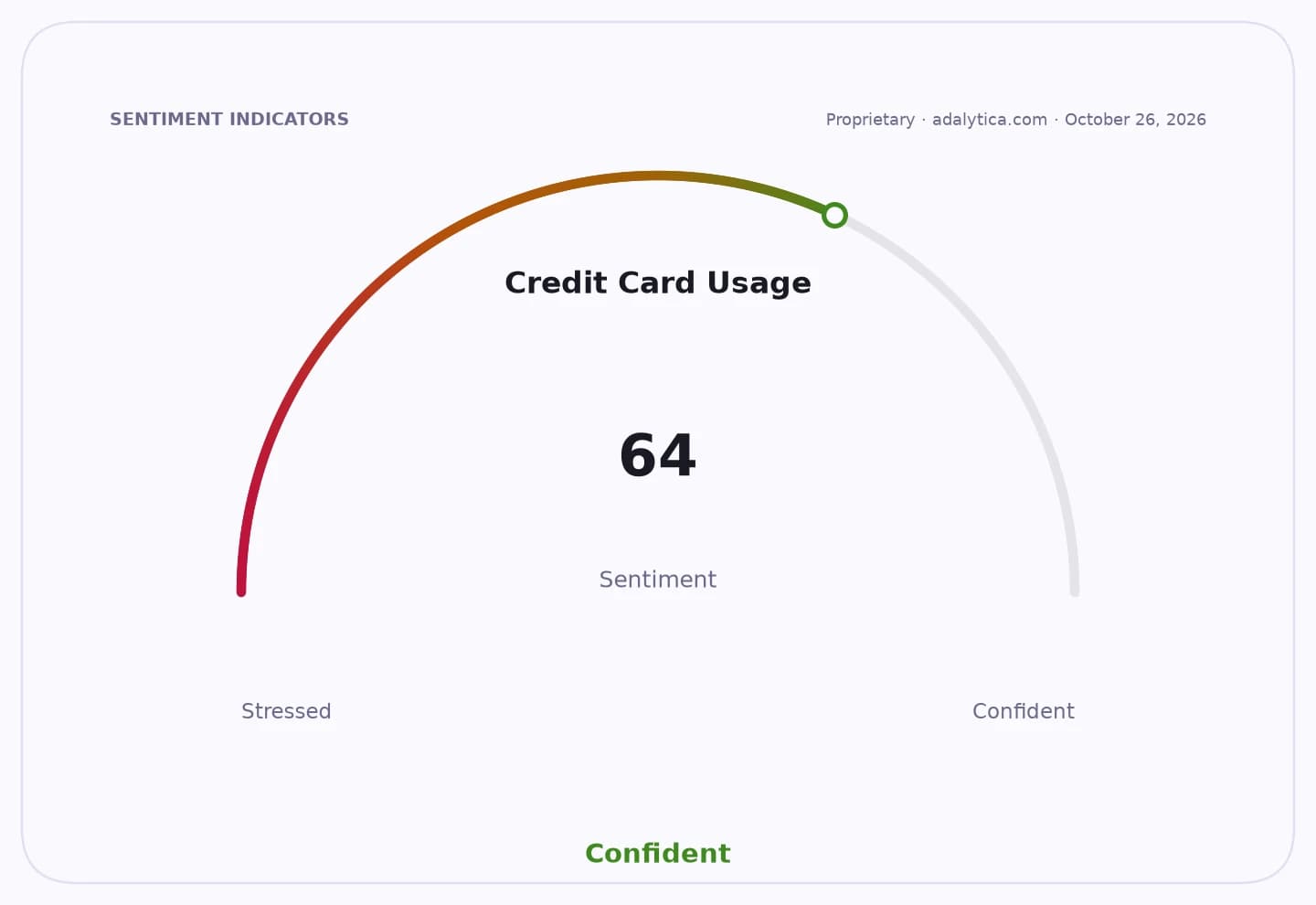
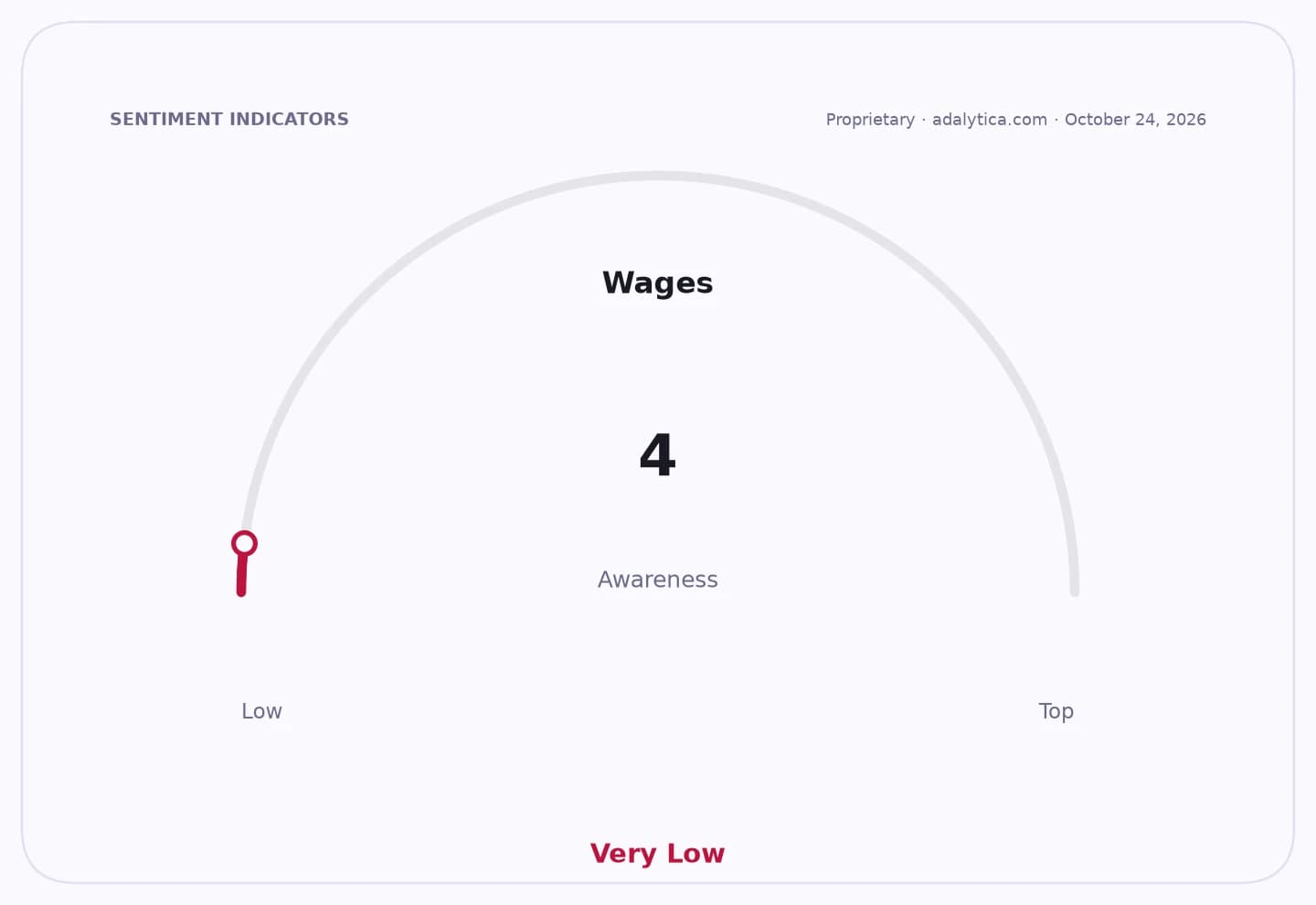
For investors, the key issue is not simply that bills are high, but that they are persistent. When energy and utility costs climb, consumers often finance the gap with credit cards or other short-term borrowing, raising delinquency risk and eventually pressuring banks, consumer lenders and retail spending. Adalytica’s credit card usage sentiment remains neutral, but its 1-day, 7-day and 30-day readings have all fallen sharply, a sign that near-term household stress is intensifying even if the broader picture is not yet catastrophic. At the same time, Adalytica’s wage inflation sentiment is in “Extreme Greed,” suggesting pay expectations remain elevated and making it harder for real incomes to catch up with living costs.
The pattern matters because it can become self-reinforcing. Higher utility bills leave less discretionary income, weaker discretionary spending slows parts of the economy, and rising revolving debt increases interest burdens just as financing conditions remain restrictive. The Federal Reserve’s balance sheet has shrunk to about $6.76 trillion from the pandemic-era peak, meaning liquidity is still tighter than in the emergency period when households and borrowers could lean more heavily on easy money. That leaves consumers more dependent on wage growth and stable employment to service debt.
Utility companies and investors in the sector are watching the dynamic closely. Higher bills can support revenue and cash flow for regulated utilities such as Duke Energy, Southern Co. and XLU-tracked peers, but the upside is constrained by regulators, affordability concerns and the political sensitivity of rate increases. Duke Energy shares have outperformed the utility sector recently, while Southern has also gained, reflecting the market’s preference for yield and defensiveness. Yet both names, along with the broader utility complex, remain tied to the same affordability question: how far can rates rise before the customer starts to break?
The risk for policymakers is that affordability becomes a growth problem, not just a social one. If utility costs keep outpacing wage gains, households will cut back elsewhere, credit quality will weaken, and lenders could start to see more pressure in subprime and revolving credit portfolios. The next inflection points will be the October CPI release, labor-market data and any evidence that utility price inflation is spilling into broader consumer delinquency trends.
| Entity | Gains | Losses |
|---|---|---|
| Regulated utilities | ▲Higher allowed revenue | ▼Political backlash over bills |
| Household borrowers | ▲Temporary credit access | ▼Rising debt burdens |
| Banks and card lenders | ▲Interest income near term | ▼Delinquencies and charge-offs |
| Consumers | ▲None | ▼Less disposable income |