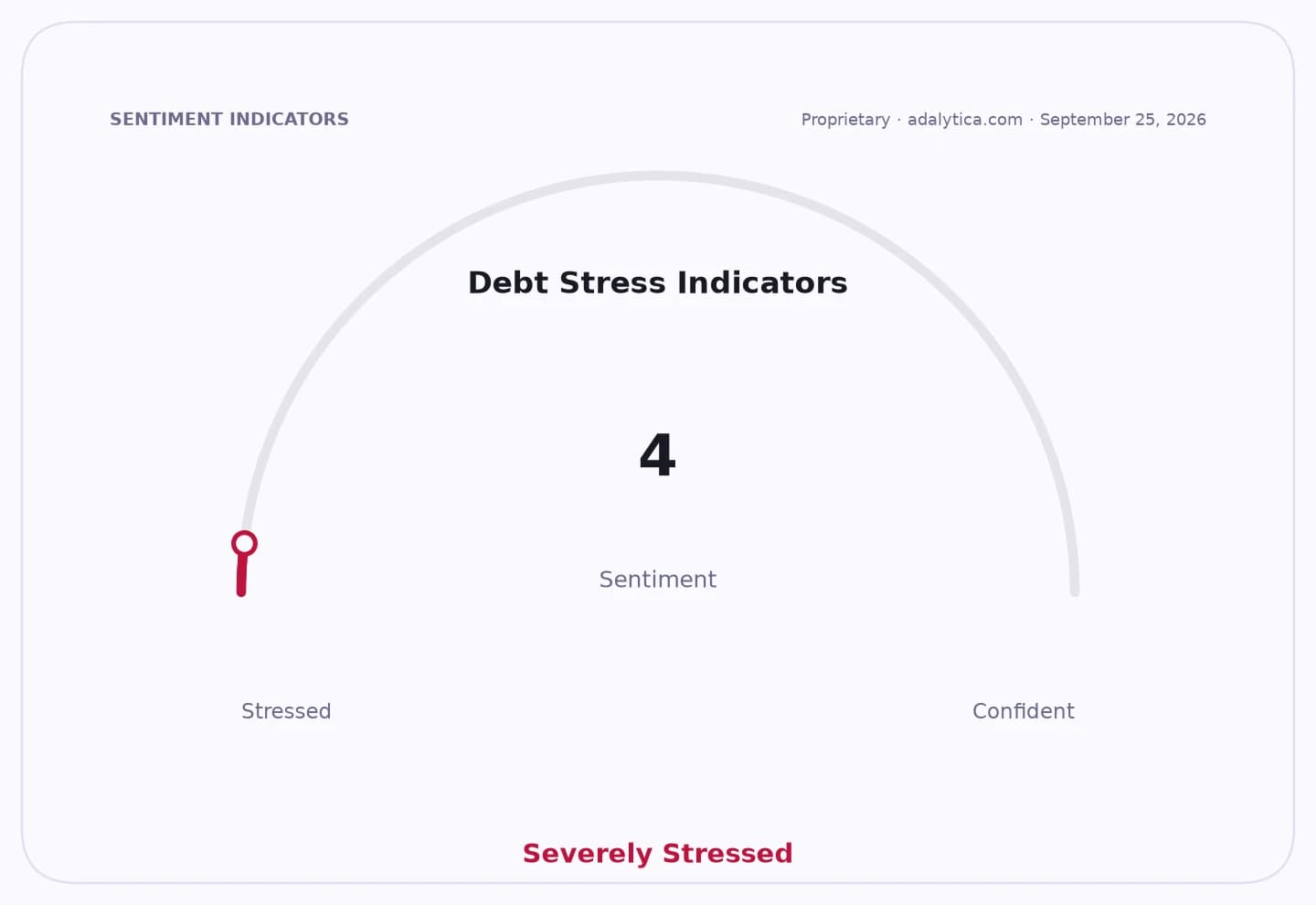
Americans looking for a way to knock out $7,500 in credit-card debt are doing so in a far more stressed financial backdrop, as household debt sentiment has plunged to an “Extreme Fear” reading and savings confidence remains fragile.
Household debt stress rises as savings confidence slips
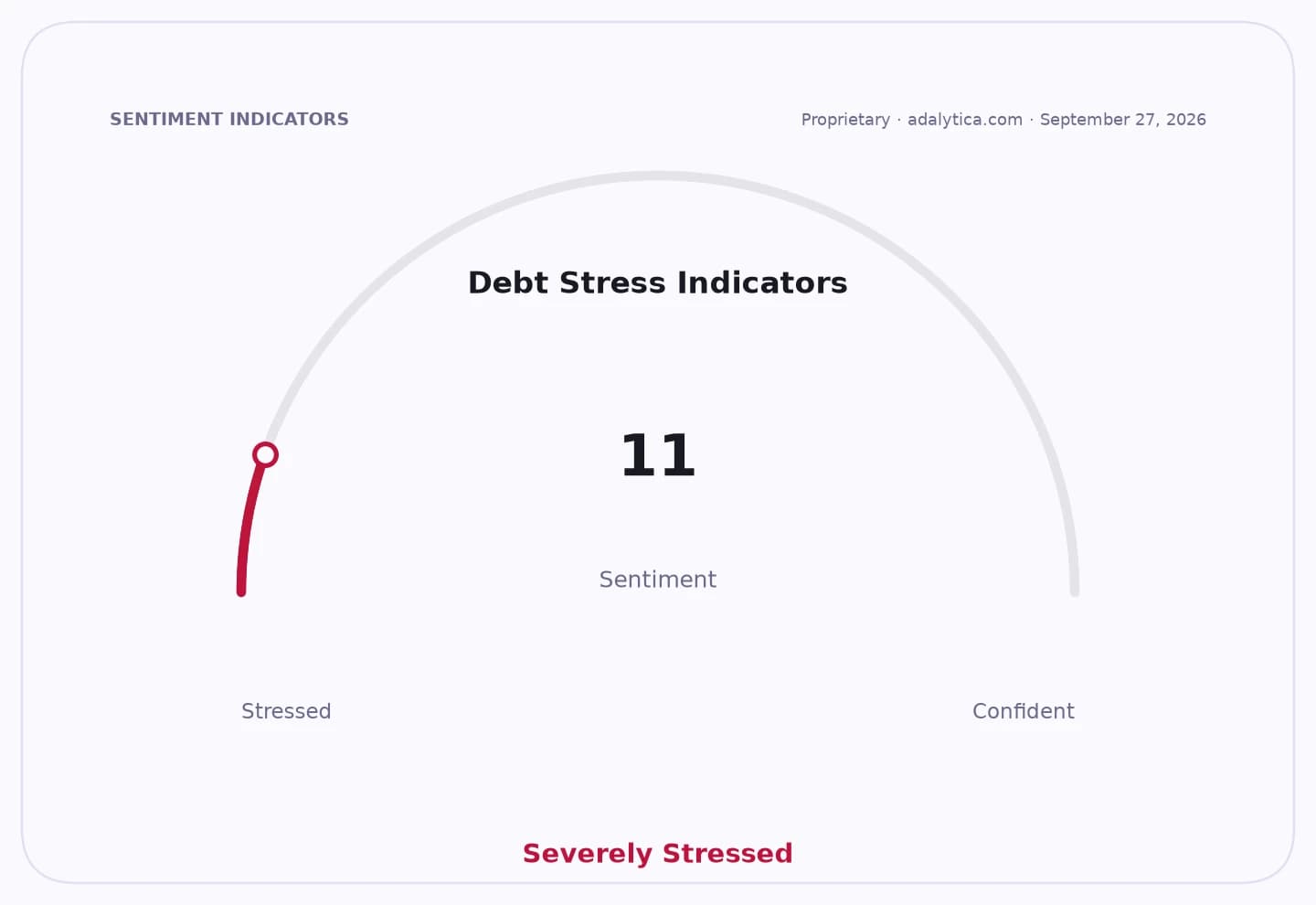
That matters because the real story is not just about one payoff plan — it is about a consumer still trying to delever while cash buffers remain thin. In the latest Adalytica snapshot, household debt stress sentiment sits at 11, down 35 points over 30 days, while the household savings rate sentiment is only 36, still neutral but far from strong. For investors, that combination points to a consumer under pressure, not a consumer ready to reaccelerate.
The economic implication is straightforward: when card balances stay elevated and savings behavior remains cautious, discretionary spending gets squeezed first. Households may keep making minimum payments, but they are less likely to finance big-ticket purchases, travel upgrades or nonessential retail splurges with confidence. That puts a ceiling on revenue growth for consumer lenders, retailers and some parts of services, even if employment remains broadly intact.
The setup also creates winners. Debt-consolidation lenders, balance-transfer card issuers, personal-finance apps and credit counseling services are likely to see more traffic as households search for practical repayment strategies. The demand is especially powerful when fear is high: consumers become more willing to refinance, cut expenses and restructure obligations. That can support products built around lower rates, fixed-payment plans and automated savings, while punishing lenders exposed to revolving card balances and late fees.
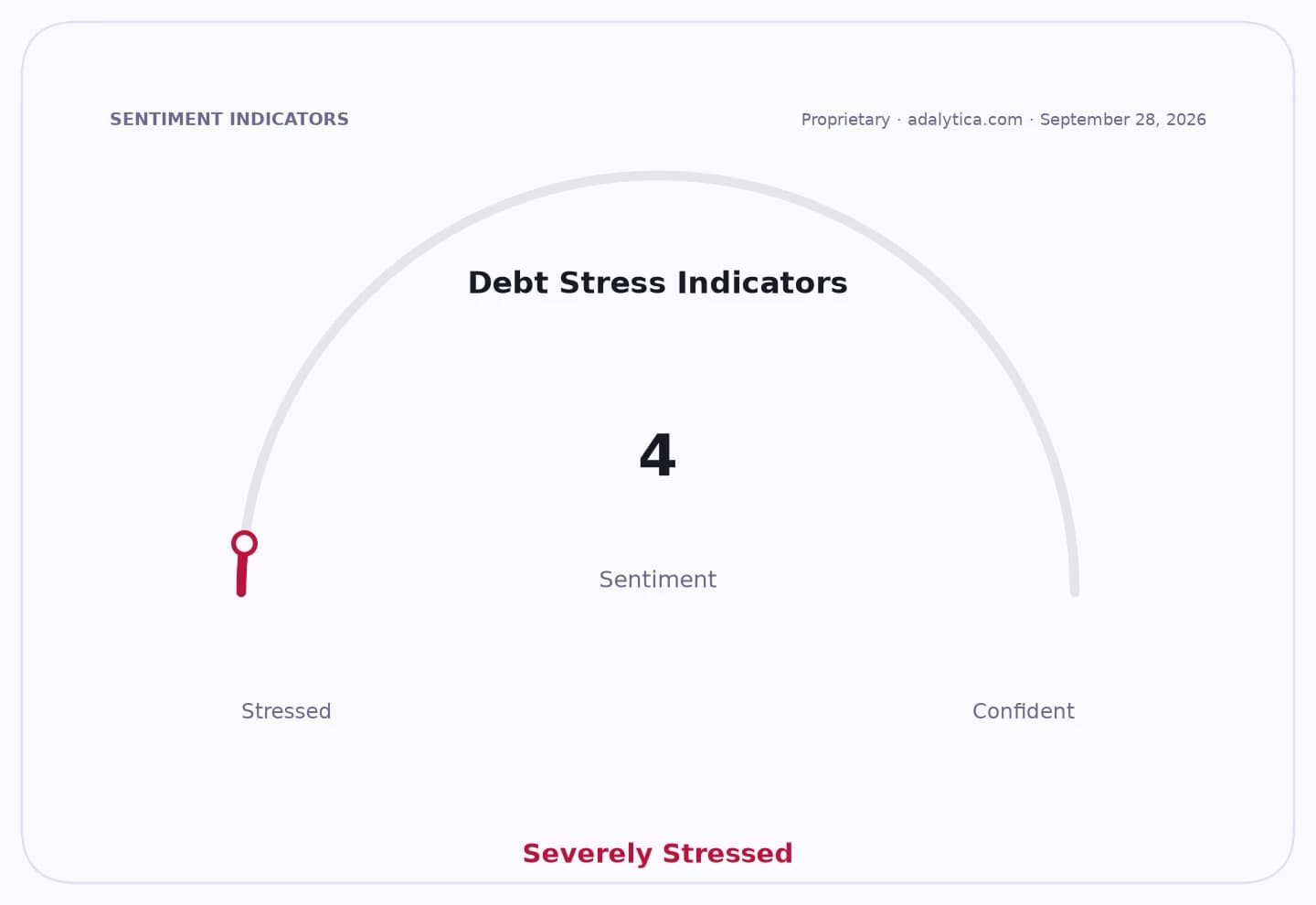
Debt Stress Indicators — 30-day sentimentadalytica.com
Explore this data interactively — full history, time series and cross-market comparisons.Open AlphaPulse
The market is underestimating how durable this behavior can be. Household stress does not have to rise every day to matter; once consumers shift into defense mode, the spending mix changes. The latest reading shows debt-stress sentiment rebounding 7 points in a day after a steep monthly decline, while savings sentiment improved 10 points on the day and 32 points over the week. That suggests consumers are still actively adjusting, not relaxing.
For investors, that argues for a barbell. On one side, favor businesses that monetize financial self-help: debt-management platforms, installment-credit providers, budgeting software and fintechs that help consumers refinance at lower cost. On the other, be cautious on issuers and merchants that depend on high revolving-card usage and discretionary demand. The consumer is still spending, but with more discipline and less excess.
My takeaway: the best opportunity is not in hoping household debt stress disappears — it is in owning the tools people use to manage it. If the $7,500 payoff mindset spreads, the next winners will be the companies that help consumers escape high-interest debt faster than the market expects.
| Entity | Gains | Losses |
|---|---|---|
| Debt-consolidation lenders | ▲More refinancing demand | ▼Higher underwriting pressure |
| Personal-finance apps | ▲User growth | ▼Less consumer slack |
| Credit-card issuers | ▲Minimum-payment revenue | ▼Revolving-balance growth |
| Discretionary retailers | ▲— | ▼Softer nonessential spending |