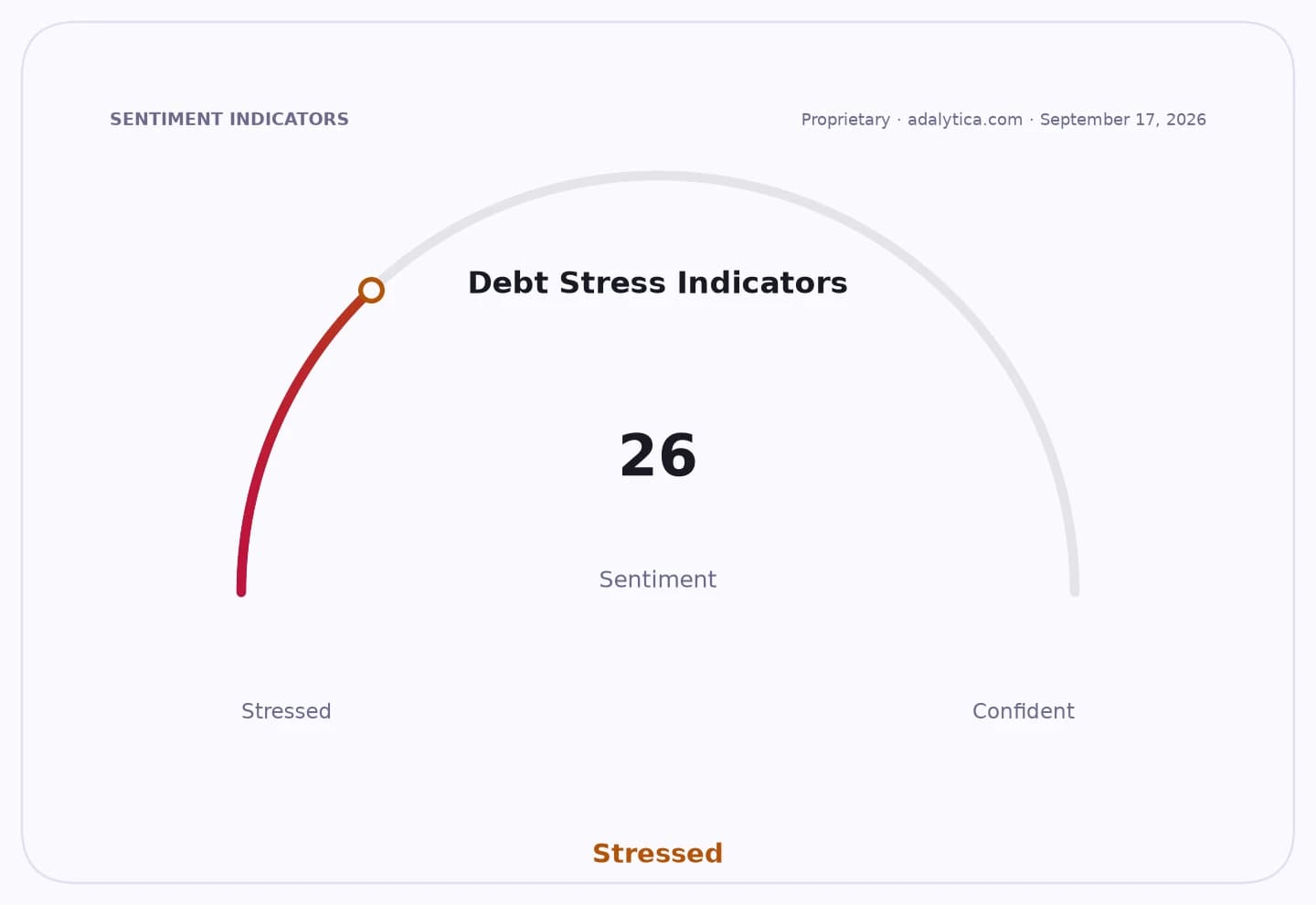
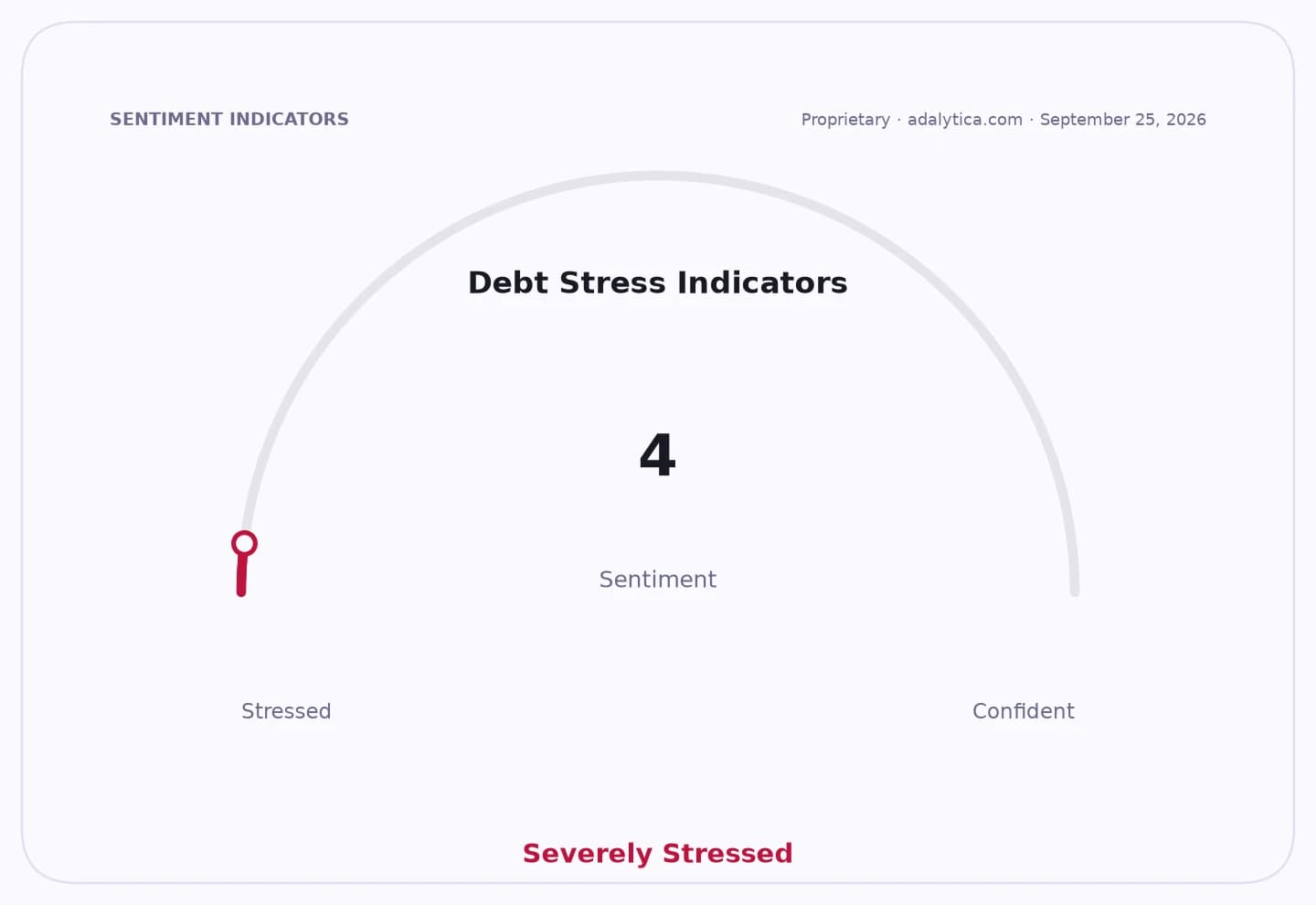
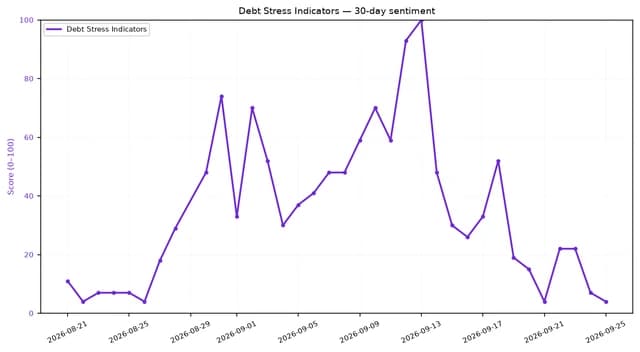
Credit-card lenders are facing a tougher borrower backdrop as households show fresh signs of stress, with Adalytica’s household debt stress gauge at 4 and labeled “Extreme Fear” and U.S. payroll sentiment also in “Extreme Fear,” a mix that raises the odds of tighter underwriting for applicants trying to rebuild after bankruptcy.
Capital One, AmEx, Synchrony Fall on Credit Stress
That matters because post-bankruptcy borrowers sit at the edge of consumer-credit demand and default risk. When employment and debt stress weaken at the same time, issuers can see fewer qualified new accounts, softer spending growth and higher charge-off risk, even as consumers who can get approved often pay up for secured cards, subprime products and fee-heavy rebuilding offers.
The market is already discounting that tension. Capital One Financial has fallen to $196.53 from a Jan. 6 high of $254.96, while American Express is at $305.55 versus $362.65 in mid-January and Synchrony Financial trades at $71.30, down from $79.20. All three names are below their 50-day moving averages, a technical sign that investors remain cautious on the consumer-credit outlook.
Amex’s latest filings showed U.S. card balances still climbing, but delinquency and net write-off trends remain key watch points. Capital One and Synchrony, which have heavier exposure to lower- and middle-income borrowers, are more sensitive to changes in credit availability for consumers emerging from bankruptcy and other damaged-credit profiles.
The broader narrative is straightforward: demand for credit rebuilding remains in place, but the cost of serving those borrowers is rising as macro stress builds. Investors will be watching upcoming delinquency data, loan-loss provisions and any changes in card lending standards for signs that issuers are becoming more selective about who gets back into the market.
| Entity | Gains | Losses |
|---|---|---|
| Post-bankruptcy borrowers | ▲Rebuilding credit options | ▼Approval odds, pricing |
| Card issuers with secured/subprime products | ▲New fee income | ▼Higher loss risk |
| COF, AXP, SYF shareholders | ▲— | ▼Softer sentiment, credit losses |
| Regulators / lenders | ▲Tighter underwriting discipline | ▼Slower loan growth |