Consumers relying on minimum credit-card repayments are still facing a costly and persistent drag on household finances, even as some market gauges point to a modest easing in broader credit stress.
Credit card minimum payments weigh on household finances

That tension matters because minimum payments are the slowest and most expensive way to clear revolving debt: balances linger, interest compounds and borrowers remain exposed to rate resets and income shocks. For lenders, that can keep receivables elevated for longer, but it also raises the odds that weaker borrowers eventually slip into delinquency once the bill becomes unmanageable.
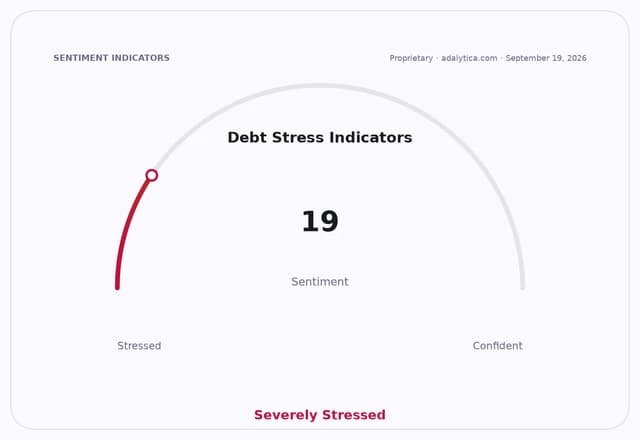
Sentiment IndicatorsⓘProprietary · adalytica.com · September 19, 2026
This is a snapshot — live sentiment, awareness and momentum for 130+ markets update continuously in the dashboard.Open AlphaPulse
The backdrop is not a full-scale credit rupture. The ICE BofA U.S. high-yield spread stood at 2.7 percentage points on Sept. 17 and was forecast at 2.731 on Sept. 18, well below the 4.16-point peak seen in April 2025, suggesting financial markets are not pricing acute stress across corporate credit. U.S. unemployment was also forecast to ease to 4.02% in September from 4.1% in August, a sign that the labor market remains broadly stable enough to support household repayment capacity.
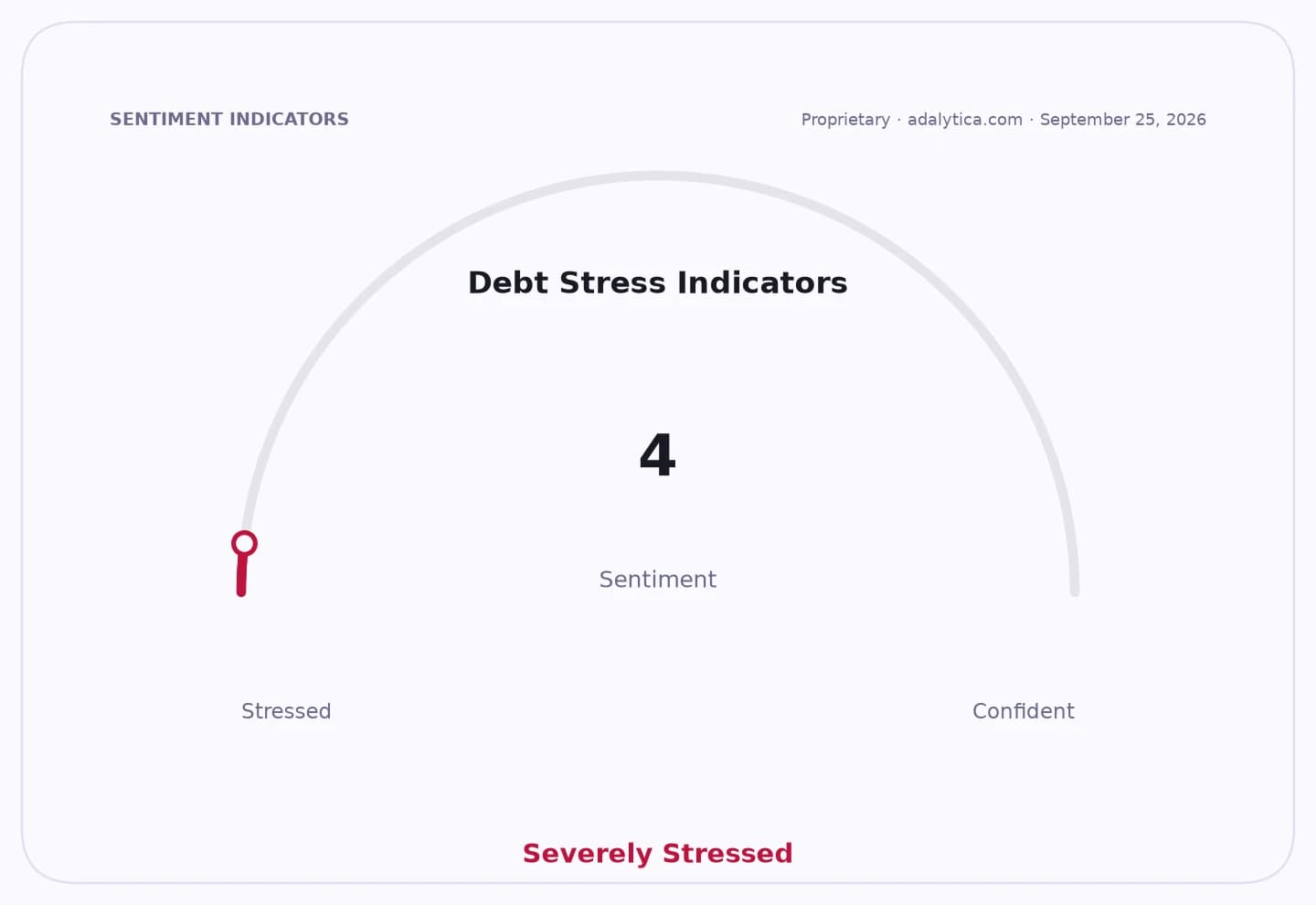
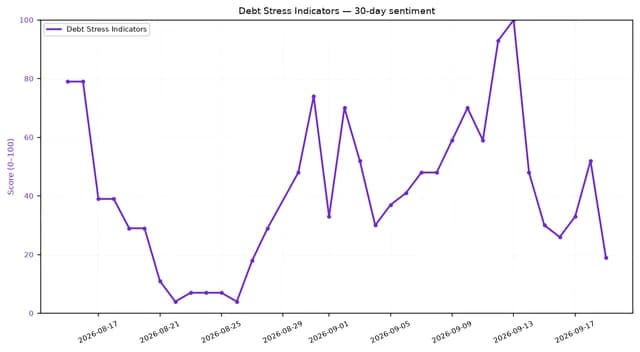
But card-specific indicators point to lingering strain beneath that surface calm. Adalytica’s Household Debt Stress sentiment gauge sat at 19, labeled “Fear,” with awareness at 4, or “Extreme Fear,” while its Credit Card Usage sentiment gauge was 22, also in “Fear.” The sharp deterioration in both measures suggests consumers are increasingly aware that carrying balances month after month is becoming harder to sustain, even if headline macro conditions have not yet forced a broad pullback.
That is the central investment issue for card lenders such as Capital One and Synchrony Financial. For issuers, minimum payments can support near-term interest income and keep accounts open, but they also increase the duration of exposure to financially stretched borrowers. If employment softens or funding costs remain elevated, the same accounts that generate yield can quickly become a source of charge-offs. Capital One shares recently traded at $202.43, below the 50-day moving average of $212.29 and with RSI readings near 31, a technical setup that reflects renewed pressure after a summer rally. Synchrony, at $75.04, sat just under its 50-day average of $76.82, with RSI at 37.8, also suggesting fading momentum.
The broader market signal is more nuanced. Credit spreads are not flashing crisis, and the unemployment forecast implies consumers still have enough income to stay current for now. Yet the household debt data and card sentiment readings point to a slower-burning risk: consumers may be doing the minimum today only because they have not yet had to confront the full cost of carrying balances. If rates stay high and wage growth cools, the “minimum payment” strategy becomes less a budgeting choice than an early warning of future stress.
For investors, that means the key question is not whether card portfolios are still growing, but how much of that growth is coming from borrowers who are stretching repayment. The winners are lenders that can price risk accurately and keep losses contained; the losers are households that roll balances indefinitely and eventually face a much larger bill.
| Entity | Gains | Losses |
|---|---|---|
| Card issuers | ▲Interest income | ▼Higher long-run credit risk |
| Minimum-payment borrowers | ▲Immediate cash relief | ▼Rising total interest cost |
| Capital One, Synchrony | ▲Revolving balance revenue | ▼Delinquency exposure |
| Household budgets | ▲Short-term flexibility | ▼Longer debt drag |