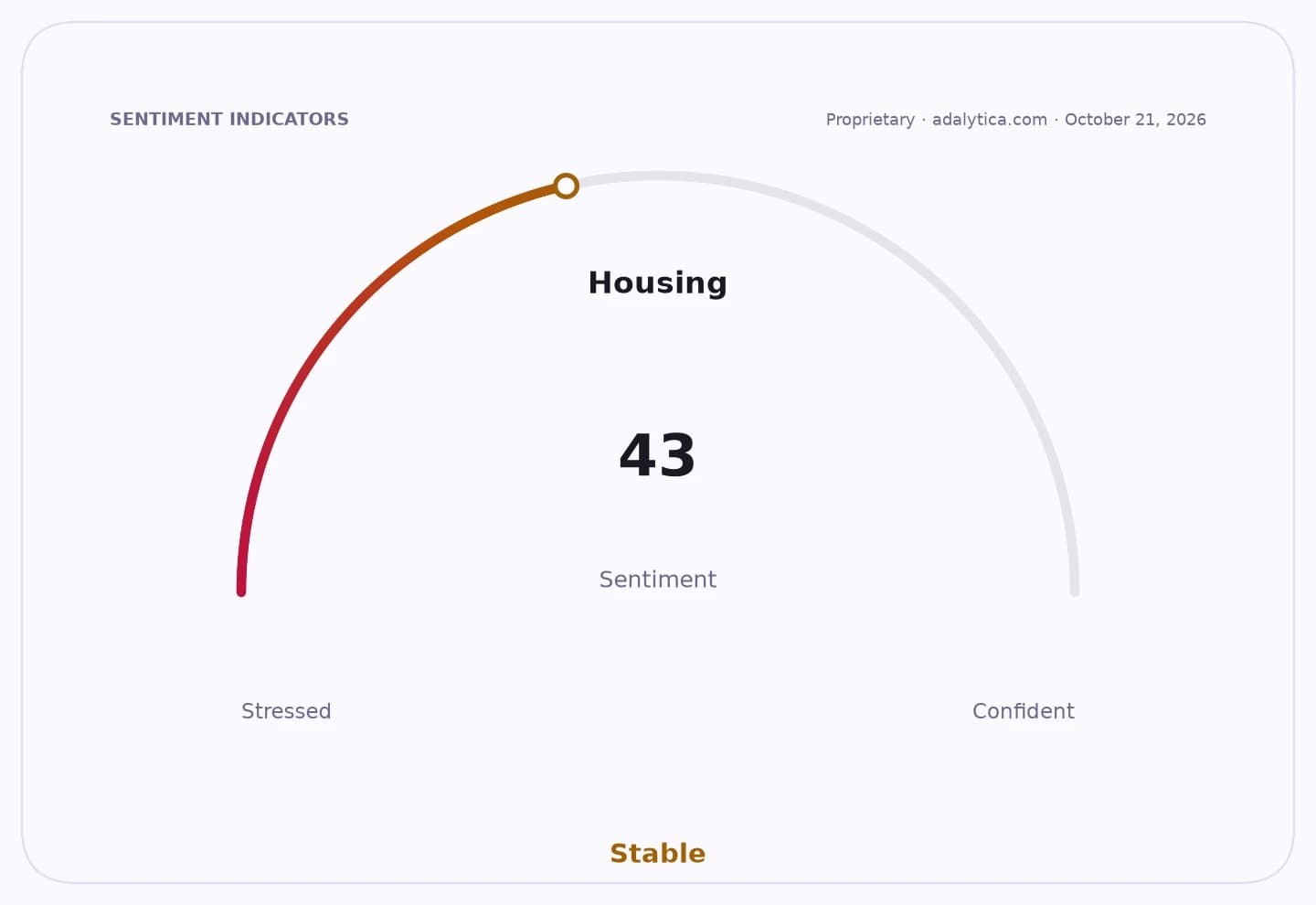
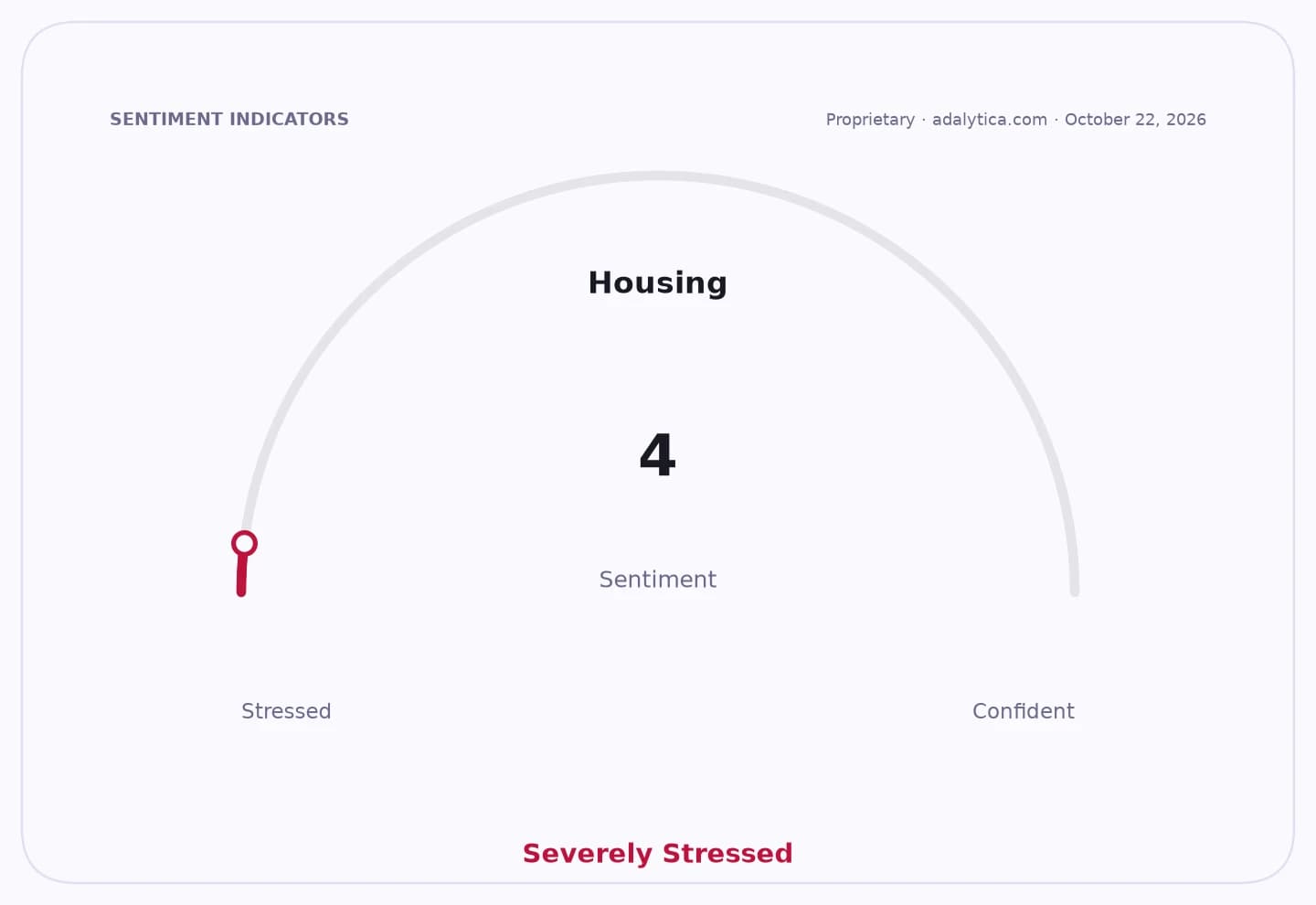
U.S. households are showing fresh signs of tightening budgets, and home improvement stocks are feeling the strain as consumers delay projects and favor smaller repairs over large renovations.
XHB Falls Below Key Moving Averages
That shift matters because housing-related spending is one of the clearest gauges of household confidence and discretionary demand. When families start trimming spending on kitchens, baths and other big-ticket items, it often ripples through retailers, builders, appliance makers and suppliers tied to the housing cycle.
Sentiment IndicatorsⓘProprietary · adalytica.com · October 22, 2026
This is a snapshot — live sentiment, awareness and momentum for 130+ markets update continuously in the dashboard.Open AlphaPulse
The iShares U.S. Home Construction ETF, XHB, closed at $98.43 on Oct. 22, up from a recent low near $95.60 but still below its 50-day moving average of $99.31 and under its 200-day average of $104.79, a sign the group remains under pressure despite a short-term bounce. The ETF’s technical backdrop has improved from oversold levels earlier in the year, but the broader trend still reflects caution around home-related demand.
The economic backdrop is consistent with that weakness. The Personal Consumption Expenditures index, a broad measure of household spending, rose to 22,308.5 in August from 20,458.7 in December, while consumer prices continued climbing, with the CPI at 336.298 in September after 334.131 in August. In other words, household spending is still rising in dollar terms, but inflation and higher living costs are forcing consumers to be more selective.
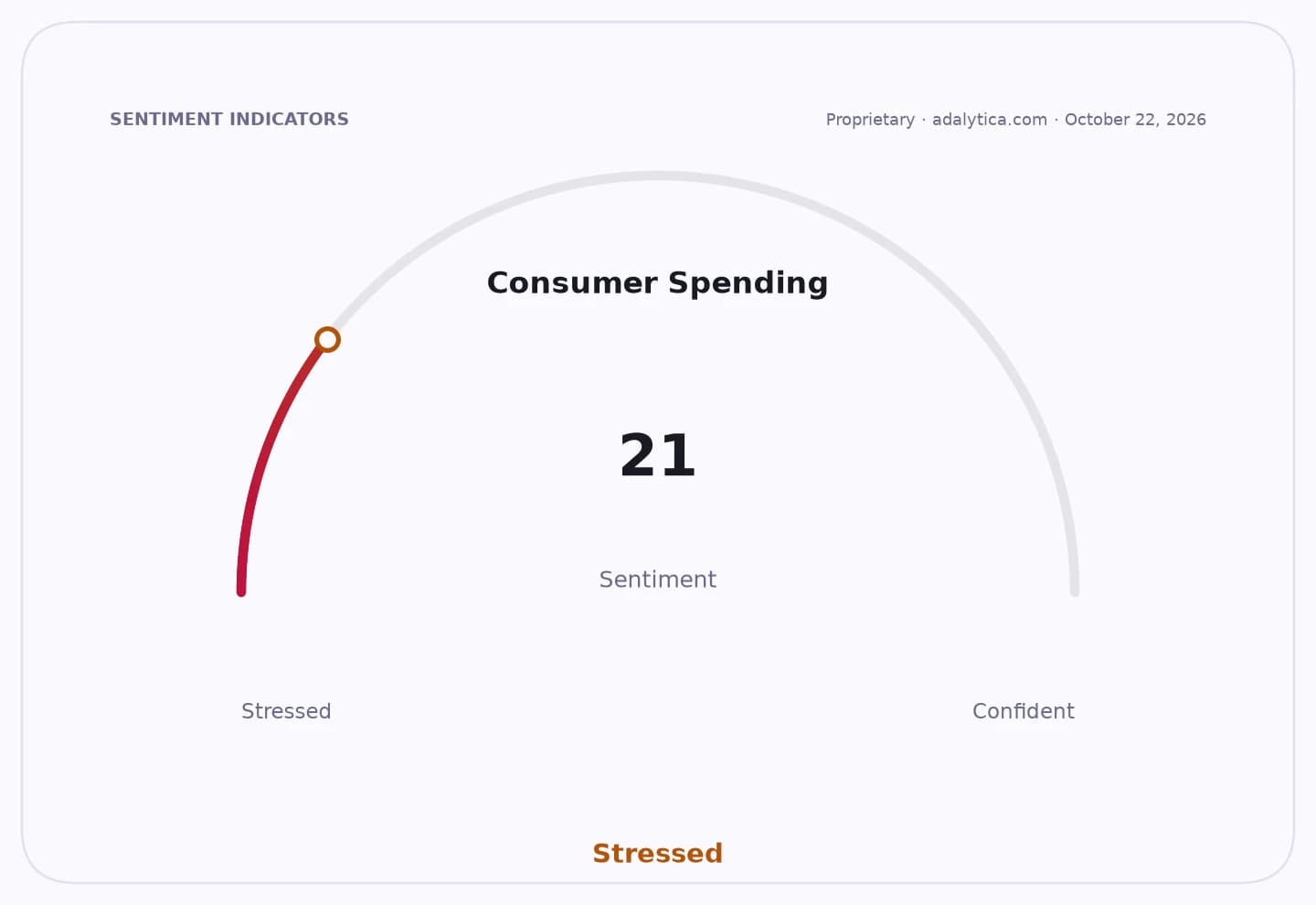
That pressure is showing up in other consumer gauges as well. Adalytica’s Consumer Spending Sentiment snapshot stands at 21, labeled “Fear,” with awareness at 4 and “Extreme Fear,” underscoring a sharp deterioration in spending confidence over the past month. By contrast, credit card usage sentiment is at 93, or “Extreme Greed,” suggesting households are still using credit even as they grow more anxious about the cost of living.
Home-related data point in the same direction. Housing starts fell to 1,221 in September from 1,288 in August and 1,369 in July, suggesting a softer construction backdrop that can spill into remodeling demand and durable-goods purchases. When fewer homes are being built or sold, demand for appliances, fixtures and remodeling materials tends to cool.
That is the environment facing home-improvement and housing-linked stocks. XLY, the consumer discretionary ETF, ended at $114.91 on Oct. 22, below its 200-day moving average of $115.38, while the homebuilders-focused XHB is trading only slightly above its 50-day average and below its long-term trend. Investors are still betting on consumer resilience, but they are increasingly pricing in a slower pace of spending in housing-related categories.
The next test is whether inflation eases enough to give households more room to spend, and whether housing activity stabilizes. Until then, the market is likely to favor companies tied to repairs and maintenance over those dependent on major discretionary projects.
| Entity | Gains | Losses |
|---|---|---|
| Repair-focused home retailers | ▲Smaller-ticket demand | ▼Big-renovation sales |
| Homebuilders | ▲Stable mortgage demand | ▼Slower new-start activity |
| Consumers | ▲Budget flexibility | ▼Discretionary spending power |
| XHB and housing stocks | ▲Relief from rate easing | ▼Margin pressure from weaker demand |