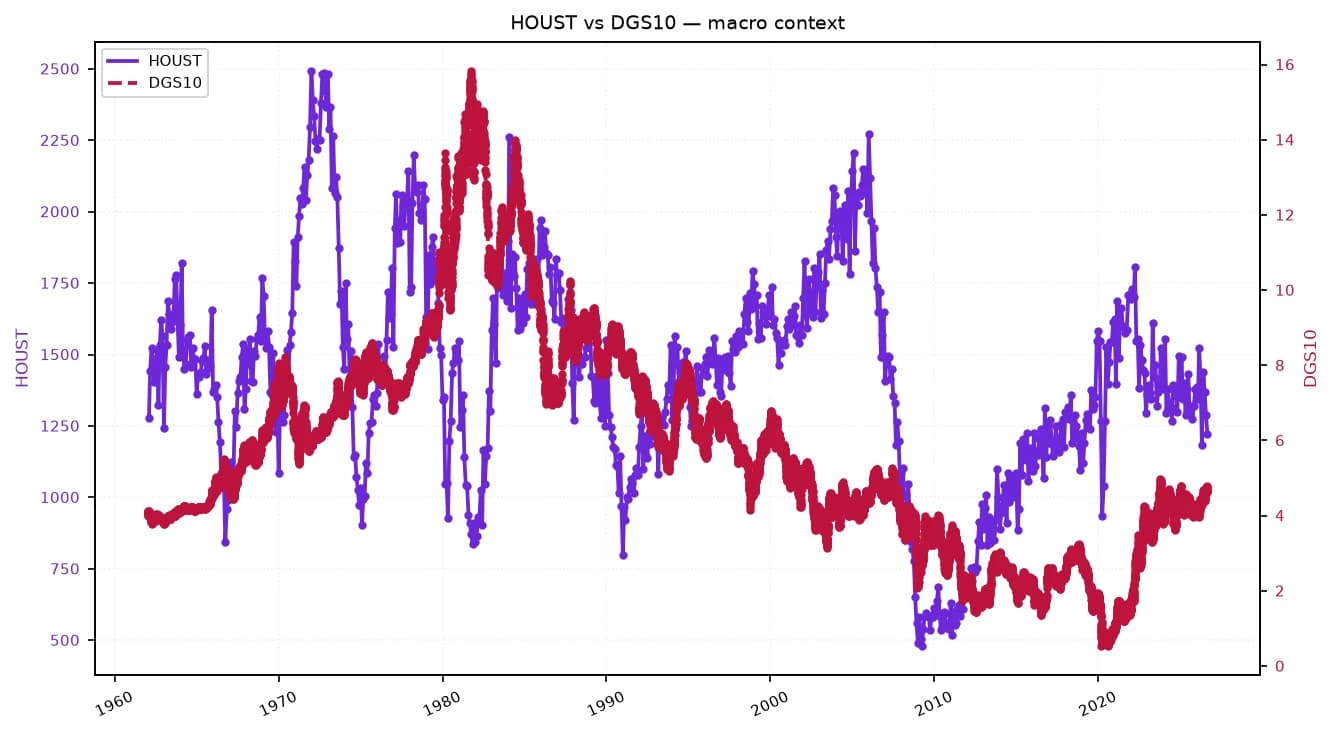
Mortgage rates are heading toward 6%, and that may be the first real relief buyers have had in a housing market that has punished affordability for years.
Czech Mortgage Rates Near 6% as Housing Softens
In the Czech market, average quoted mortgage rates have climbed to 5.79% in October, according to Hypoindex, while the average rate on newly granted loans reached 5.1% in September, reflecting deals largely signed in August. Bankers, economists and real-estate experts now expect borrowing costs to keep rising, driven in part by heightened geopolitical tension, and to move closer to 6%.
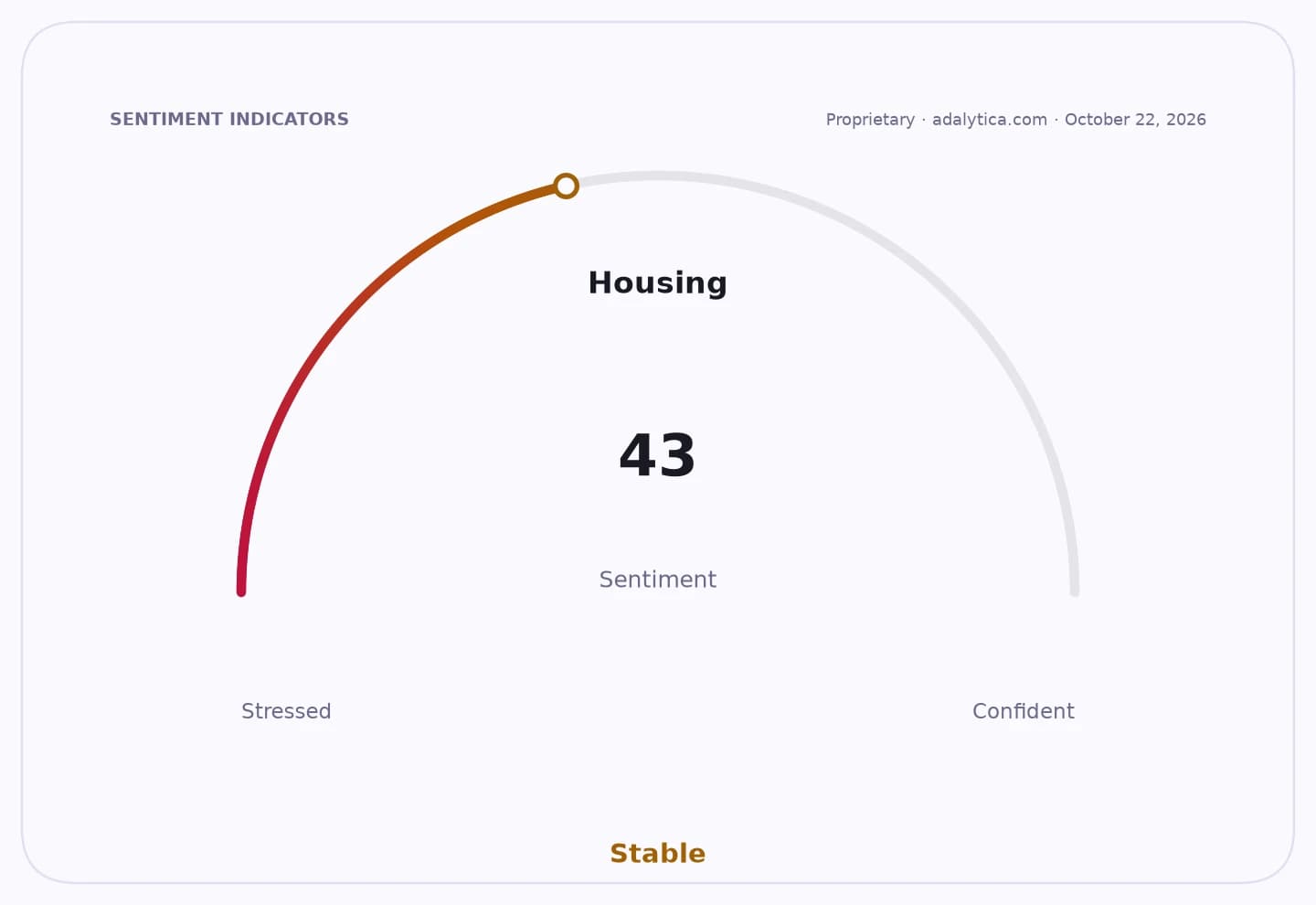
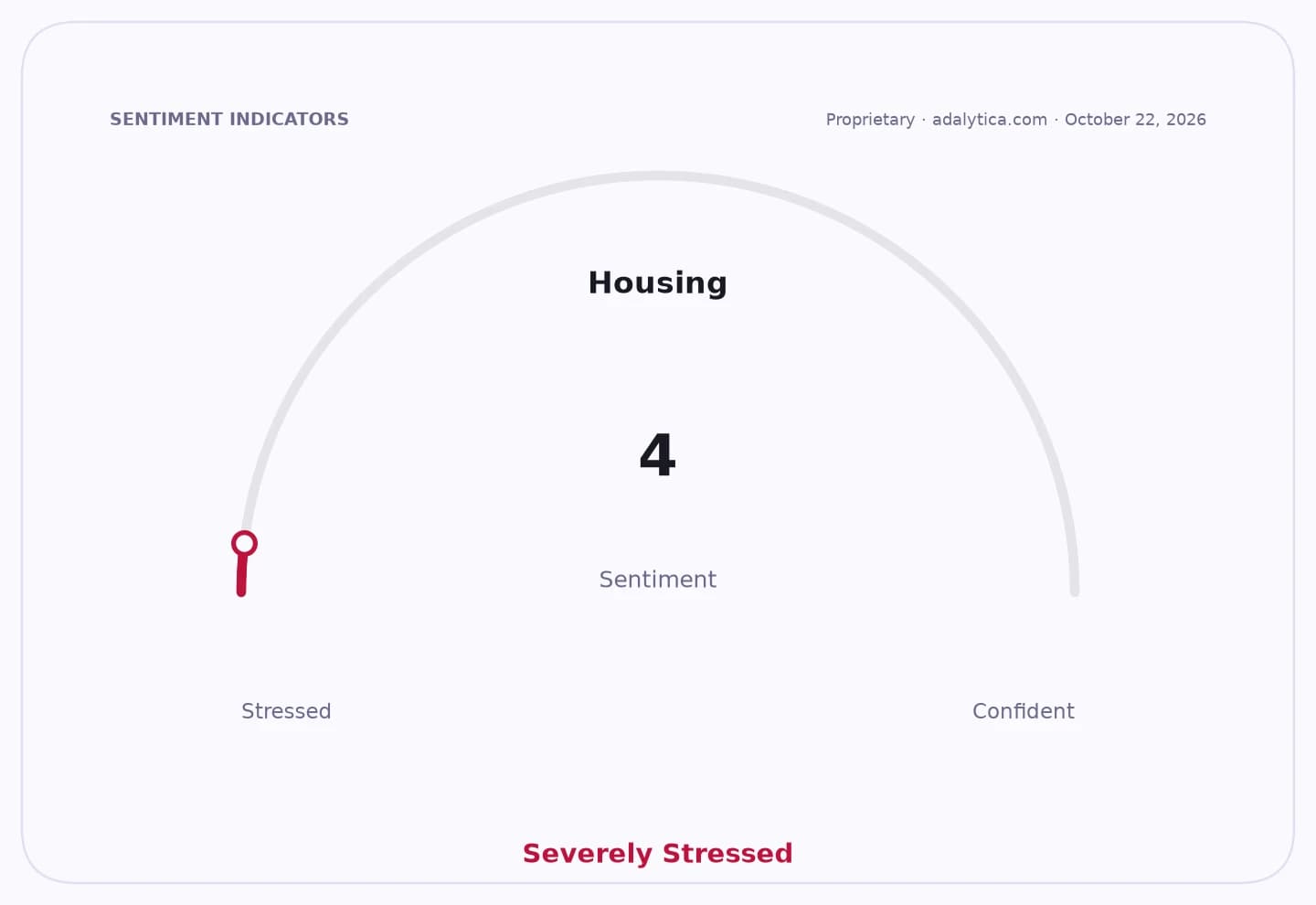
Sentiment IndicatorsⓘProprietary · adalytica.com · October 22, 2026
This is a snapshot — live sentiment, awareness and momentum for 130+ markets update continuously in the dashboard.Open AlphaPulse
That matters because higher mortgage costs do not just squeeze household budgets; they can change the balance of power in the housing market. When financing gets more expensive, demand usually cools first in the older-apartment segment, where buyers are more sensitive to monthly payments and more willing to walk away from inflated asking prices. Sellers then lose some of the pricing power that has kept homes expensive.
For investors and would-be homeowners, that is an important shift. Slower price gains in older flats can open room for negotiation and, in some cases, outright discounts from advertised prices. In practical terms, a buyer who can still secure financing may find that a softer market does part of the work that rate cuts would otherwise have done.
The ripple effects should also show up in new construction. Developers have more room to use incentives, but they cannot fully insulate the market from weak affordability. In the U.S., homebuilding ETFs have already reflected that tension: the ITB and XHB funds have both backed off recent levels as higher borrowing costs weigh on the housing cycle, even as the long-term need for housing remains intact.
The broader lesson for investors is simple: housing does not respond only to the direction of prices, but to the cost of money. If mortgage rates keep edging higher, sellers will likely have to adjust expectations first, and buyers with patience could gain negotiating leverage. For long-term investors, that makes homebuilders, mortgage-sensitive lenders and rental owners worth watching closely as the next phase of the cycle takes shape.
| Entity | Gains | Losses |
|---|---|---|
| Homebuyers | ▲More negotiating power | ▼Higher monthly payments |
| Sellers of older apartments | ▲Less pricing pressure | ▼Lower sale prices |
| Homebuilders | ▲Incentive-driven demand | ▼Slower sales pace |
| Housing ETFs and lenders | ▲Selective opportunities | ▼Rate-sensitive earnings pressure |