Walmart is leaning harder into value, launching a $120 bundle aimed squarely at Amazon and Costco as shoppers keep trading down and looking for ways to stretch household budgets.
Walmart launches $120 bundle against Amazon, Costco
Walmart Inc
The move matters because it shows the pricing fight in U.S. retail is no longer just about squeezing margins — it is about who gets to define “value” in a consumer market still shaped by inflation fatigue. Walmart is using its scale and supply chain to package essentials at an entry price that can appeal to cash-strapped households, while also testing whether convenience can beat Amazon’s delivery reach and Costco’s bulk-price membership model.
Sentiment Indicators
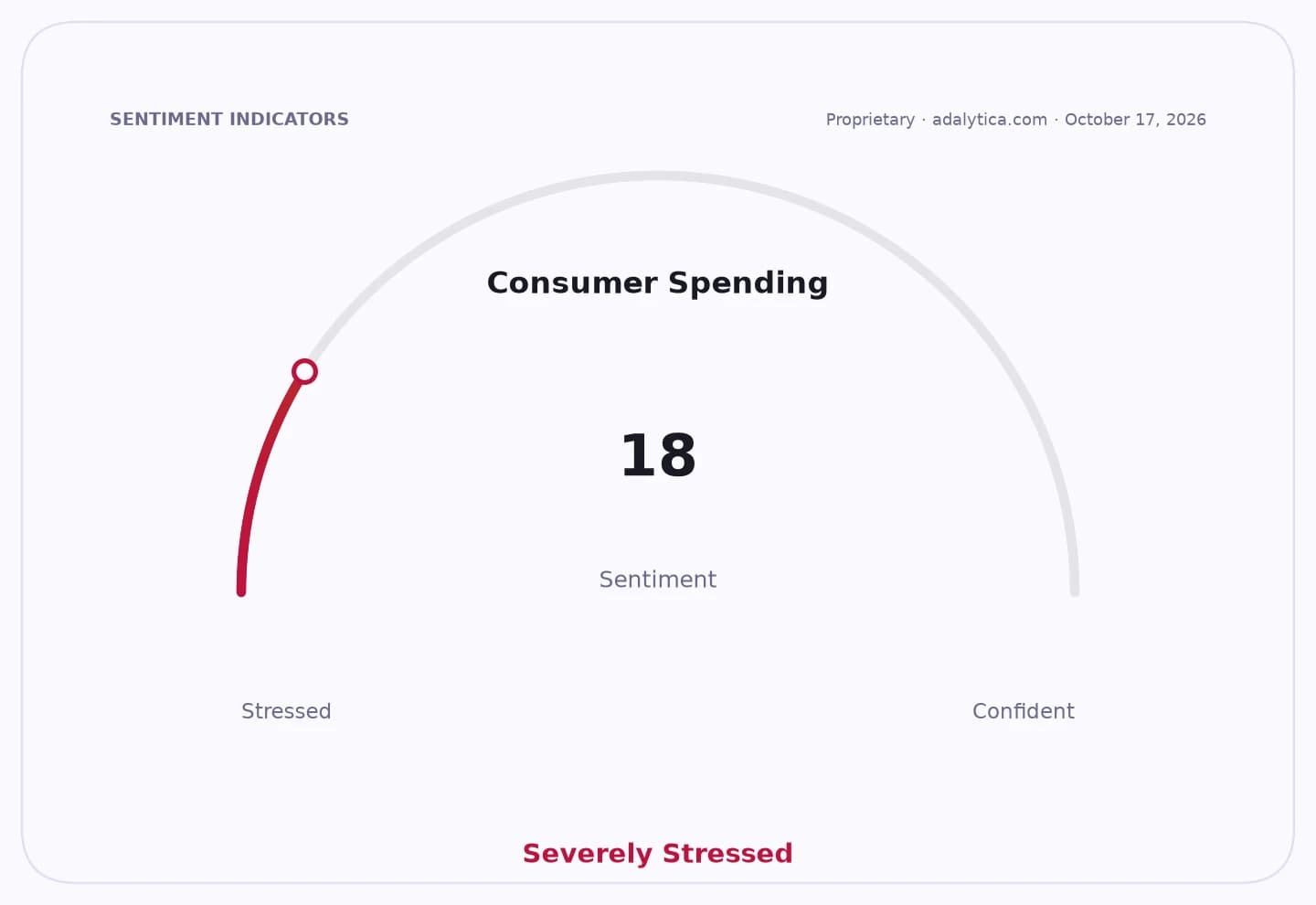
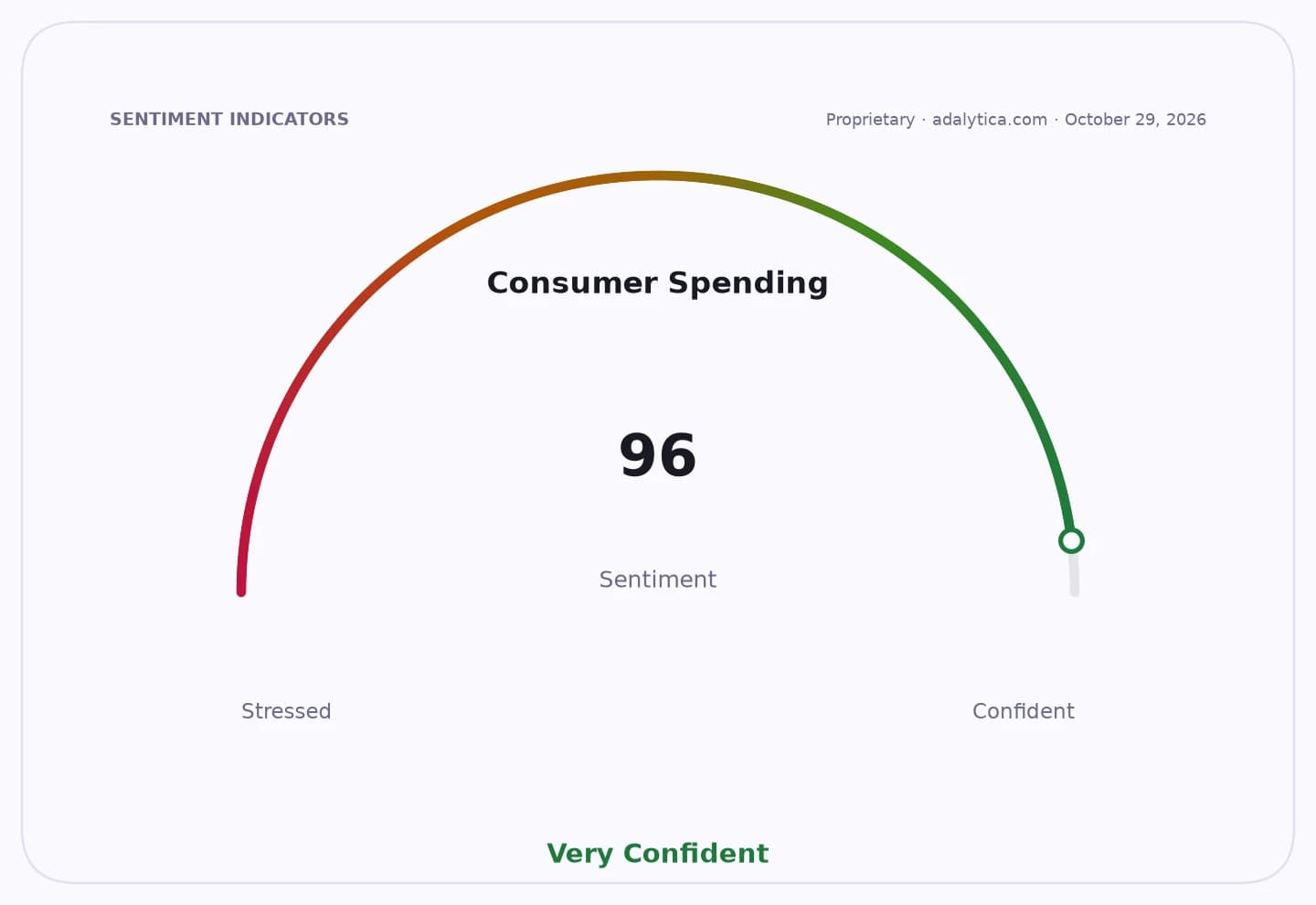
That positioning is important for the broader economy because retail pricing power is increasingly being determined by consumer stress, not just by brand strength. Grocery and household spending remain the most sensitive parts of the basket, and retailers that can hold traffic with lower-cost bundles may take share even if unit economics are thinner in the short term. The latest Adalytica consumer-spending sentiment reading sits at 96, in “Extreme Greed,” while Walmart’s own earnings sentiment has cooled to neutral after a sharp jump earlier in the week, suggesting the market is still digesting how far value-led demand can carry the stock.
Investors are watching because Walmart has become one of the clearest public-market barometers of defensive consumer demand. The shares rose to $123.51 on Oct. 30, well above the 50-day moving average of $110.23 and the 200-day average of $118.14, but the rally has also pushed the stock into technically stretched territory, with RSI at 76.7. That leaves room for the market to question whether value promotions can sustain revenue growth without eroding margins. On the other side, Amazon’s slide to $240.35 and Costco’s pullback to $1,012.28 show that even the strongest retail franchises are not immune when consumers become more price selective and more aggressive about comparing baskets across channels.
The narrative behind the bundle is straightforward: consumers are back in control. Walmart is responding by making price its sharpest weapon, not only against Amazon’s convenience model but also against Costco’s membership-driven value proposition. For investors, the key question is whether that strategy drives enough traffic and basket growth to justify the margin trade-off, or whether the retail sector is entering another phase of discount competition that rewards volume leaders and pressures everyone else to follow.
| Entity | Gains | Losses |
|---|---|---|
| Walmart | ▲Traffic and share gains | ▼Margin pressure |
| Amazon | ▲Convenience demand | ▼Price-comparison discipline |
| Costco | ▲Value-seeking loyalty | ▼Basket migration risk |
| Consumers | ▲Lower-priced essentials | ▼Less room for premium pricing |