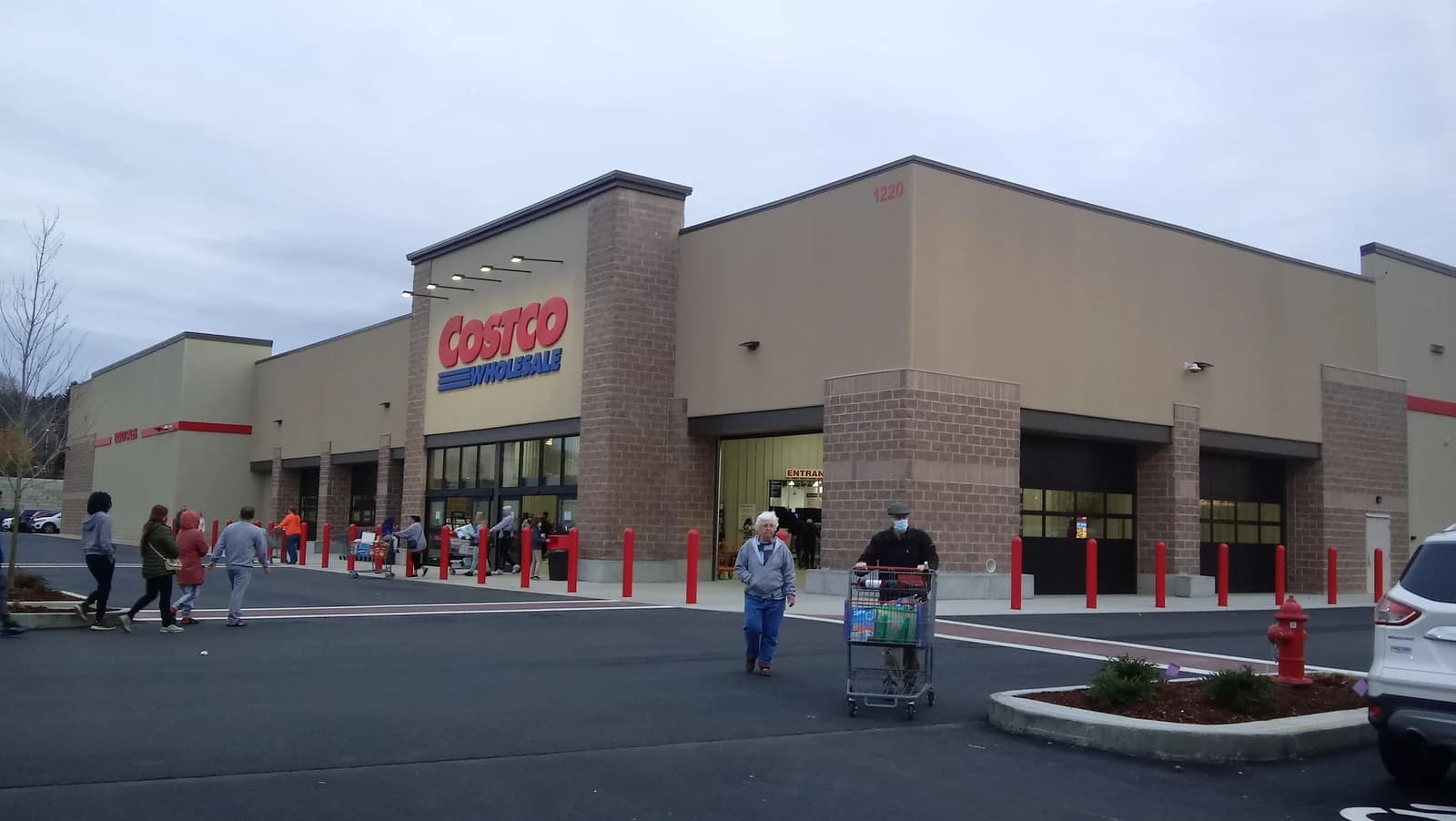
Costco Wholesale Corp. shares pushed to a record high as investors kept favoring the warehouse club’s low-price model over a shaky consumer spending backdrop and a sudden deterioration in sentiment around Walmart’s earnings outlook.
Costco Hits Record High on Defensive Spending
The stock closed at $1,013.98, up sharply from the prior session and well above its 50-day moving average of $937.95 and 200-day average of $967.00, after a burst of momentum that has left the relative strength index at 90.7, a level that points to an overheated short-term move. The gain extends a run that has pushed Costco higher even as broader consumer confidence remains weak.
Sentiment IndicatorsⓘProprietary · adalytica.com · October 22, 2026
This is a snapshot — live sentiment, awareness and momentum for 130+ markets update continuously in the dashboard.Open AlphaPulse

That matters because Costco is one of the clearest public-market beneficiaries of trading-down behavior. When shoppers feel pressure from inflation, housing costs or tighter budgets, membership warehouses often draw traffic from households seeking bulk staples, private-label goods and cheaper grocery baskets, helping reinforce fee income and traffic.
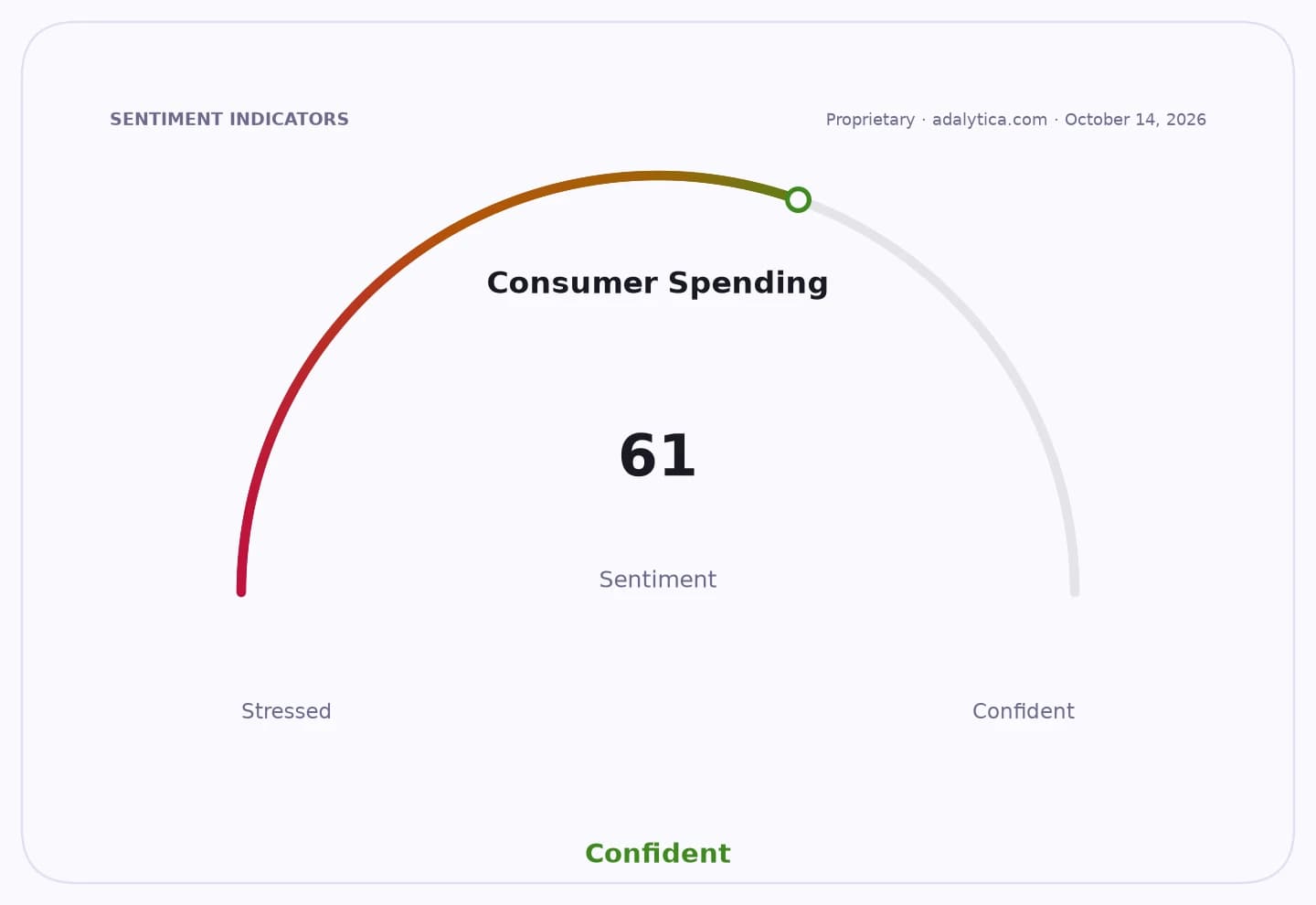
The latest move also stands in contrast to the mood around Walmart, where Adalytica.com’s Walmart earnings sentiment gauge sits at 7, or “Extreme Fear,” after a 21-point one-day drop. Adalytica’s consumer spending sentiment remains in “Fear” at 21, with awareness in “Extreme Fear,” underscoring a fragile backdrop even as investors continue to pay up for companies seen as defending share in a cautious consumer economy.
For Costco, the investor case remains centered on membership renewal economics, fee income and steady traffic rather than flashy discretionary spending. The company’s latest annual filing said membership fees are a key driver of profitability and that renewal rates materially influence earnings.
The stock’s climb leaves it technically stretched in the near term, but traders are still betting that Costco’s scale, pricing power and recurring fee stream can keep the shares favored if consumers stay defensive. The next read on that thesis will come from holiday shopping trends, monthly sales updates and any signs that spending weakness is broadening beyond lower-income shoppers.
| Entity | Gains | Losses |
|---|---|---|
| Costco shareholders | ▲Higher valuation, momentum | ▼Near-term overbought risk |
| Value-focused shoppers | ▲Lower-cost bulk options | ▼Less room for premium purchases |
| Walmart | ▲Defensive sector interest | ▼Sentiment slump, share competition |
| Rivals in grocery/warehouse retail | ▲More volume pressure | ▼Costco traffic and loyalty advantage |