U.S. consumer confidence remains near a record low, underscoring how higher prices tied to the Middle East conflict are eroding household sentiment just as voters head into pivotal midterm elections.
Michigan Consumer Sentiment Near Record Low
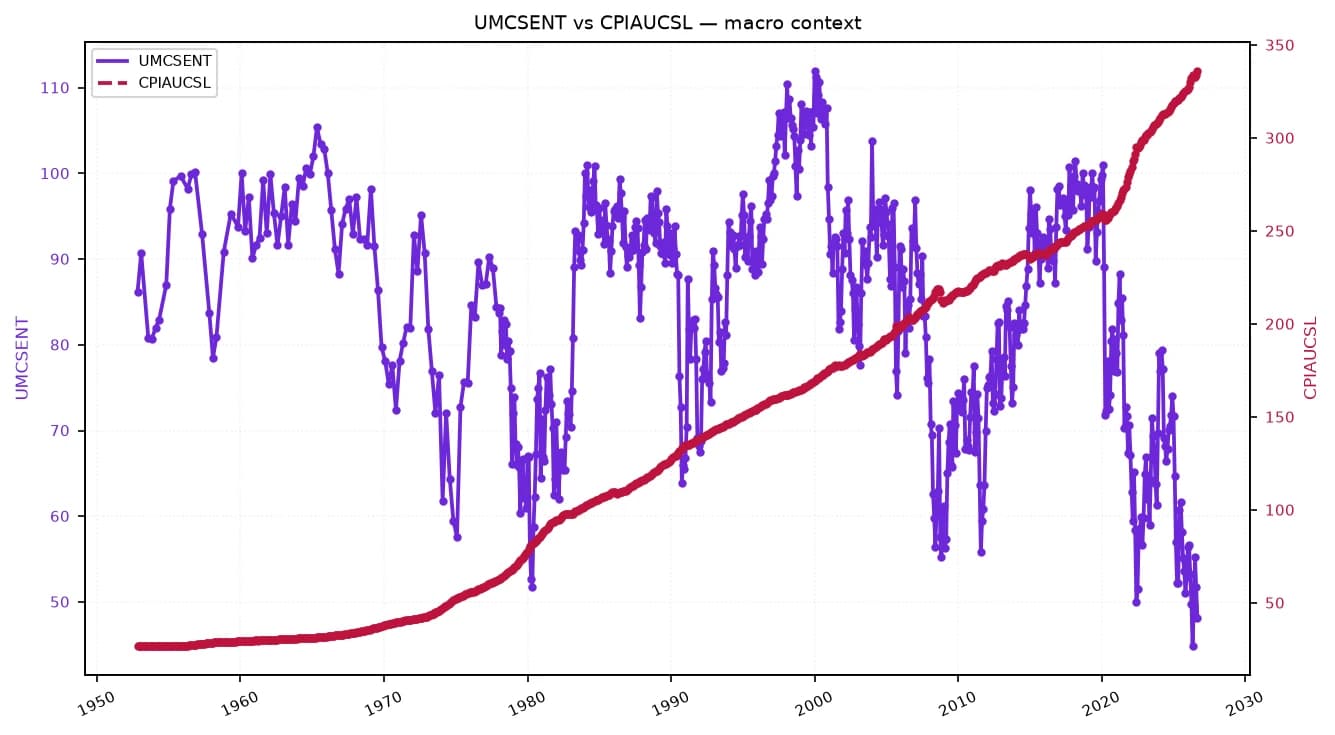
The University of Michigan’s final October reading on consumer sentiment came in at 48, barely changed from September’s 48.1 and only slightly above May’s all-time low of 44.8, set after the Iran war began to push up energy costs. Economists surveyed by Reuters had expected a deeper decline to 46.3, making the latest result less bad than feared but still historically weak. It is the second-lowest reading on record.
Sentiment Indicators
The message from the survey is not that Americans are spending freely because the stock market has held up, but that many households feel trapped by elevated prices. Michigan survey director Joanne Hsu said purchasing power is now the dominant issue shaping attitudes toward the economy. Confidence is down 10% from a year ago and 15% from February, before the conflict escalated.
That matters economically because consumer sentiment helps shape whether households delay purchases, draw down savings or front-load spending in anticipation of further inflation. The survey’s inflation expectations point in the same direction: consumers now see prices rising 4.7% over the next year, up from 4.6% in September and sharply above February’s 3.4%. Five-year expectations edged up to 3.5% from 3.4%. Persistent expectations at those levels complicate the Federal Reserve’s effort to return inflation to its 2% target, especially when households say rising costs are already altering behavior.
The political backdrop amplifies the significance. The survey aligns with broader voting data showing negative views of the economy and of President Donald Trump and Republicans’ handling of it. Independent voters — a crucial bloc in the November 3 midterms — were the main drag on October confidence, with their sentiment falling to 42.4 from 47.7 in September. Democratic and Republican readings improved modestly. Early voting has already begun, and polls suggest Republicans could lose control of the House and possibly the Senate.
For investors, the tension is between weak sentiment and still-resilient actual spending. Hsu noted that consumer outlays remain relatively steady, which is why markets have not yet priced a hard economic break from the confidence slump. But the risk is that sustained anxiety over prices eventually bleeds into discretionary demand, particularly if households accelerate purchases ahead of further price increases, making disinflation harder. That would keep pressure on the Fed and leave rate cuts further out of reach.
The market impact is visible in the relative performance of consumer-sensitive assets. Shares tied to staples and defensive spending have held up better than discretionary names as inflation fears linger, while broad equities have also been buffeted by energy shocks. The recent surge in oil prices following the conflict in the Middle East has reinforced the same narrative driving the survey: households are being squeezed not by abstract macro data, but by the price of everyday goods and gasoline.
The next test is whether inflation eases enough to reverse the mood before the holiday shopping season or whether higher prices remain entrenched as a political and economic drag into year-end. If energy markets stay volatile, consumer confidence is likely to remain depressed, limiting the upside for discretionary retailers and keeping policymakers under pressure.
| Entity | Gains | Losses |
|---|---|---|
| Energy producers | ▲Higher oil prices | ▼Households and consumers |
| Consumer staples retailers | ▲Defensive demand | ▼Consumer discretionary spending |
| Federal Reserve | ▲Data justification for caution | ▼Credibility on 2% inflation target |
| Republicans/Trump | ▲None from weak sentiment | ▼Midterm prospects and approval ratings |