Consumer caution is reshaping the retail food mix even as grocery demand remains firm, and that split is increasingly visible in the stocks and operating trends of the sector’s biggest players.
Walmart, Kroger, Costco rise on grocery demand
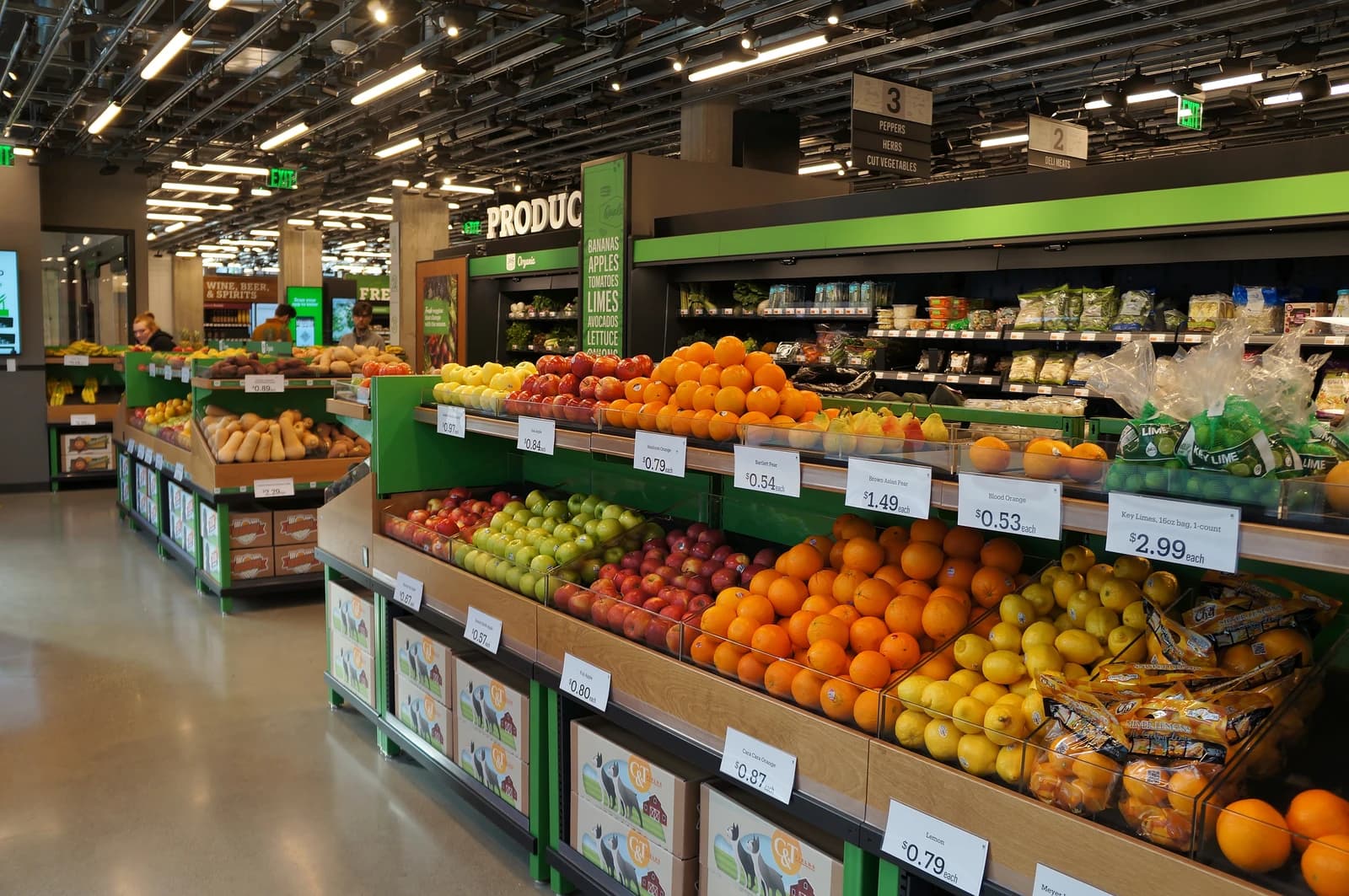
The dominant story for grocery retailers is not a broad collapse in demand but a continued shift in where households spend: away from discretionary restaurant meals and toward lower-cost eating at home, while still seeking value with disciplined basket sizes and sharper price comparison. That helps explain why food retailers remain central to the consumer narrative even as broader consumer sentiment has weakened sharply.
Sentiment Indicators
Food & Groceries
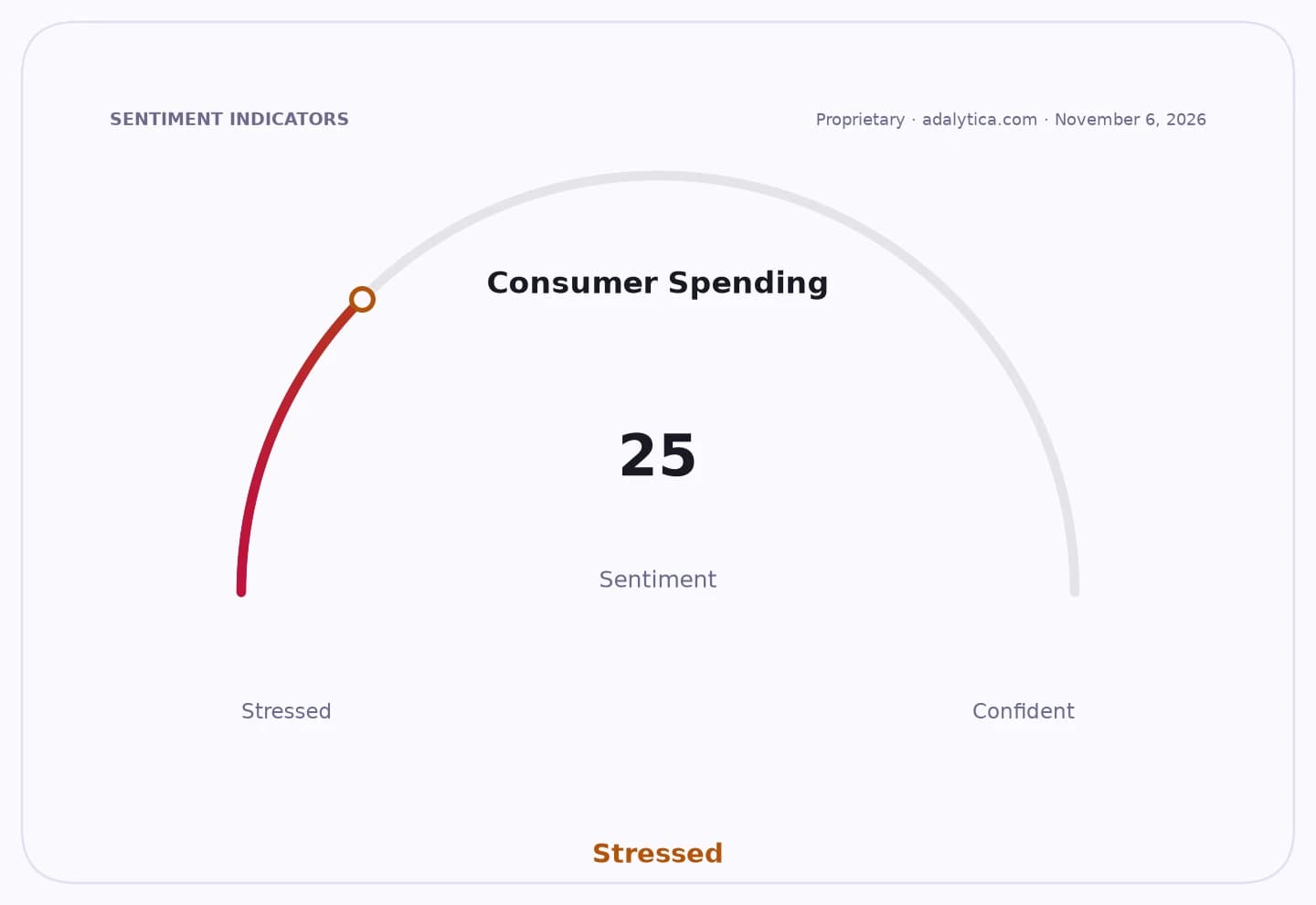
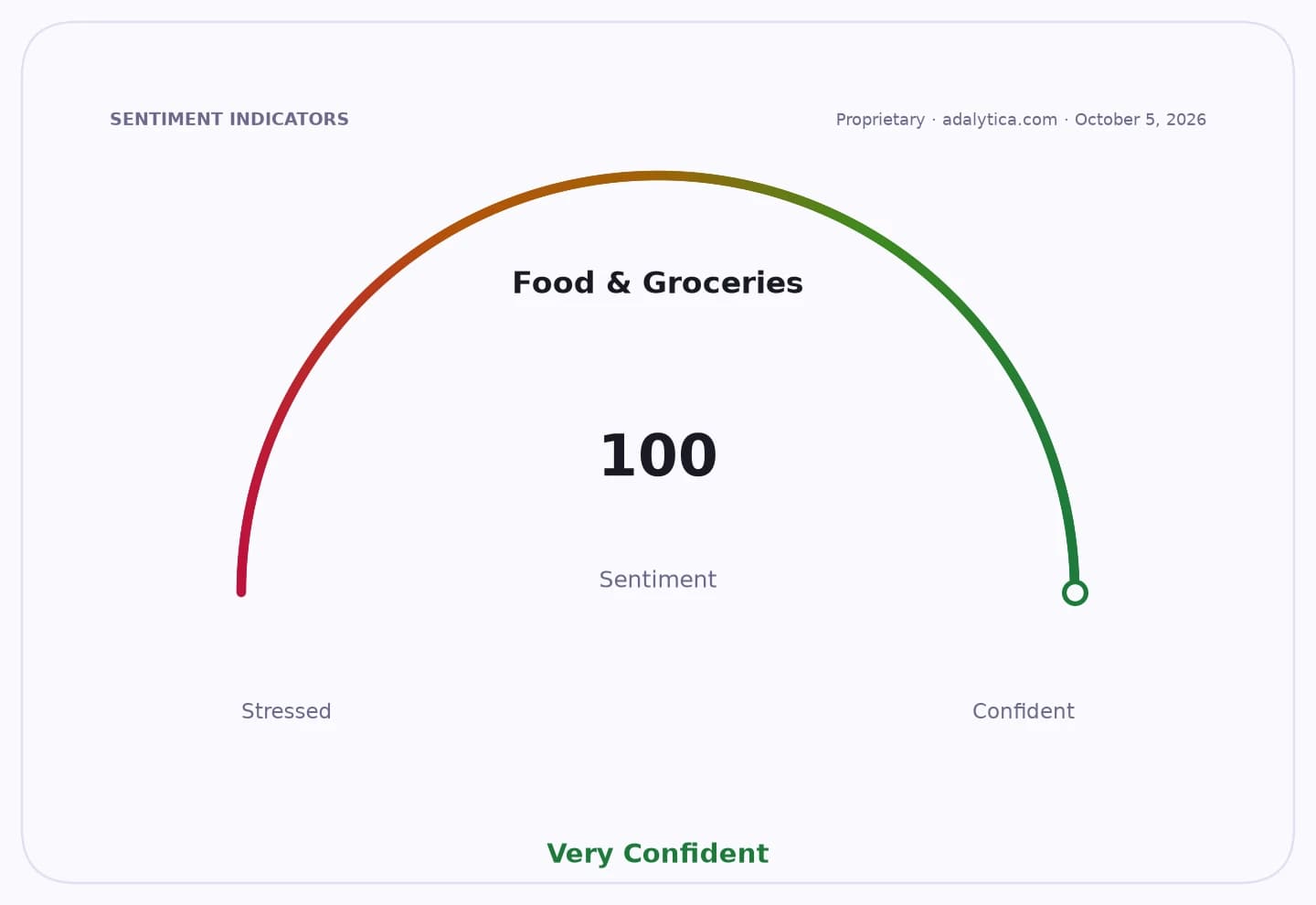
Adalytica’s consumer spending sentiment snapshot shows extreme fear at 18, while food and grocery spending sentiment sits at 89, or extreme greed, underscoring a consumer that is anxious overall but still prioritizing food purchases. That divergence matters economically because groceries are a defensive category, and in a slower-spending environment the industry often gains share from restaurants, convenience dining and other discretionary categories.
The shift is also showing up in industry signals. McDonald’s reported a 0.2% decline in U.S. same-store sales in the third quarter, its first drop in six quarters, a reminder that consumers are still reluctant to spend freely on dining out as living costs remain elevated. For grocers, that dynamic can be a tailwind, but it is not a straight line to margin expansion. Shoppers trading down tend to be more price sensitive, more promotional, and quicker to switch retailers.
That backdrop helps frame the market action in the main grocery names. Walmart shares have climbed to around $125.52 after touching $129.17 this week, while Kroger has rallied to about $67.70 from the mid-50s in July. Costco has also pushed higher, last at roughly $1,053.56 after a move through $1,065.59. The price action suggests investors are still rewarding retailers with scale, pricing power and defensive traffic, even as technical readings show the moves are extended, with relative strength readings elevated across the names.
Fundamentally, the strongest operators are benefiting from the consumer’s continued emphasis on value and convenience. Kroger’s recent filing showed e-commerce sales increased 14% in the second quarter and in the first two quarters of 2026, while excluding certain portfolio changes, e-commerce rose 19% and 20% in comparable periods. Walmart’s filing showed comparable sales growth of 3.3% and 3.8% in the three and six months ended July 31, driven by transactions and average ticket, with grocery strength helping offset weakness elsewhere.
For investors, the narrative is less about a single earnings print and more about whether grocery demand remains resilient enough to support traffic while promotional intensity stays contained. The bull case is that consumers under pressure keep trading from restaurants to retail food, supporting volume and share gains for Walmart, Kroger and Costco. The bear case is that persistent cost pressure forces heavier discounting, capping margins even if sales hold up.
What to watch next is whether restaurant weakness deepens, whether grocery sentiment remains detached from the broader consumer mood, and whether the latest rally in supermarket and warehouse stocks can be sustained if traffic growth slows or pricing competition intensifies.
| Entity | Gains | Losses |
|---|---|---|
| Walmart | ▲Grocery traffic and trade-down demand | ▼Promotional pressure if competition rises |
| Kroger | ▲Share from restaurant spend | ▼Margin if value wars intensify |
| Costco | ▲Premium defensive spending | ▼Extended valuation if growth cools |
| Restaurants | ▲None | ▼Discretionary visits and same-store sales |