Bitcoin is still getting fresh capital, but not enough to power the next leg higher.
Bitcoin inflows slow as $87,000 breakout stalls
That is the key message from Glassnode’s latest onchain data, which shows rolling 30-day “new money” inflows of about $4.9 billion through Oct. 5 even as Bitcoin’s realized cap rose by $12.8 billion over the same stretch. In other words, less than two-fifths of the market’s latest value creation came from new capital; the rest came from existing holders paying higher prices to one another.
That matters because Bitcoin’s breakout story in 2024 and 2025 was built on a simple engine: ETFs, corporate treasury demand and stablecoin creation bringing in new dollars faster than long-term holders could distribute. Glassnode is now warning that this mix has weakened. Until those inflows re-accelerate, the market is relying on a recycling of capital already inside the system rather than a true expansion of demand.
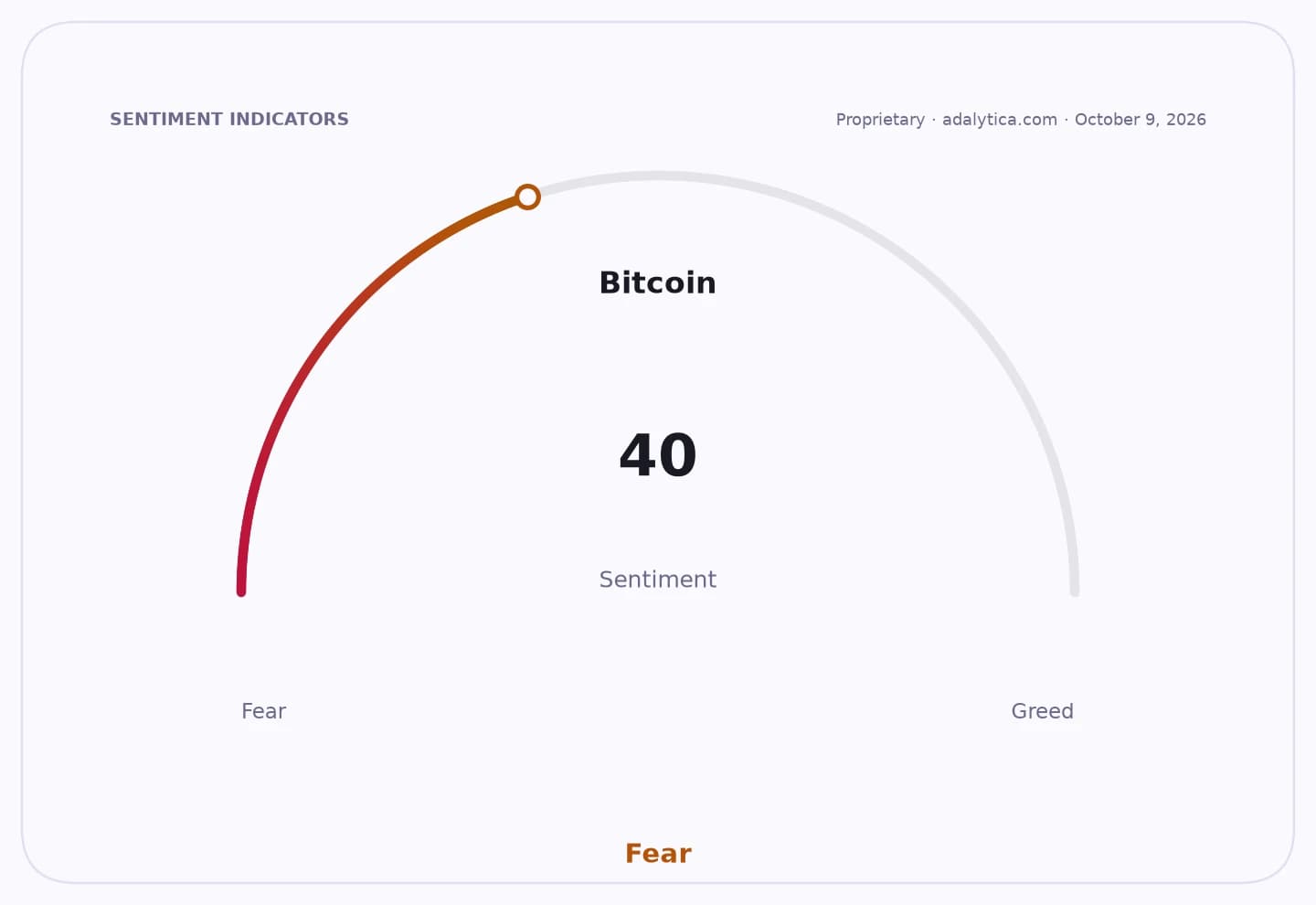
The price action is confirming the hesitation. Bitcoin has tried four times since Sept. 21 to push through $87,000 and has failed each time as overhead sell orders thickened. BTC was trading around $83,000 on Thursday, down 1% month-to-date, while the 50-day moving average remains well above spot, a sign the rally has lost momentum. Momentum indicators have also softened, with RSI readings sliding into the low-40s and bearish MACD divergence showing that buyers are losing control of the trend.
The more important signal, though, is behavioral. Glassnode said roughly 86% of coins sent to exchanges on the day Bitcoin first closed above $85,000 in months came from short-term holders booking gains. That is classic late-cycle action: newer buyers take profits fast, and every push higher runs into supply from traders who bought the breakout. Short-term holders still sit in profit, with an estimated cost basis near $78,250, so they have room to sell into strength before any forced capitulation.
For investors, this is the difference between a healthy trend and a fragile one. Bitcoin can grind higher on recycled flows, but sustained upside usually needs a much bigger wave of fresh institutional demand. That puts the focus on ETF net inflows, corporate balance-sheet purchases and stablecoin expansion over the next several weeks. If those channels revive, Bitcoin can retake the $87,000 area and reprice quickly. If they do not, the market may remain locked in a choppy range while holders rotate rather than accumulate.
The opportunity here is less about chasing a stalled breakout and more about positioning for the second-order winners if institutional inflows return. Bitcoin itself remains the bellwether, but listed proxies such as MicroStrategy and Coinbase, along with the broader crypto infrastructure trade, are the names most levered to a renewed wave of “new money.” For now, the tape says patience is warranted — but the setup is exactly the kind of reset that can become an inflection point if liquidity comes back in force.
| Entity | Gains | Losses |
|---|---|---|
| Bitcoin bulls | ▲lower-cost accumulation window | ▼stalled breakout above $87,000 |
| Short-term holders | ▲profits on recent buys | ▼supply overhang if momentum fades |
| Bitcoin ETFs | ▲renewed inflow upside | ▼slower asset growth if demand weakens |
| MicroStrategy, Coinbase | ▲leverage to fresh BTC demand | ▼sentiment if Bitcoin remains range-bound |