Ethereum’s slide to $2,479 has put the $5,000 debate on ice for now, but the bigger story is that the market is washing out weak hands in a way that could set up the next multi-year move.
Ethereum Falls to $2,479 as Fear Hits Extreme
That matters because Ethereum is not just another crypto token trading on sentiment. It is the core settlement layer for decentralized finance, stablecoin activity and much of the broader onchain economy, which means every violent reset in ETH has implications for capital formation, transaction costs and risk appetite across the digital-asset complex.
Sentiment IndicatorsⓘProprietary · adalytica.com · October 9, 2026
This is a snapshot — live sentiment, awareness and momentum for 130+ markets update continuously in the dashboard.Open AlphaPulse
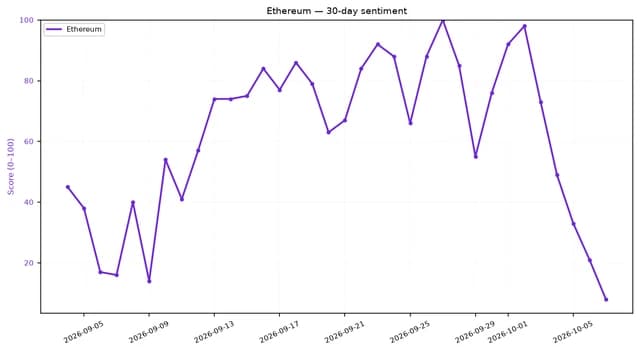
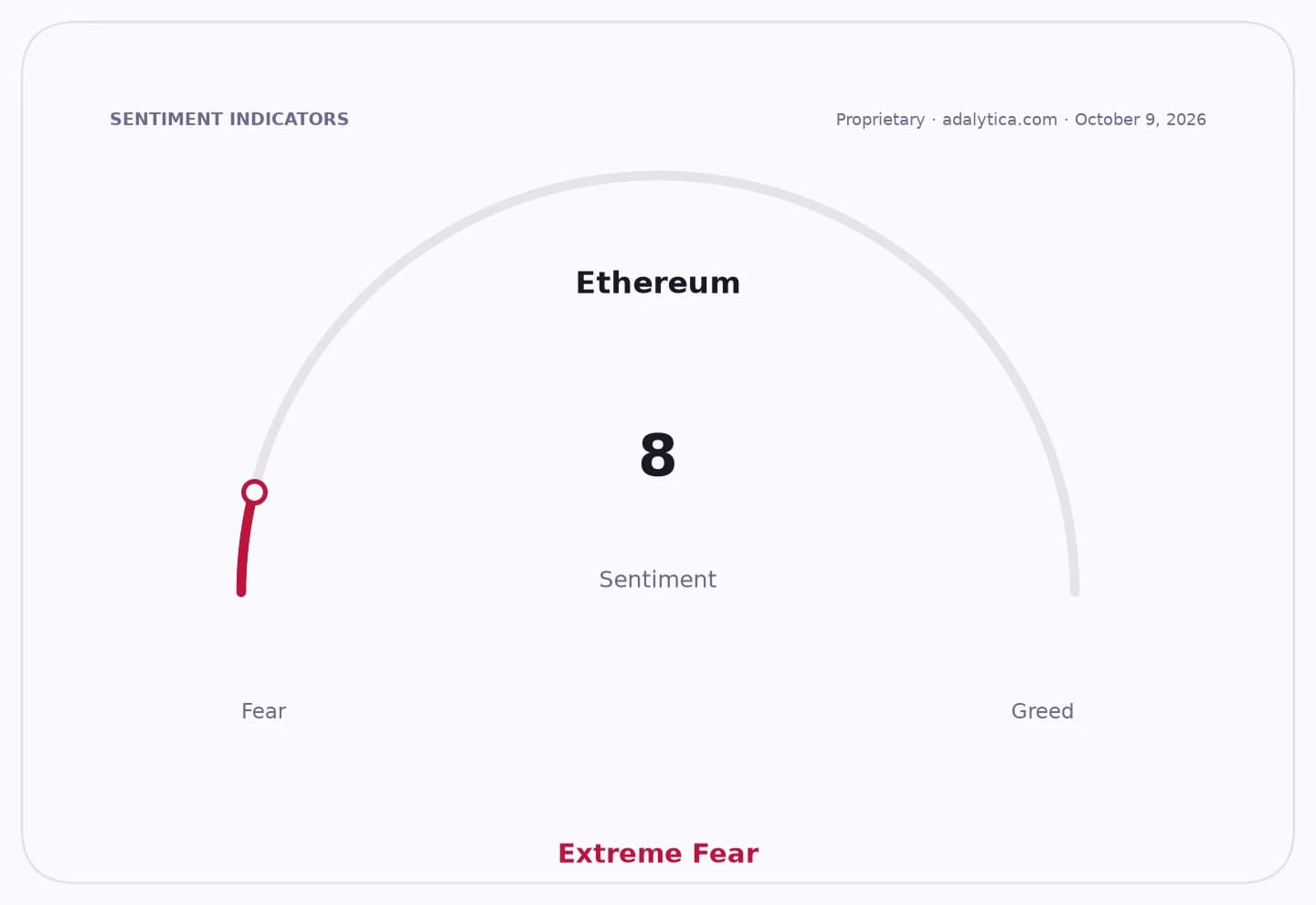
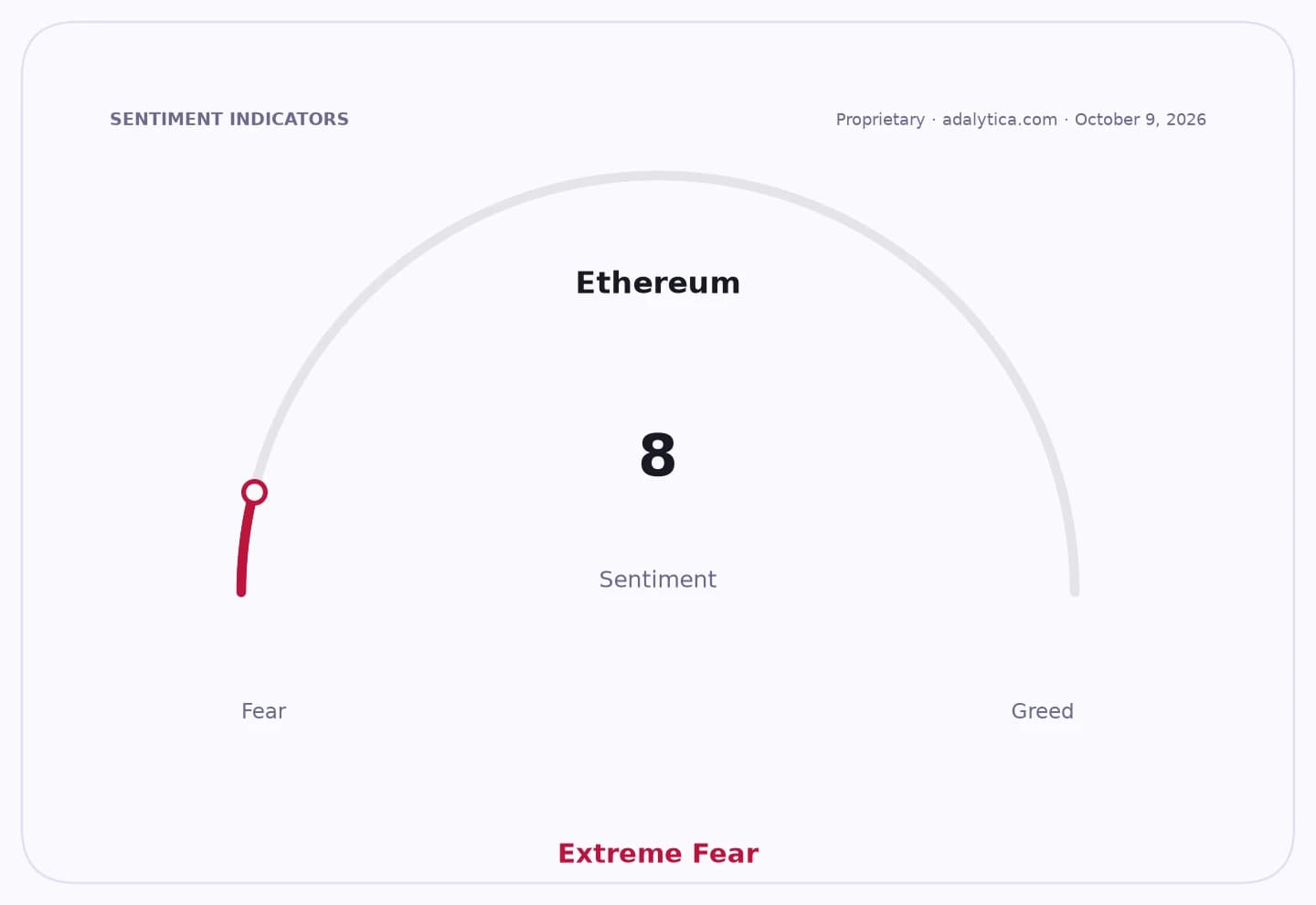
The latest price action is brutal. ETH has fallen more than 7% in the latest session and is down sharply from its recent 2026 peaks, with the 14-day RSI at 24.1, a reading that signals deeply oversold conditions. The token is trading below its 50-day moving average of 2,551.15, while the MACD remains below its signal line, underscoring that momentum is still weak even after the selloff. Adalytica’s Ethereum Fear & Greed Index sits at 8, or “Extreme Fear,” a classic sign of capitulation rather than enthusiasm.
For investors, that combination matters more than the day-to-day price. Extreme fear often marks the kind of forced deleveraging that creates asymmetric entries for patient capital, especially in assets with strong network effects and long-duration utility. If Ethereum can reclaim its 50-day average and stabilize above the mid-$2,500 area, the market will start to look past the current drawdown and back toward the structural case for higher prices into 2026-2032.
The key point is that the market is still pricing ETH like a high-beta trade when it is increasingly behaving like digital infrastructure. That is why the most important question is not whether ETH reaches $5,000 tomorrow, but whether this flush becomes the base for the next institutional accumulation phase. If crypto risk appetite returns and Ethereum’s onchain activity expands with broader adoption, the path back to $5,000 becomes a matter of cycle timing, not technology.
That setup also spills over into equities. Coinbase and MicroStrategy remain the obvious proxies for renewed crypto beta, but the cleaner long-term trade may be the infrastructure layer: exchanges, custody providers, and companies tied to onchain activity that benefit when Ethereum usage rebounds. Until then, the selloff is a warning that the market is still pricing in stress, not growth.
For now, the message is simple: ETH is not confirming a breakout, but it is offering a potentially attractive long-term reset. Investors willing to think in multi-year horizons should watch for stabilization near current levels, because the next major move in Ethereum is more likely to be fueled by fear exhaustion than by euphoria.
| Entity | Gains | Losses |
|---|---|---|
| Long-term ETH buyers | ▲Lower entry point | ▼Near-term drawdown |
| Short-term momentum traders | ▲Volatility trades | ▼Trend-following longs |
| Coinbase (COIN) | ▲Rebound in crypto volumes | ▼Weak retail/speculative flows |
| MicroStrategy (MSTR) | ▲Bitcoin risk-on spillover | ▼Broad crypto risk aversion |