Ethereum’s latest network tune-up matters less as a headline than as a capital-allocation signal: developers are still pushing the chain toward higher capacity, and that keeps the long-term bull case for ETH infrastructure intact even as the token trades under pressure near $2,700.
Ethereum update keeps 200M gas trial on track
Prysm’s late fix for a configuration issue ahead of Glamsterdam’s Sepolia activation removes a near-term technical snag and keeps the 200 million gas-limit trial on track for October 6. That is the kind of plumbing upgrade that matters to investors because it tests whether Ethereum can handle bigger blocks without breaking the validator stack. If the trial works cleanly, it strengthens the case for a more scalable base layer and, by extension, more durable demand for Ethereum’s settlement and execution economy.
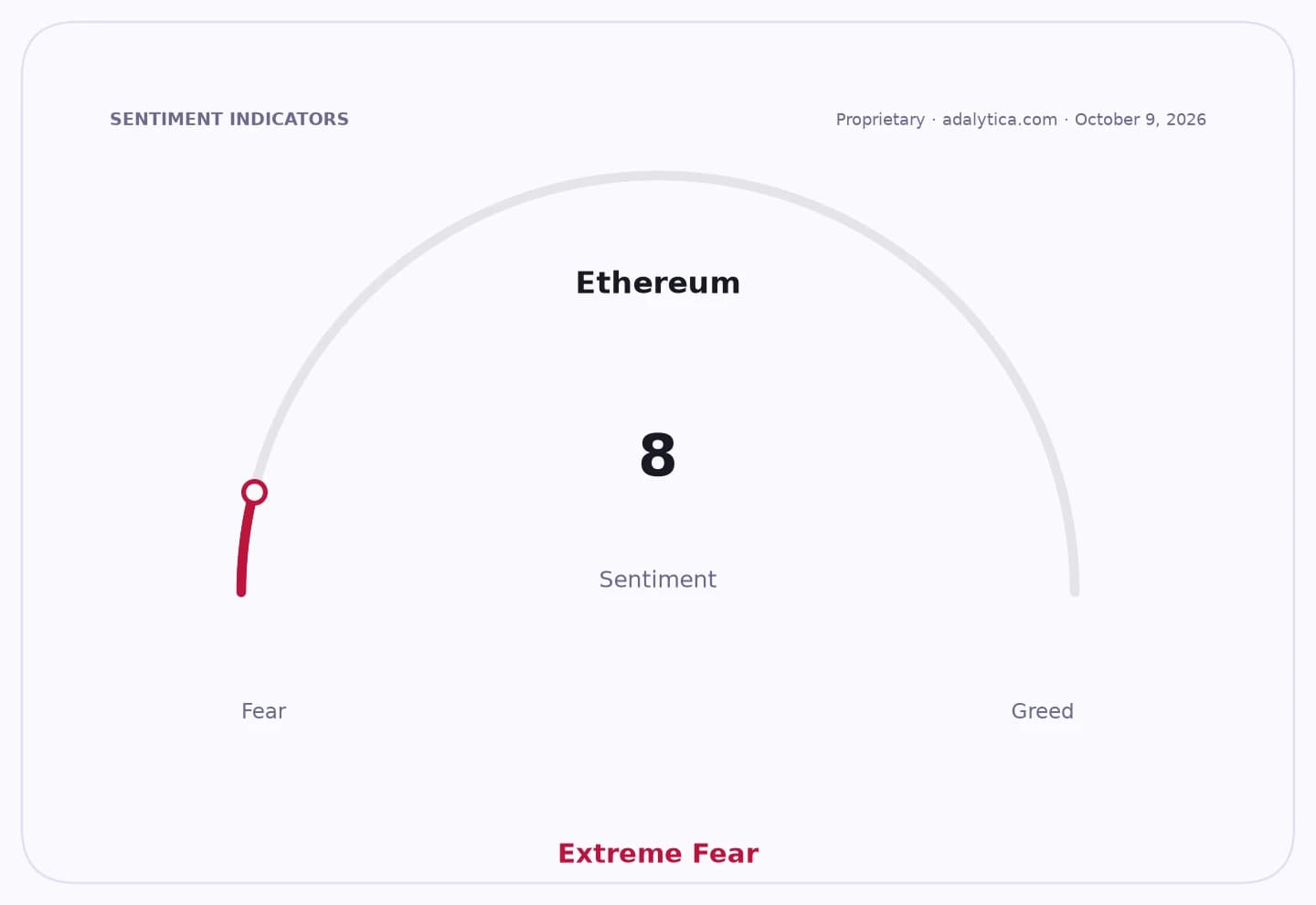
Sentiment IndicatorsⓘProprietary · adalytica.com · October 8, 2026
This is a snapshot — live sentiment, awareness and momentum for 130+ markets update continuously in the dashboard.Open AlphaPulse
But the market is not pricing this as a clean win. ETH has been consolidating below resistance, with spot Ether ETF weekly net outflows adding a demand-side headwind. That combination explains why a meaningful protocol milestone is not translating into immediate price momentum. The token closed at $2,697.52 on October 6, then slipped to $2,573.53 and $2,470.85 over the next two sessions, while its 50-day moving average sat near $2,551. The technical picture is fragile: ETH’s RSI fell to 23.6, a level that typically reflects oversold conditions, but oversold can stay oversold when flows remain weak.
This is the setup the market keeps misreading. Ethereum is not being repriced only on near-term chart action; it is being weighed by macro and flows at the same time developers are laying groundwork for higher throughput. The Fed minutes on October 7 and U.S. CPI on October 14 could still tighten or ease financial conditions, and crypto remains highly sensitive to yields and the dollar. For investors, that means the next sustained move in ETH will likely require both a credible capacity upgrade story and an improvement in risk appetite.
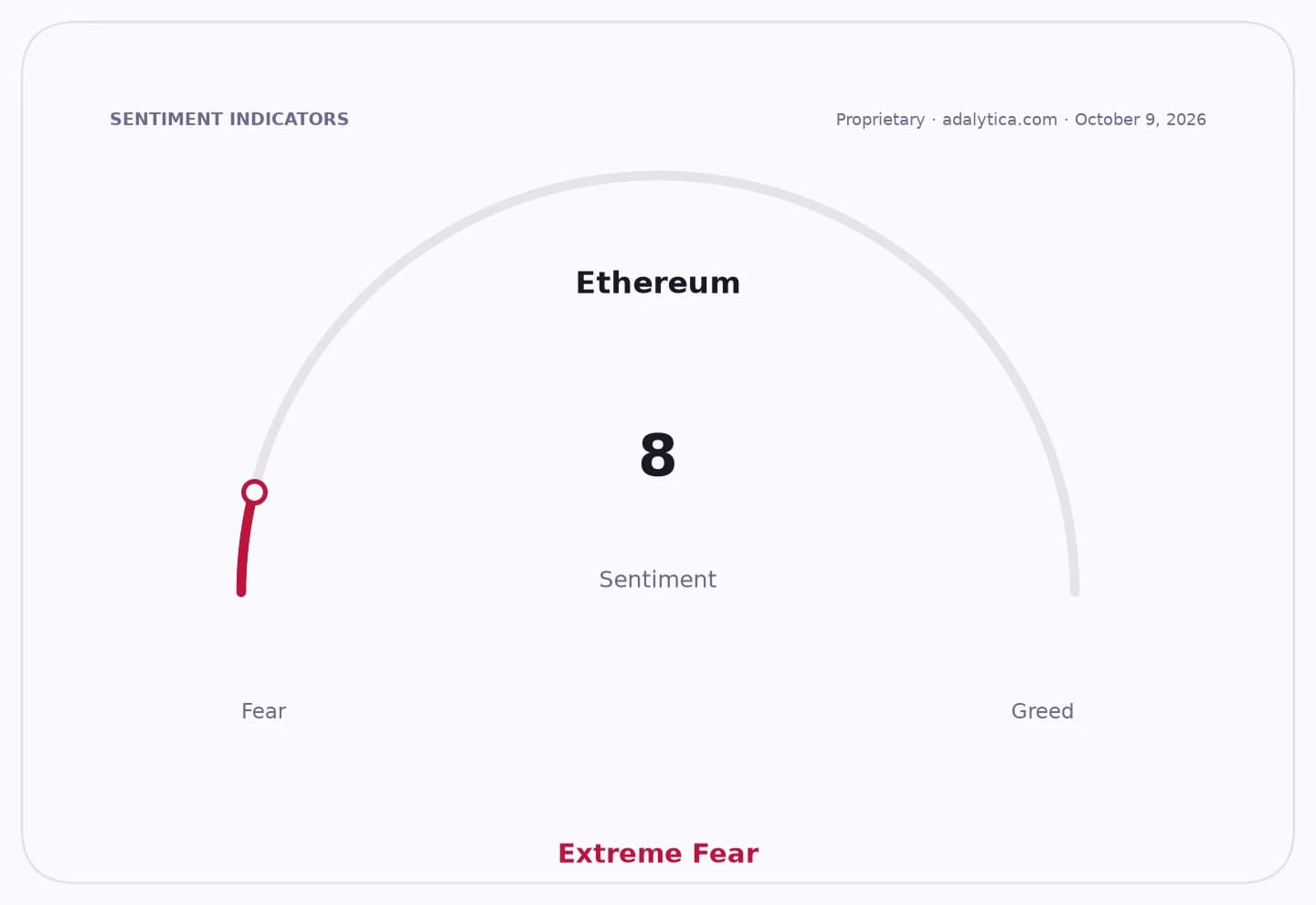
The asymmetry is in the second-order winners. A successful Glamsterdam test would not make a 200 million gas mainnet limit immediate, but it would reinforce the investment case for Ethereum-linked infrastructure, scaling tools and execution layers that benefit from higher network demand over time. The market is already showing extreme fear around ETH, with Adalytica’s Ethereum sentiment index at 8, suggesting positioning is washed out even as the network roadmap keeps advancing. That is often where the best entries begin to form.
For now, the key line in the sand remains $2,650 to $2,700. A decisive reclaim of the $2,705 to $2,730 supply zone and then $2,800 would put the breakout thesis back in play. Lose $2,650, and the market likely retests deeper support near $2,550. My view: the better trade is to watch for confirmation rather than chase weakness, because the real opportunity lies in Ethereum’s expanding capacity story, not in a single volatile session.
| Entity | Gains | Losses |
|---|---|---|
| Ethereum core developers | ▲roadmap credibility | ▼failed test optics |
| ETH bulls | ▲capacity-upgrade thesis | ▼weak ETF demand |
| Validators using Prysm 7.2.1 | ▲access to trial | ▼older configurations |
| Short-term traders | ▲volatility opportunity | ▼breakout failure risk |