Bitcoin is pulling back toward an unfilled gap around $81,170, but the bigger market question is whether the retreat resets momentum for another run higher or marks the start of a deeper correction.
Bitcoin Pulls Back Toward $81,170 Gap
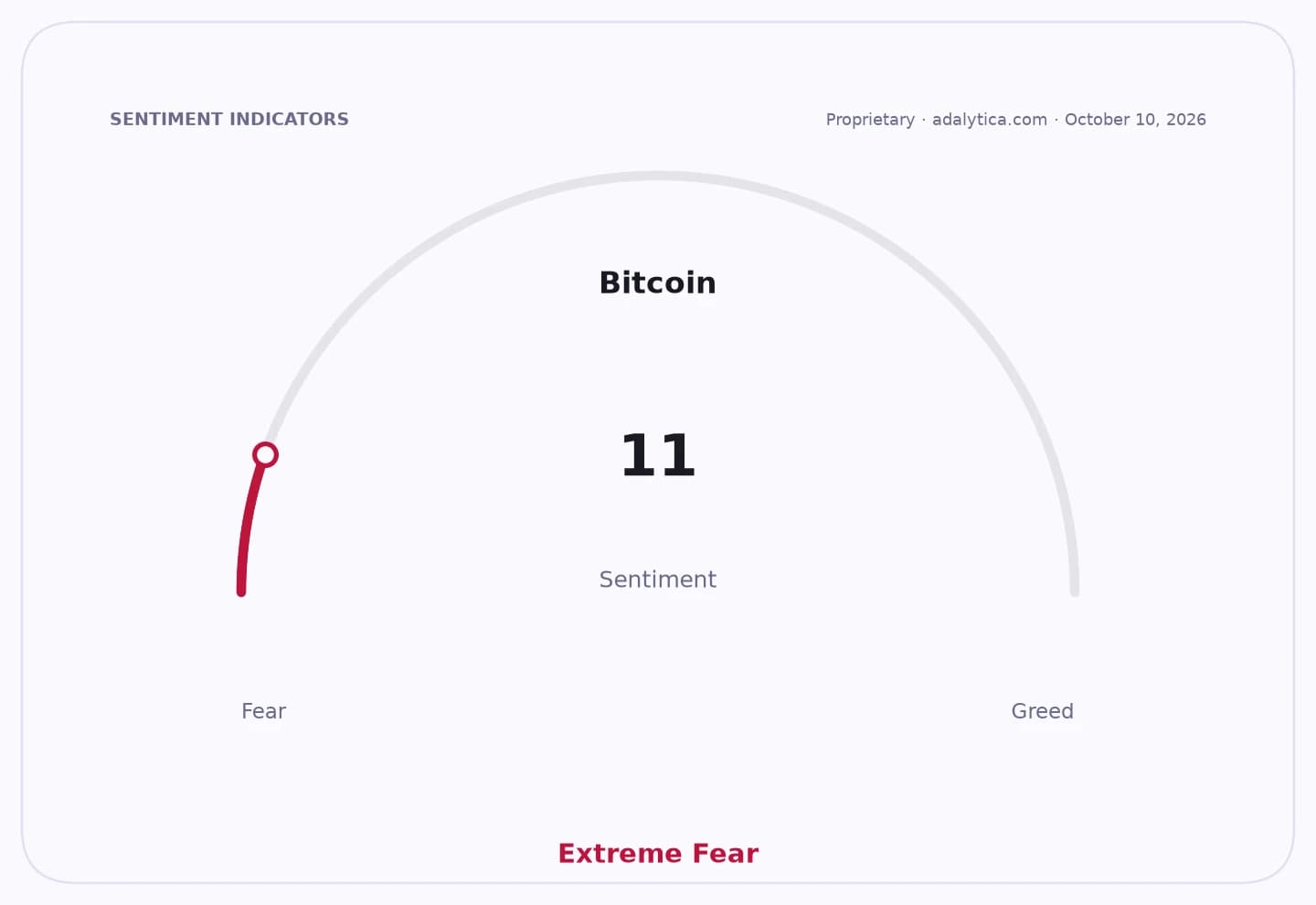
The drop comes after a sharp run in 2026 that left the token vulnerable to profit-taking and forced liquidations, with sentiment gauges showing extreme fear even as Bitcoin still trades well above its 200-day moving average. That combination matters because it suggests the market is not breaking down in a structural sense, but it is still digesting leverage and looking for a cleaner base before buyers can press the next advance.
Sentiment IndicatorsⓘProprietary · adalytica.com · October 10, 2026
This is a snapshot — live sentiment, awareness and momentum for 130+ markets update continuously in the dashboard.Open AlphaPulse
Technically, the case for a pause is straightforward. Bitcoin closed at $82,977 on Oct. 10, just below the $81,170 gap referenced in chart work and below the upper end of its recent range. Its 50-day moving average stands near $80,811, while the 200-day average is much lower at $71,919, leaving the longer-term trend intact but the short-term setup stretched. The Relative Strength Index at 43.5 points to fading momentum rather than outright oversold conditions, and MACD remains above its signal line, suggesting the broader trend has not fully turned negative.
The immediate support level to watch is $74,925, according to the technical view cited in the market context. A hold above that zone would preserve the market’s bullish structure and keep open the case for a retest of resistance near $87,700. A break below it would do more than fill a gap: it would raise the risk that Bitcoin’s latest advance from summer lows was merely a rebound inside a larger consolidation.
For investors, the significance extends beyond the coin itself. Bitcoin remains the bellwether for crypto risk appetite, so a controlled retracement would be healthier than a disorderly slide. That is especially true after the market saw roughly $1.09 billion in liquidations, a sign that crowded positioning is being flushed out. The pain has been most acute for leveraged traders, while long-term holders and cash buyers can use weakness to rebuild exposure at lower levels.
MicroStrategy and Coinbase are the clearest equity proxies for that trade. MicroStrategy closed at $154.34 on Oct. 9, far below its earlier peaks but still above its 200-day average, while Coinbase ended at $179.39, also above its longer-term trend line. Both remain highly sensitive to Bitcoin direction: a stabilizing coin would help sentiment in crypto-linked stocks, while another leg lower would likely keep pressure on multiples and trading volumes.
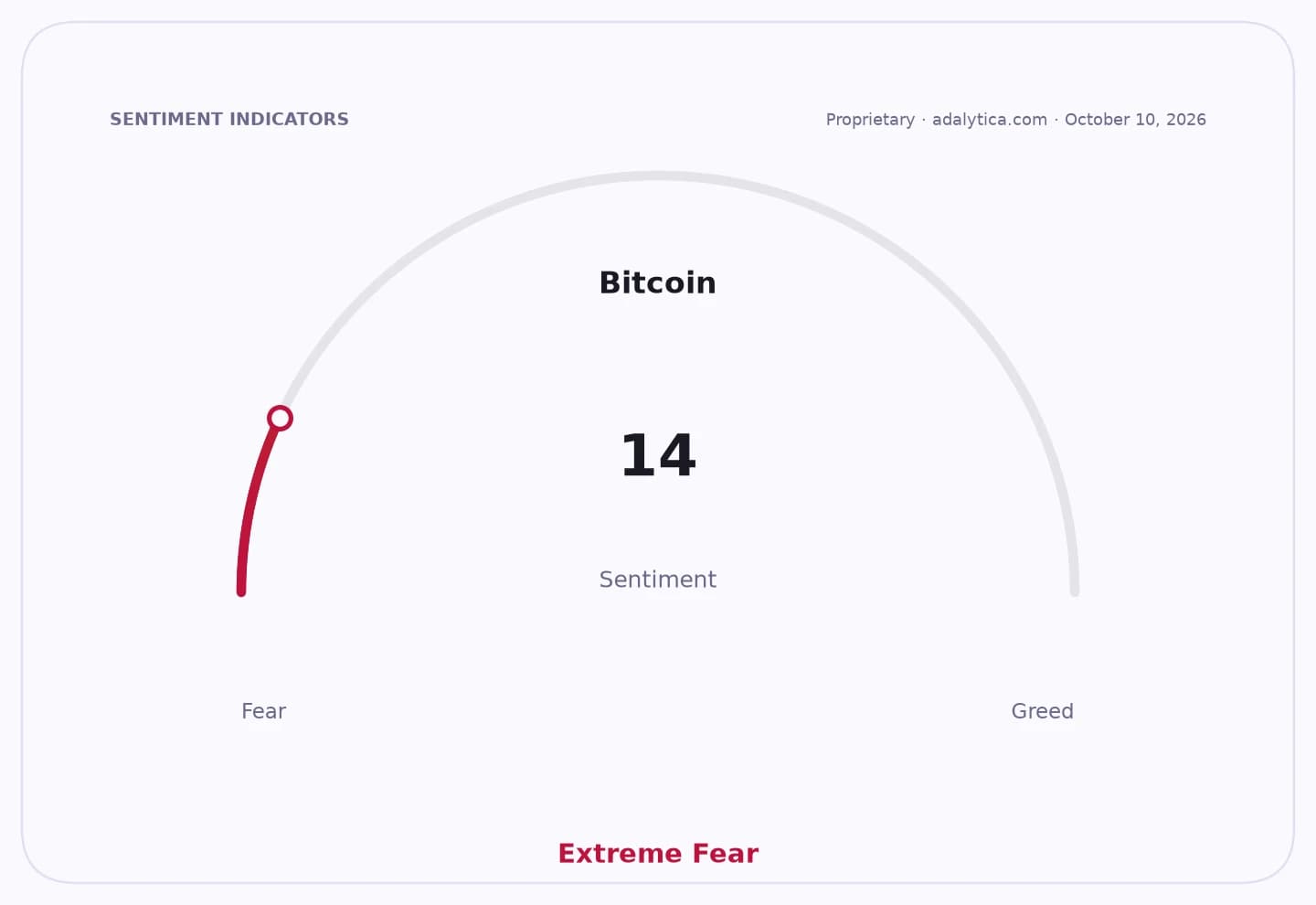
There is also a broader market backdrop behind the pullback. Adalytica’s Bitcoin Fear & Greed Index stands at 11, in “Extreme Fear,” even as the S&P 500 trade signal remains in “Extreme Greed.” That divergence underscores a market still willing to chase risk in equities while treating crypto more defensively, a split that often leaves Bitcoin needing a technical reset before sentiment can recover.
For now, the setup looks more like a pause than a reversal. If Bitcoin can hold the low-$70,000s and reclaim the $87,700 resistance area, the case for a move back toward $100,000 strengthens. If not, the current step back could turn into a more protracted digestion phase before the market can generate enough momentum for the next leg higher.
| Entity | Gains | Losses |
|---|---|---|
| Long-term Bitcoin holders | ▲Better entry levels | ▼Near-term volatility |
| Leveraged crypto traders | ▲Reset of excess leverage | ▼Forced liquidations |
| MicroStrategy, Coinbase | ▲Rebound if Bitcoin stabilizes | ▼Pressure if Bitcoin weakens |
| Short sellers | ▲More downside if support holds | ▼Squeeze risk on recovery |