Bitcoin has climbed back above $80,000, giving the crypto market its clearest sign yet that the October washout may be easing, even as traders remain wary of U.S. politics, regulation and the next Federal Reserve move.
Bitcoin Reclaims $80,000 After October Selloff

The world’s largest cryptocurrency was changing hands around $80,500 to $80,700 on Nov. 5, up more than 6% in 24 hours after pressure late in October, according to CoinMarketCap data cited by INDODAX. That rebound matters because Bitcoin is still the market’s bellwether: when it stabilizes, liquidity tends to flow back into the broader digital-asset complex, and when it rolls over, risk appetite usually disappears fast.
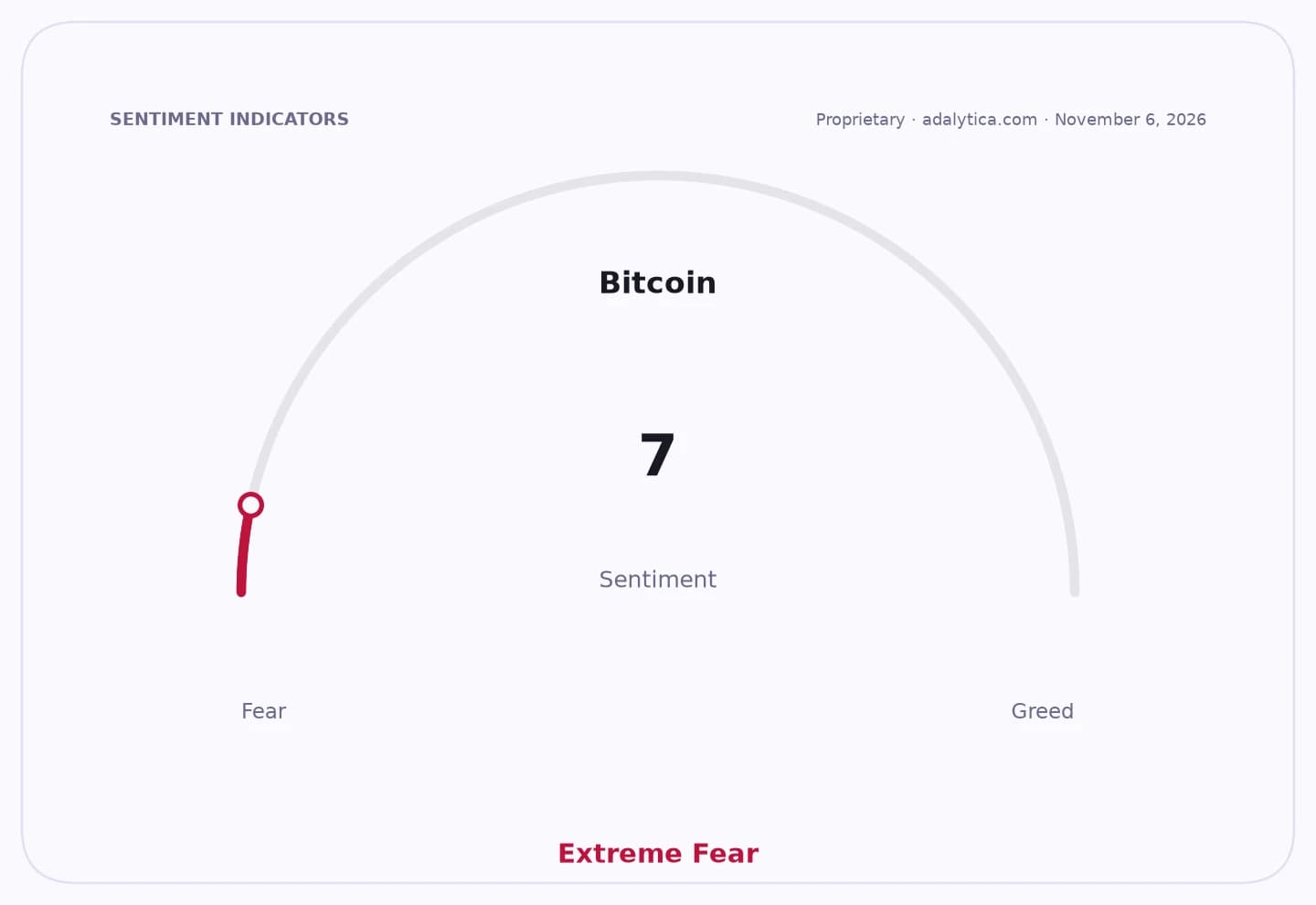
Sentiment Indicators

INDODAX Chief Marketing Officer Aloysia Dian said the move suggests investor interest is returning after a stretch of uncertainty, though she warned that a one- or two-day bounce does not confirm a durable trend. That caution is justified. Bitcoin has been punished repeatedly this year whenever macro conditions tightened, and the latest recovery comes with the 50-day moving average still above spot and the 200-day moving average near $73,147, meaning the rally has not yet restored a clean technical uptrend.
Still, the move is important for investors because it argues that crypto remains highly sensitive to the same forces driving equities and rates: U.S. inflation, labor-market data and the Federal Reserve’s policy path. Traders are now looking ahead to U.S. jobs data, which could reshape expectations for rate cuts and, by extension, the appeal of speculative assets. A softer rates outlook would likely favor Bitcoin and crypto-exposed names; a hotter labor print could quickly reverse this recovery.

The political backdrop adds another layer. Markets are parsing the impact of the U.S. midterm result and the shift in Washington’s balance of power, which could influence both inflation policy and digital-asset regulation. The CLARITY Act and broader debates over SEC oversight remain unfinished business, and that uncertainty matters more than most investors want to admit. Crypto does not need perfect regulation to rally, but it does need a clearer path for institutional capital.
That is why the rebound is not just about Bitcoin’s price. It is also a read-through for listed crypto proxies. Coinbase and MicroStrategy both sold off into the move, showing the market is still pricing in policy risk and fragile momentum. Yet if Bitcoin can hold above the $80,000 area while U.S. data and regulation become less hostile, the setup could turn sharply more constructive for exchanges, custodians and Bitcoin-adjacent balance-sheet plays.
In Indonesia, the underlying market is also expanding. OJK data show local crypto investors reached about 23.48 million in September, while transaction value rose to Rp30.56 trillion, up nearly 32% from August. That tells you the addressable market is still deepening even in a volatile tape, which is exactly the kind of second-order trend long-term investors should watch.
My takeaway: this is not the time to chase Bitcoin blindly, but it is the time to position for a recovery in crypto risk appetite. If macro data soften and Washington inches toward clearer rules, Bitcoin’s reclaiming of $80,000 could mark the start of a far more durable re-rating in the entire digital-asset ecosystem.
| Entity | Gains | Losses |
|---|---|---|
| Bitcoin holders | ▲Rebound above $80,000 | ▼October drawdown risk |
| Coinbase | ▲Higher trading activity | ▼Regulatory uncertainty |
| MicroStrategy | ▲BTC treasury leverage | ▼Price volatility |
| U.S. dollar | ▲Could weaken if Fed turns dovish | ▼Safe-haven bid if data stay hot |