Bitcoin’s slide back toward $75,000 is less about a single shock than a broader unwind in the risk appetite that powered the rally earlier this year, with tighter-for-longer US policy, persistent inflation and heavy ETF redemptions draining liquidity from the market.
Bitcoin Falls Toward $75,000 on ETF Outflows
Bitcoin
The cryptocurrency traded at $75,514.10 on Nov. 6, after dropping 6.1% over the previous two sessions and 17% from its Sept. 3 peak near $81,272. That leaves Bitcoin below its 50-day moving average of $81,970 and only modestly above its 200-day average of $73,190, a technical setup that suggests the market has lost short-term momentum even as the longer-term trend remains intact.
Sentiment Indicators
The macro backdrop is doing most of the damage. The Federal Reserve left rates at 3.75%-4.00% in late October after a 10-2 vote, with two officials favoring a hike, underscoring that policymakers are still more worried about inflation than about slowing growth. September PCE ran at 3.6% year on year and CPI at 3.7%, levels that argue against near-term rate cuts and keep the dollar supported. For Bitcoin, that matters because the token has increasingly behaved like a high-beta liquidity asset: when real yields stay elevated and the dollar is firm, speculative demand tends to fade.
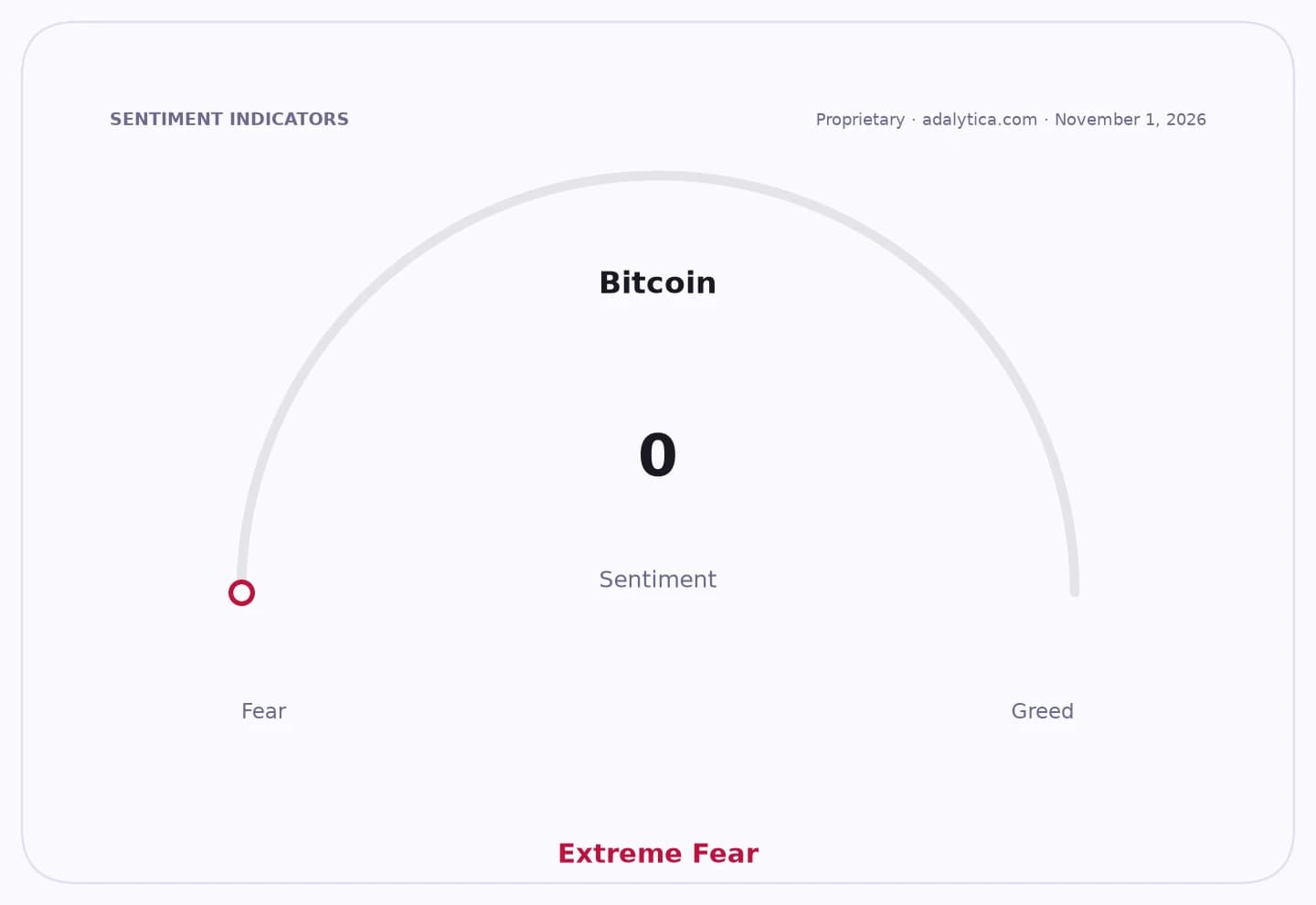
That shift is showing up in the flow data. US Bitcoin ETFs have suffered more than $6.4 billion in outflows over the past month, stripping a major source of incremental demand from the market. At the same time, Adalytica’s Bitcoin Fear & Greed Index is at 7, or “Extreme Fear,” while its awareness gauge remains at 88, suggesting investors are still watching the asset closely but are unwilling to add risk. The combination is consistent with a market that has not lost attention, only conviction.
Crypto-linked equities are reflecting the same strain. MicroStrategy fell to $126.81 from $142.54 in two sessions, while Coinbase dropped to $132.77 from $151.50. Both names remain above their 200-day moving averages, but the recent break lower shows how quickly sentiment can spill over into the broader crypto equity complex when Bitcoin loses altitude. For Bitcoin treasury holders and miners, that means tighter financing conditions and less room to lean on mark-to-market gains.
There is a bull case. Bitcoin is still above its 200-day average, and the recent selloff has already pushed technical momentum into deeply oversold territory, with RSI readings around 34. A softer US dollar would likely help, and any repricing of Fed policy toward easier conditions could revive flows quickly. But the bear case is more immediate: if inflation data stay sticky and ETF redemptions continue, the market could test the mid-$70,000s again before finding durable support.
For investors, the key level now is not just the headline price but whether Bitcoin can hold above its 200-day moving average and rebuild demand in the face of restrictive policy. If it cannot, the November narrative is likely to be one of further deflation in crypto risk rather than a fresh leg higher.
| Entity | Gains | Losses |
|---|---|---|
| Dollar bulls | ▲Higher yields support the greenback | ▼Easier liquidity conditions |
| Bitcoin longs | ▲Oversold technical bounce potential | ▼ETF outflows and weak momentum |
| Crypto bears | ▲Fed caution and outflows validate caution | ▼Risk of sharp short covering |
| Coinbase/MicroStrategy shareholders | ▲Potential rebound if Bitcoin stabilizes | ▼Immediate mark-to-market pressure |