Bitcoin’s next record may come later than many traders expect, but the bigger market message is that institutional demand is changing how the token trades. Mike Flaum, chief executive of Log Scale Investments, said in a Bitcoin Magazine interview that Bitcoin is no longer bound to its traditional four-year halving cycle and could set a new all-time high in 2027 as spot ETF inflows and corporate treasury buying keep tightening supply.
Bitcoin could hit a new high in 2027

That matters because Bitcoin’s old rhythm — rally into the halving, peak, then unwind — has long shaped positioning across crypto markets. Flaum’s view is that the current cycle is different: ETF demand has pulled forward buying that used to arrive much later in the cycle, while public companies accumulating Bitcoin have reduced the free float. In that framework, price discovery becomes less about retail speculation and more about balance-sheet allocation, passive flows and the willingness of institutions to absorb volatility.
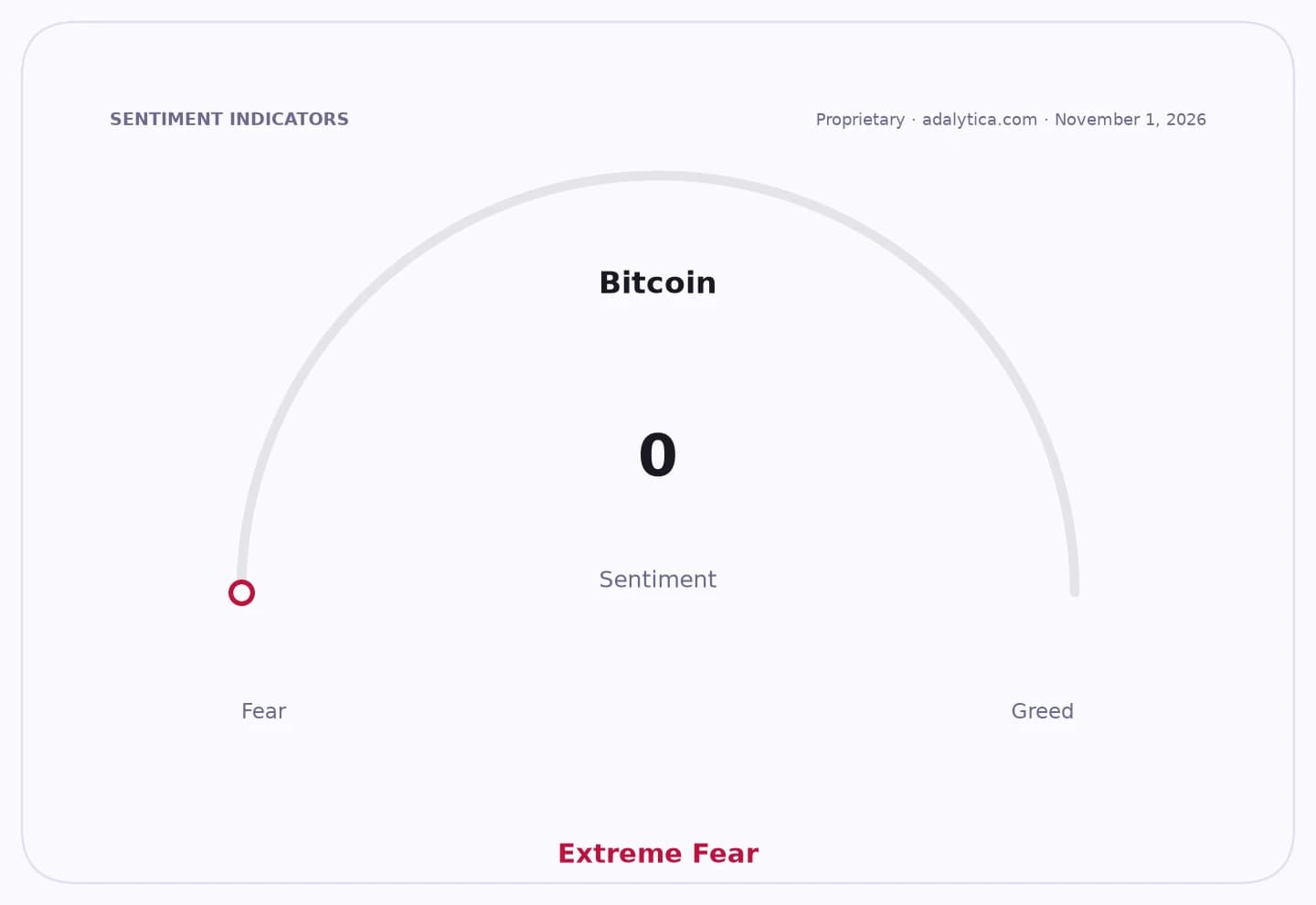
Sentiment Indicators

The argument comes at a delicate moment for the market. Bitcoin has been recovering from a recent slide but still trades well below its earlier highs, and technical readings suggest the rebound remains fragile rather than decisive. The token’s 50-day moving average is above the spot price, while the relative strength index has climbed out of deeply oversold territory but has not flashed a strong trend reversal. Adalytica’s Bitcoin fear-and-greed gauge shows “Extreme Fear,” even as awareness remains elevated, underscoring how quickly sentiment has turned cautious after earlier bouts of optimism.
The macro backdrop is also mixed. Yields remain relatively high by recent standards, with the 10-year Treasury near 4.9% and the Fed funds rate forecast around 3.9%, leaving little room for a broad risk rally to do the work for Bitcoin investors. Yet the dollar’s recent weakness remains supportive for hard assets, and Bitcoin bulls argue that a looser financial backdrop would reinforce the case for a delayed but stronger upswing into 2027. Bears counter that the same institutionalisation Flaum highlights could also make Bitcoin more sensitive to cross-asset de-risking if ETF flows reverse.

Flaum’s comments on Bitcoin treasury companies sharpen that debate. Strategy, the largest corporate holder of Bitcoin, has grown its stash to about 850,000 BTC from roughly 214,000 BTC in March 2024 while its split-adjusted share price is still around $140, a reminder that equity performance does not move in lockstep with coin accumulation. Investors are increasingly focused on capital structure rather than raw Bitcoin ownership, because common shareholders sit behind debt and preferred stock. That is why Strategy’s STRC preferred returning to its $100 par value matters: it allows the company to issue again without lifting its cost of capital, potentially financing more purchases. Strive’s SATS preferred, which grew to $700 million from an initial $500 million because of demand, suggests that market appetite for Bitcoin-linked income products is still expanding.
For investors, the implication is that Bitcoin’s next leg may be driven less by the old halving calendar and more by the speed at which ETF demand, treasury accumulation and yield-seeking capital keep soaking up supply. If that demand persists, Flaum’s 2027 target is plausible. If it fades, the market could remain trapped in a long consolidation even as adoption broadens. Either way, Bitcoin is increasingly trading like a macro asset with equity-market plumbing, not just a cyclical token tied to mining rewards.
| Entity | Gains | Losses |
|---|---|---|
| Bitcoin long investors | ▲Tighter supply, institutional demand | ▼Extended consolidation |
| Spot Bitcoin ETFs | ▲More inflows, product relevance | ▼Outflow risk in risk-off markets |
| Strategy and Strive | ▲Cheaper capital access | ▼Greater scrutiny of leverage and payouts |
| Bitcoin shorts / cycle traders | ▲Volatility to trade | ▼Weakening four-year-cycle thesis |