Bitcoin is back at a key support zone, and that matters because the latest drop is no longer just about a few speculative tokens getting hit — it is testing whether the crypto market can hold its footing after a broader altcoin unwind.
Bitcoin Tests Support Near $81,700

For long-term investors, this is the kind of moment that separates a healthy correction from a more damaging risk-off phase. Bitcoin’s slide to $81,709 puts it just above the lower edge of its recent Bollinger Band range and only a little above the $81,085 area marked by that band in the latest data. Its 50-day moving average is still higher, around $80,529, which shows the intermediate trend is not broken yet, but momentum has clearly weakened. The relative strength index at 37.1 suggests Bitcoin is getting close to oversold territory without quite reaching panic levels, while the MACD remains below its signal line, a reminder that selling pressure is still in control for now.
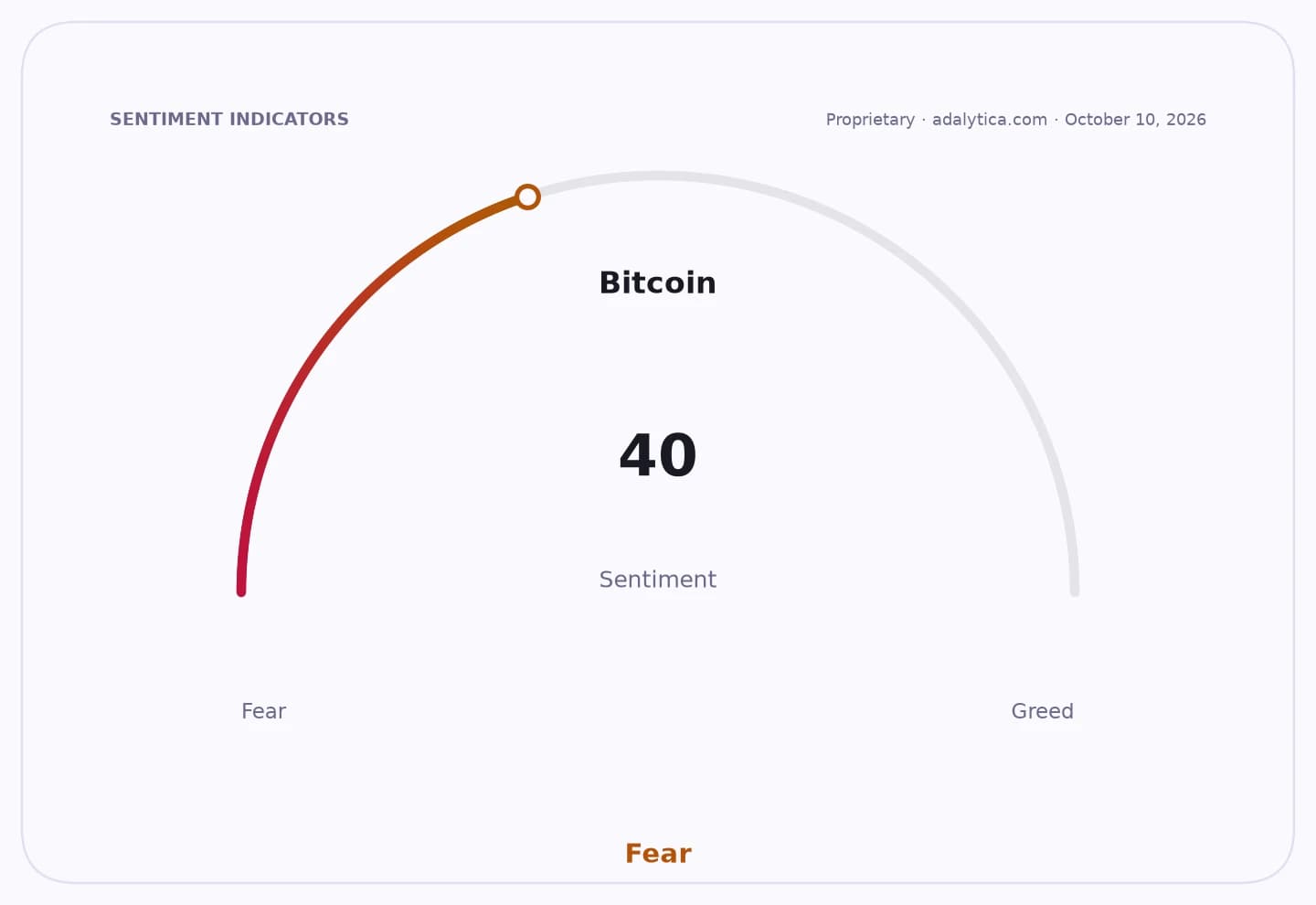
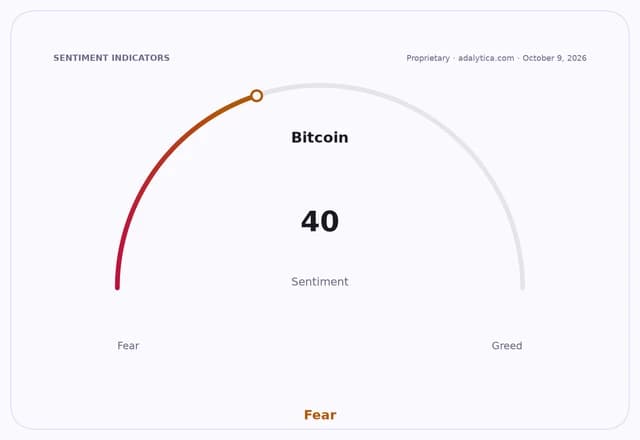
Sentiment IndicatorsⓘProprietary · adalytica.com · October 9, 2026
This is a snapshot — live sentiment, awareness and momentum for 130+ markets update continuously in the dashboard.Open AlphaPulse
That is why the market is watching Bitcoin’s support so closely. A bounce here would reinforce the idea that this is a buy-the-dip moment inside a longer bull market. A failure would likely drag more altcoins lower, especially because Bitcoin usually acts as the liquidity anchor for the entire digital-asset complex. When it loses momentum, traders tend to cut smaller, less liquid positions first.
Ethereum is telling a similar but slightly stronger story. ETH fell to $2,475.55, and its RSI at 23.9 puts it deep in oversold territory, which often attracts patient buyers. Even so, its MACD is still soft and the token remains well below its recent highs. Solana, meanwhile, is under even more pressure, with its price down to $109 and its RSI at 35.1. That kind of dispersion matters because it suggests investors are not simply selling crypto as one trade; they are being more selective, rotating out of the higher-beta names and into the relative safety of Bitcoin or cash.
The broad altcoin pullback is also showing up in market structure. The weakness in “others” dominance measures suggests capital is leaving the more speculative end of the market, even while Bitcoin’s own dominance may be holding up better. That kind of rotation is usually a sign that risk appetite is fading at the margin, not collapsing outright. In plain English: investors are still in crypto, but they are getting choosier.
There is one more reason this matters beyond crypto itself. Broader markets remain oddly resilient, with U.S. stocks making new highs even as the dollar stays strong. That combination can pressure risk assets that depend on easy liquidity and speculative appetite. For Bitcoin and altcoins, a firm dollar and a nervous cross-asset backdrop often mean the market has to prove itself the hard way — by holding support and building a base before the next advance.
For investors, the takeaway is simple. Bitcoin is still the bellwether, and this pullback is testing whether that role can hold. If support near the 50-day moving average and the lower Bollinger Band keeps buyers engaged, the longer-term trend can stay intact. If not, altcoins could face a sharper correction than Bitcoin itself. For patient investors with a multi-year horizon, this remains a watchlist area rather than a reason to panic, but discipline matters: the strongest opportunities usually appear when fear rises and weaker coins get washed out.
| Entity | Gains | Losses |
|---|---|---|
| Bitcoin dip buyers | ▲Lower entry prices | ▼Short-term volatility |
| Altcoin holders | ▲Potential rebound setup | ▼Deeper drawdowns |
| Bitcoin | ▲Relative resilience | ▼Break of support if selling worsens |
| Cash-heavy investors | ▲More dry powder | ▼Missed upside if support holds |