Bitcoin is trading under a clearer U.S. regulatory backdrop, with fresh CFTC crypto guidance and renewed debate over stablecoin rules offering the market its most important near-term catalyst even as an exchange hack and broader enforcement risks keep traders on edge.
Bitcoin under U.S. regulation and stablecoin rule debate

The shift matters because regulation, more than technology, has become the main driver of institutional crypto demand. Bitcoin’s latest move comes as investors weigh whether Washington is moving toward a framework that makes it easier for banks, brokers and funds to transact in digital assets, or whether headline risk from enforcement and security failures will keep capital cautious.
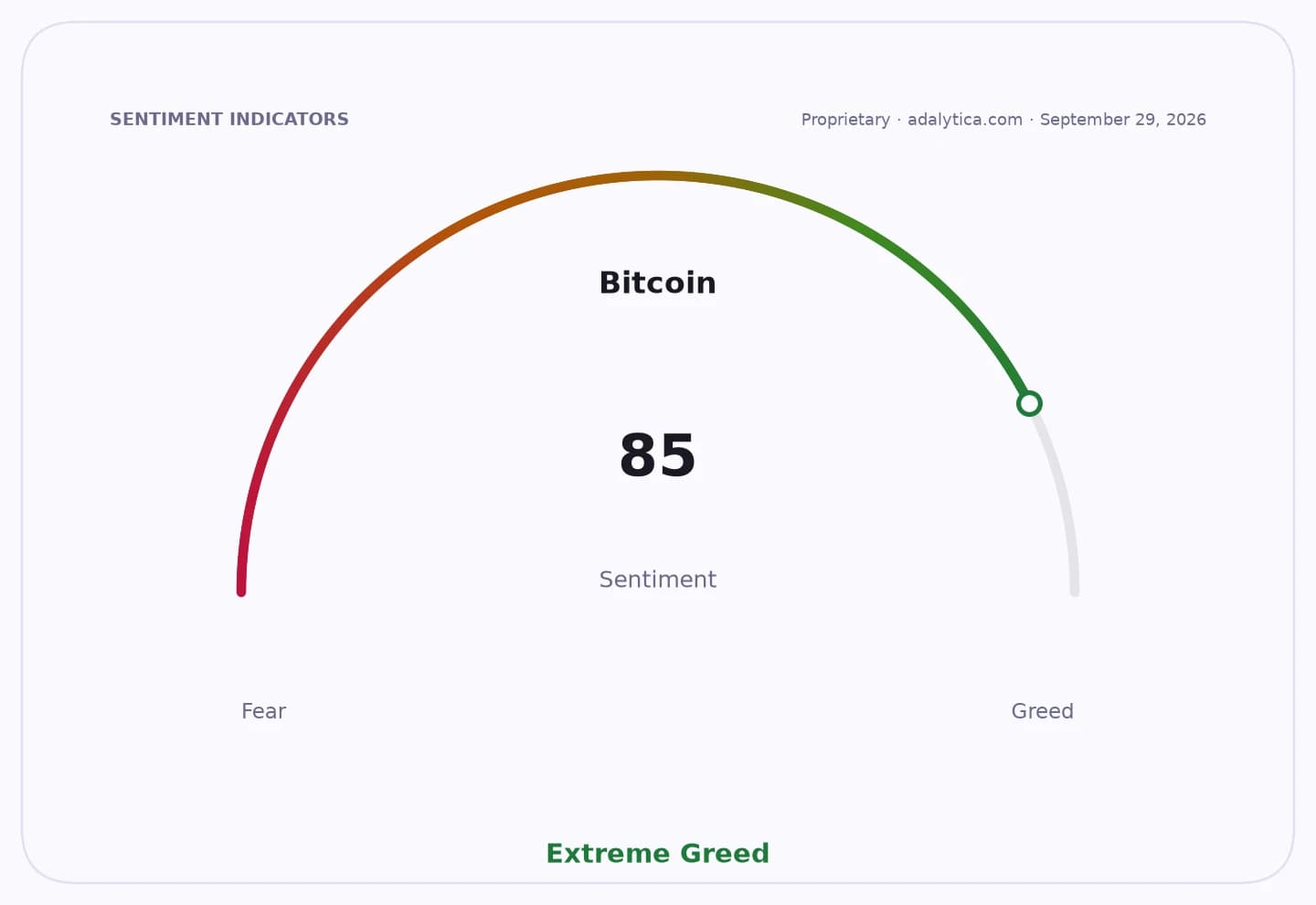
Sentiment IndicatorsⓘProprietary · adalytica.com · September 30, 2026
This is a snapshot — live sentiment, awareness and momentum for 130+ markets update continuously in the dashboard.Open AlphaPulse
Bitcoin changed hands at about $83,000 on Sept. 30, well above its 50-day moving average near $76,860 and its 200-day average around $71,200, a sign the market still has trend support even after recent volatility. Technical indicators also point to a firmly bid market: RSI readings were in the low 70s, while Bitcoin’s MACD remained above its signal line. Adalytica’s Bitcoin Fear & Greed Index stood at 76, in “Greed” territory, even after easing from 99 two days earlier.
That combination suggests the market is pricing in regulatory progress without fully discounting the risks. Fresh CFTC guidance could help define how spot and derivatives activity is supervised, a meaningful issue for exchanges, market makers and custodians that have spent years operating in a patchwork of rules. Stablecoin proposals from the Federal Reserve matter just as much: dollar-backed tokens are the settlement layer for much of crypto trading, and clearer treatment would reduce friction for institutions moving cash on and off blockchain rails.
Bitcoin — 30-day sentimentadalytica.com
Explore this data interactively — full history, time series and cross-market comparisons.Open AlphaPulse
For investors, the implications go beyond Bitcoin itself. Coinbase shares, which have tracked the sector’s regulatory cycle for years, have recovered from deep summer weakness and were trading near $190. Strategy, the largest corporate holder of Bitcoin, was near $155, reflecting the market’s continued willingness to assign a premium to leveraged Bitcoin exposure. If Washington moves toward a more coherent regime, both companies could benefit from higher volumes, better liquidity and a stronger institutional client base.
But the story is not one-way bullish. The Bitget breach involving roughly $351.6 million stolen is a reminder that security failures can quickly reignite concerns about custody and counterparty risk. At the same time, U.S. prosecutors are probing Binance over sanctions and laundering allegations, underscoring that regulatory scrutiny is intensifying even as parts of the rulebook become clearer.
The broader macro setting is still supportive for risk assets, with the 10-year Treasury yield around 5.3% and high-yield credit spreads relatively contained, but crypto remains especially sensitive to changes in policy tone. A clearer CFTC framework and stablecoin progress would likely favor Bitcoin and the biggest regulated platforms first, while a delay or a crackdown would hit smaller exchanges and speculative altcoins hardest.
For now, the market’s message is that U.S. regulation is turning from an existential overhang into a tradable catalyst. The next leg for Bitcoin will depend on whether the policy shift proves durable enough to draw in new institutional capital, or whether enforcement noise and security failures keep the rally capped.
| Entity | Gains | Losses |
|---|---|---|
| Bitcoin | ▲clearer U.S. rules | ▼regulatory ambiguity |
| Coinbase | ▲higher institutional volumes | ▼compliance overhang |
| Strategy | ▲stronger Bitcoin premium | ▼funding and BTC volatility |
| Bitget / smaller exchanges | ▲none | ▼security and trust damage |