Sterling slipped after the Bank of England delivered a surprisingly hawkish vote split, because traders quickly concluded that the real message was patience, not imminent tightening.
BoE hold weighs on sterling after hawkish split

That distinction matters for the pound and for UK assets. The BoE left Bank Rate unchanged at 3.75%, but three members — Huw Pill, Megan Greene and Catherine Mann — voted for an immediate increase. Normally that kind of split would support the currency. Instead, the pound’s reaction turned negative as investors focused on guidance that suggested policymakers were still waiting for clearer evidence that inflation is feeding through to wages and prices a second time.
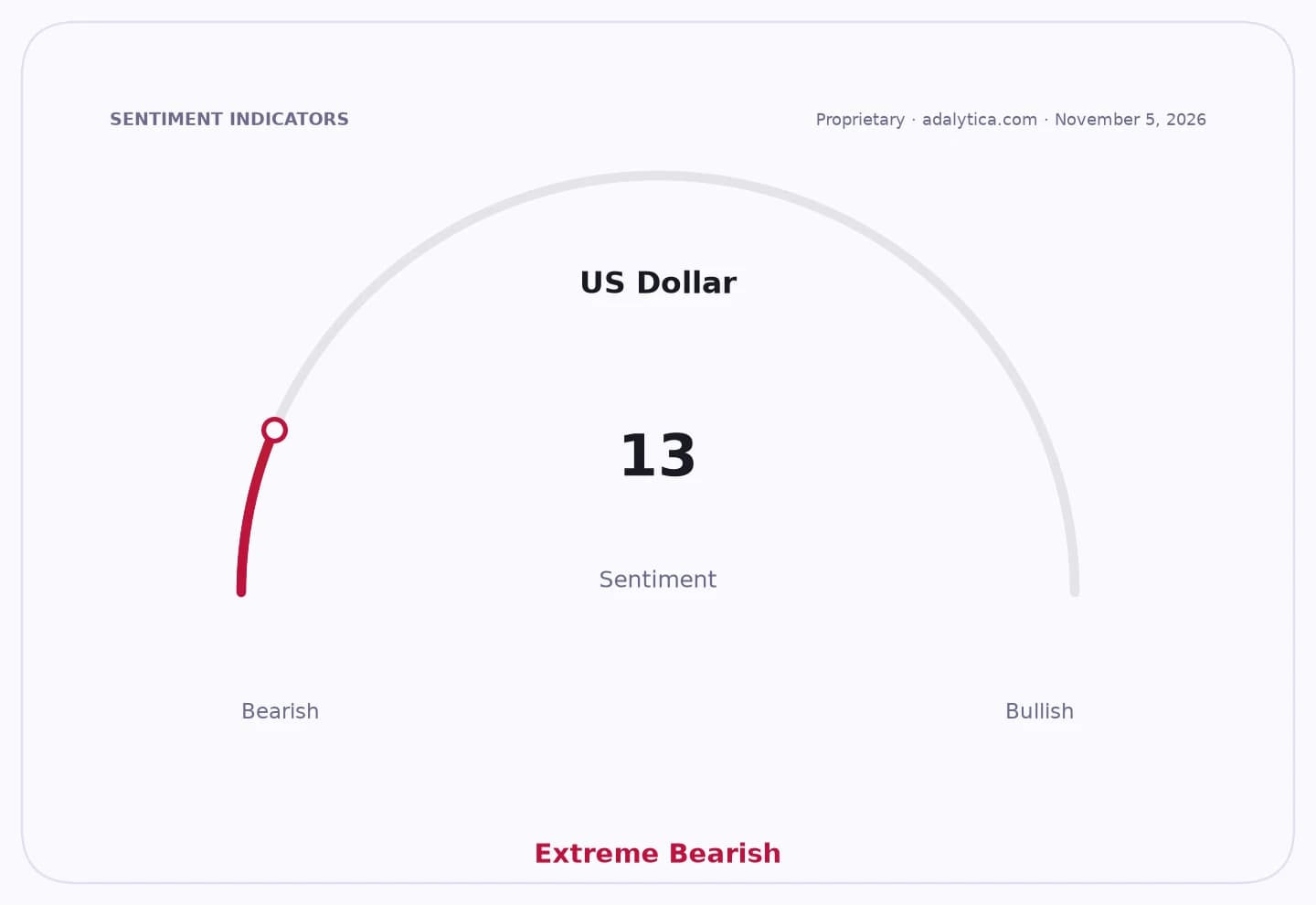
Sentiment Indicators
Rabobank’s read was blunt: “Ignore the vote surprise, guidance a little less hawkish, Committee happy to keep waiting.” The central bank said there was “little evidence so far” of stronger second-round inflation effects and “continued to be clear signs of underlying disinflation in recent data,” even as it warned not to put too much weight on first signs of easing. That tension is what left the market with a mixed message: hawkish dissent, but not hawkish enough for a near-term hike.
The price action told the story. Pound-dollar was still only about 0.2% higher on the day at roughly 1.3394 after earlier dollar weakness, while sterling weakened against the euro to around 1.1655. More importantly, the initial pop in the pound faded within minutes. GBP/USD, GBP/AUD and GBP/EUR all slipped back below pre-release levels, then sold off again later in the session. In other words, the market looked past the vote count and priced the language that mattered.
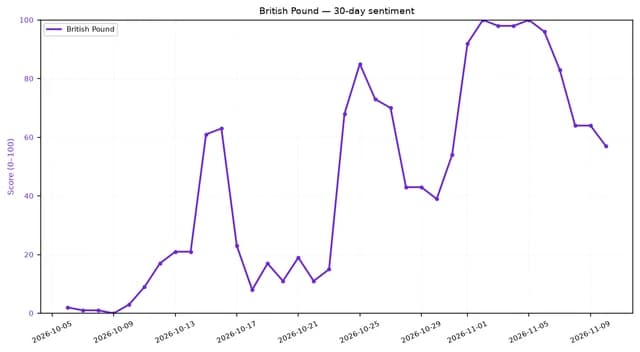
That is why the move is economically significant. The BoE is signaling that it sees inflation risk, but not enough evidence yet to force action. For the UK economy, that means borrowing costs are likely to stay restrictive but stable, rather than moving sharply higher. For investors, it trims the case for an aggressive sterling rally built on policy divergence alone. The pound is getting some protection from a rapid repricing toward cuts, but it is not getting the kind of hawkish surprise that would justify a sustained breakout.
Rabobank said the Committee’s swing voters appear content to keep rates unchanged while they wait for second-round effects, provided markets continue pricing some chance of tighter policy later. That pushes September close to the “unlikely” category and leaves November as the more plausible window, though not the base case. The bank still expects Bank Rate to stay at 3.75% through end-2027.
The bigger narrative for sterling is simple: the market wants a clear tightening path, but the BoE is offering only optionality. Until inflation data forces the committee’s hand, the pound is likely to remain vulnerable to dollar strength and to disappointment whenever rate-hike expectations get ahead of the communication.
For investors, the setup argues for caution on sterling upside and for selective positioning rather than outright pound bullishness. The BoE has reduced the odds of a cut, but it has not delivered the kind of hawkish follow-through that would make GBP the standout macro trade. In this market, patience is still the central bank’s message — and that is not enough on its own to keep sterling firmly bid.
| Entity | Gains | Losses |
|---|---|---|
| UK borrowers | ▲Stable policy rates | ▼No immediate relief |
| GBP bulls | ▲Protection from cut pricing | ▼Lack of hike conviction |
| BoE hawks | ▲Influence on rate debate | ▼Market doubts near-term action |
| USD strength | ▲Relative support from BoE caution | ▼Some fade from earlier dollar weakness |