Christine Lagarde said the European Central Bank has reached its 2% inflation target, but investors should not assume the battle is over, because the policy path still depends on a fragile mix of growth, geopolitics and currency strength.
ECB Holds Rates as Inflation Hits 2%
That matters because central banks do not declare victory just as inflation touches goal; they look for proof that price pressures are settling in sustainably. Eurozone inflation rose to 2% in June from 1.9% in May, keeping the ECB exactly at its target for now, but Lagarde’s message from Sintra was unmistakable: the bank remains “extremely vigilant” and will decide on rates meeting by meeting.
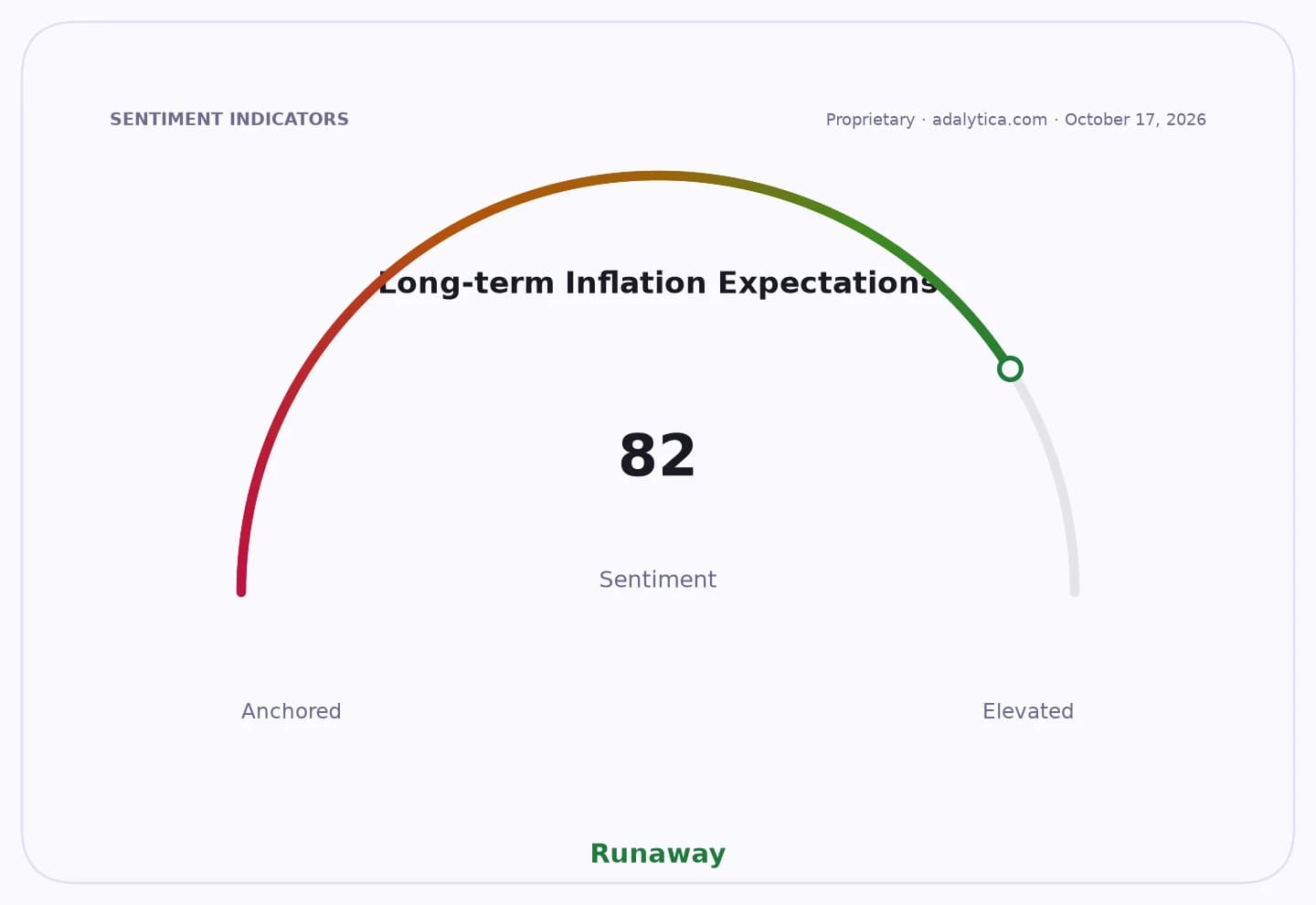
Sentiment Indicators
Long-term Inflation Expectations
For households and businesses, that means borrowing costs in Europe are not on a one-way path lower. Even after the ECB held rates steady at 2.5%, Lagarde warned of risks from global fragmentation, instability and geopolitical tensions. In plain terms, the central bank is not comfortable loosening policy aggressively when supply shocks and trade disruptions could push prices higher again.
For investors, the signal is broader than one monthly inflation print. When the ECB says it is in “good position” but still cautious, it supports a market view of higher-for-longer policy in Europe rather than a rapid easing cycle. That tends to keep pressure on rate-sensitive sectors, while giving banks, money-market assets and shorter-duration bond strategies a stronger relative case than if cuts were imminent.
CPI
The foreign-exchange market is part of the story too. Lagarde backed Jerome Powell’s data-dependent approach and said the euro’s recent strength reflects both market dynamics and the resilience of the European economy. A firmer currency can help cool imported inflation, but it can also weigh on exporters if it continues to rise, making the ECB’s job more complicated.
Bond markets are still pricing a central bank that has defeated inflation but not the risks around it. The U.S. Treasury curve shows the 10-year yield near 4.89% and the 2-year around 4.57%, while the gap between the 10-year and 2-year remains narrow at roughly 0.32 percentage point, a reminder that global policy is still restrictive. In Europe, that backdrop leaves investors focused less on the exact inflation number and more on whether wage growth, energy prices and the euro keep moving in the right direction.
The long-term takeaway is simple: the ECB may have reached its goal, but it has not earned the luxury of complacency. If inflation stays near 2% and growth remains steady, the central bank can keep policy unchanged for longer; if energy shocks or geopolitical strains re-ignite prices, rates could stay higher for longer than many borrowers and equity investors would like. For now, this is a story of cautious victory, not an all-clear.
| Entity | Gains | Losses |
|---|---|---|
| ECB / Lagarde | ▲Credibility on inflation | ▼Room for faster rate cuts |
| Eurozone savers | ▲Higher yields for longer | ▼Cheap credit |
| Eurozone borrowers | ▲Policy stability | ▼Lower financing costs |
| Exporters | ▲Stronger economic confidence | ▼A firmer euro |